Best Over the Door Pulleys for Shoulders: Top Shoulder Rehab Systems
Answering common rehabilitation questions, these over-the-door shoulder pulleys support passive range-of-motion exercises to speed recovery. Best for individuals recovering from shoulder surgery, those dealing with frozen shoulder, rotator cuff injuries, or tendonitis, and anyone seeking at-home therapy options. The top picks below emphasize ease of use, durable construction, and quiet operation to suit different needs and door types. Use this guide to compare options at a glance and choose the model that matches your home setup and therapy goals.
Selected Products Overview
| Product | Brand | Best For | Notes |
|---|---|---|---|
| Phantawell Shoulder Pulley | Phantawell | General rehab and ROM improvement | Sturdy zinc-coated housing; quiet nylon wheel |
| Shoulder Pulley Over The Door System | Hshbxd | Beginner ROM restoration | No assembly; simple door setup |
| RangeMaster EconoRanger | RangeMaster | Gradual ROM increase | Metal bracket; door-friendly |
| Vive Shoulder Pulley | Vive | Therapy from surgery or injury | Foam-padded handles; secure fit |
| Fanwer Shoulder Pulley | Fanwer | Versatile ROM exercises | Foam grips; adaptable rope length |
Phantawell Shoulder Pulley Over The Door
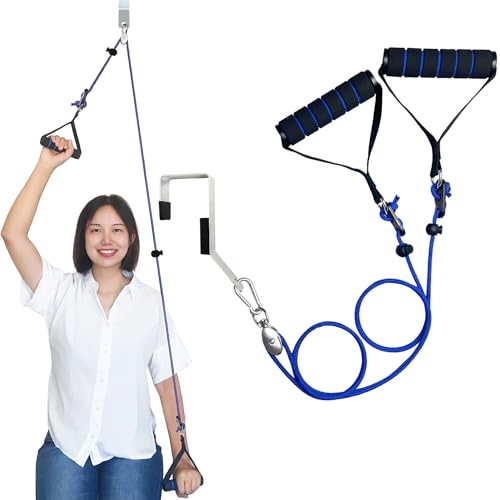
Best for gradual, gravity-assisted rehabilitation. This system uses the force of gravity for passive shoulder work, designed to speed healing, increase range of motion, and relieve pain. The zinc-coated housing reduces deformation, and the nylon wheel keeps rope movement quiet and smooth. The metal bracket offers a sturdy over-door mount with non-slip, anti-scratch protection. Choose this if you want a durable, low-noise setup that fits most standard doors and prioritizes long-term use.
Best for: beginners starting ROM therapy, users prioritizing quiet operation and durable construction. Limitation: installation and usage require a doorway wide enough to accommodate the bracket height.
Shoulder Pulley Over The Door System

Best for straightforward ROM work with minimal setup. This pulley set includes a door anchor, pulley, rope, and handles, and is designed for easy use with no assembly required. It promotes passive movement through controlled motion, helping maintain shoulder mobility after injury or surgery. Best for: users who want a ready-to-use option and simple instructions. Caution: follow your physical therapist’s frequency and pain guidelines to avoid overexertion.
RangeMaster EconoRanger Shoulder Pulley

Best for gradual ROM improvement with a sturdy metal bracket that attaches to the door. The design supports a pain-free, gravity-assisted range of motion and aims to improve shoulder lubrication through smooth, controlled movements. Best for: users who want a durable, door-friendly setup that fits most 2-inch doors. Limitation: some users may need guidance on optimal ROM progression from a clinician.
Vive Shoulder Pulley System

Best for rehabilitation after surgery or injury with enhanced comfort features. The system includes padded handles and a foam exterior to protect doors from scratches while providing a secure grip. It offers adjustable, safe ROM limits via included stoppers. Choose this if you want a trusted brand with user-friendly fit and soft-touch components. Caution: ensure the door can bear the strap tension over repeated sessions.
Fanwer Shoulder Pulley

Best for a versatile range of motion exercises at home. The exterior features a foam grip for comfortable handling and a door-friendly strap that minimizes door damage. It aims to assist arthritis, tendonitis, or frozen shoulder rehabilitation by enabling gentle, progressive stretching. Choose this if you want a flexible setup that emphasizes grip comfort. Limitation: heavier users may prefer models with a stronger mounting bracket for frequent use.
Buying Guide
- Door compatibility: Most systems fit standard doors, but check door thickness and bracket height to avoid interference with door frames or hinges.
- ROM progression: Look for models with adjustable range limits or stopper mechanisms to tailor intensity as ROM improves.
- Comfort and protection: Foam-padded handles and door-contact padding protect skin and door surfaces, reducing irritation and scratching.
- Durability: Metal brackets and zinc-coated housings typically offer longer life under repeated use; consider quiet nylon wheels for smooth operation.
- Ease of use: No-assembly or simple assembly reduces setup time, making it easier to perform regular therapy sessions.
- Portability and storage: Lightweight designs with compact packaging support convenient storage when not in use.
Frequently Asked Questions
- What is an over-the-door shoulder pulley best used for?
It provides controlled, passive ROM exercises to support shoulder rehabilitation after surgery or injury. - How do I choose the right ROM level?
Start with small movements within a pain-free range and gradually increase as advised by a clinician. - Is setup difficult?
Most models are designed for quick setup; check if assembly is required and ensure the door can support it. - Can I use these daily?
Yes, if your physical therapist recommends a routine; monitor pain and avoid sharp or sharp pain during use. - Will these damage my door?
High-quality metal brackets and foam padding reduce risk; always verify door-surface protection before use. - Do these replace clinical therapy?
They supplement professional care by enabling daily home exercises but do not replace professional treatment.