Best Practice Baseballs for Training and Skill Development: Top Picks for All Levels
When choosing practice baseballs, look for durability, flight control, and the right feel for your space. This guide highlights five top options suited for players from beginners to advanced, whether you’re training in a yard, gym, or small indoor space. Each pick supports different goals—power development, batting feedback, or safe, repeated reps. The table below summarizes who each product is best for, helping you compare at a glance.
| Product | Best For |
|---|---|
| GoSports 2.8 Inch Weighted Training Baseballs | All skill levels; improving power and mechanics |
| SKLZ Impact Limited-Flight Practice Baseballs | Small spaces; realistic flight and instant feedback |
| LoFli Practice Baseballs | Regulation feel in tight spaces; multi-skill drills |
| Coopay 24 Pack Baseball Practice Balls (White) | Group practice; affordability and high-volume drills |
| GoSports Foam Training Baseballs | Indoor safe practice; beginner confidence and coordination |
Best Overall: GoSports 2.8 Inch Weighted Training Baseballs

The 6-pack of 16-ounce training balls adds weight to build bat speed and throw strength. It’s best for players who want measurable gains in mechanics and power across hitting and pitching drills. This set is particularly suitable for beginners building fundamentals as well as intermediate players refining form. A potential limitation is that the heavier balls may require more controlled practice to prevent form deterioration during fatigue.
Best for Realistic Feedback: SKLZ Impact Limited-Flight Balls
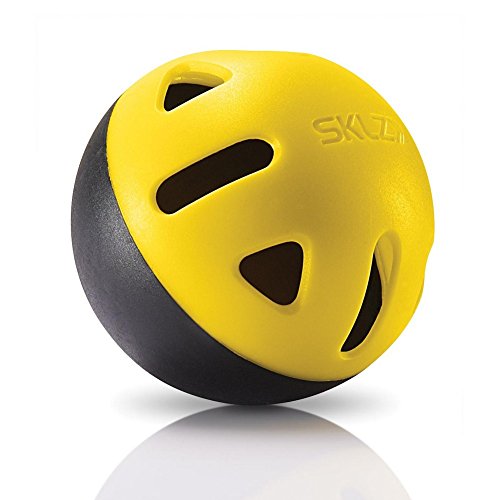
These practice balls offer instant feedback on contact and a limited-flight design for use in tight spaces. They’re heavier than standard practice balls, which provides a more authentic feel during batting and pitching drills. The limited flight helps keep drills contained indoors or in small backyards. Best for players who want realistic ball behavior without needing a full field.
Best Value For Space: LoFli Practice Baseballs
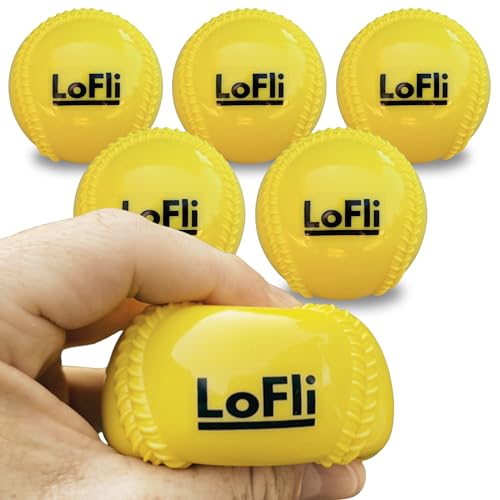
LoFli balls match regulation weight and feel while offering reduced flight to suit confined spaces. Raised seams aid grip, making these ideal for practicing hitting, pitching, ground balls, and glove work in small areas. Choose this if you want a familiar baseball sensation with space-faving flight characteristics, though the trade-off is that they may require more frequent retrieval in larger drills.
Best Pack For Group Drills: Coopay 24 Pack White Baseball Practice Balls

The 24-pack offers a bulk option with a durable soft-plastic construction and 26-hole design to mimic spin and flight while remaining affordable for team drills. Best for coaches, programs, or families practicing multiple players. A limitation is that the soft material may wear faster with heavy use or prolonged impact against hard surfaces.
Best All-Around Budget Pick: Coopay 12 Pack Green
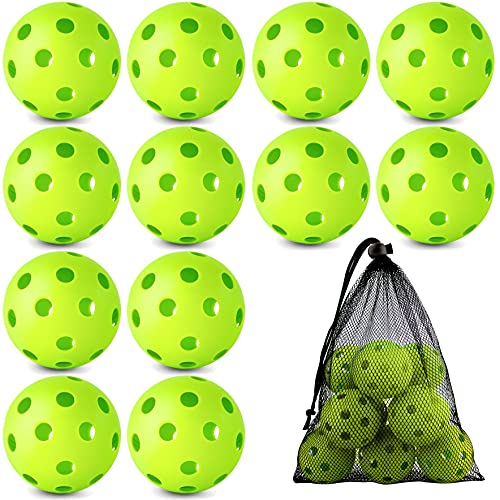
This 12-pack provides good value with a similar soft-plastic construction and low-flight design that’s suitable for backyards and indoor training. Best for budget-conscious players seeking repeated reps without breaking the bank. Limitations include fewer balls to rotate through rounds compared to larger packs.
Best for Mini Drills: Bandit Sports Popper Plastic Baseballs

These 12 mini popper balls are compact and rebounding, designed to improve accuracy and quick-hand coordination. They’re ideal for short-distance drills, soft-contact swings, and focus training in limited space. A caution is that their smaller size can feel very different from standard baseballs, so use alongside regular practice balls to maintain transfer of skills.
Buying Guide: How To Choose The Right Practice Baseballs
What is my training goal?
- Power and mechanics: Weighted training balls help build bat speed and pitching strength. Look for heavier options like the 16-ounce GoSports set.
- Space-limited practice: Limited-flight or foam options reduce ball travel, enabling safe indoor use and smaller yards, as with LoFli and GoSports foam.
- Realistic feel and feedback: Impact or weighted models with proper grip seams provide authentic contact sensations and instant feedback on swing path.
- Group practice: Bulk packs offer affordability for teams or families practicing together, such as Coopay 24-pack or 12-pack options.
What about durability and flight?
- Durability: Models with dense materials and impact-resistant construction tend to last longer under repeated hits, such as SKLZ Impact and Bandit Mini Popper balls.
- Flight: Reduced-flight designs help keep drills contained in small spaces but may not perfectly replicate real-game trajectories. Consider pairing reduced-flight balls with standard practice balls for transfer.
What space will you practice in?
- Backyards and small gyms: Choose reduced-flight or foam balls to minimize risk and maximize practice time.
- Batting cages and larger spaces: Heavier weighted training balls can simulate real power development without sacrificing accuracy, but ensure a safe drill layout.
Materials and feel matter for skill transfer. If you’re new to training balls, start with safer foam or reduced-flight options and gradually progress to heavier, more realistic-feel balls as technique improves.
Frequently Asked Questions
- Which practice baseball is best for beginners?
Foam or reduced-flight balls, like GoSports Foam Training Baseballs or LoFli practice balls, are ideal for beginners building confidence and basic mechanics in safe environments.
- Can practice balls replace regular baseballs for training?
They supplement practice but should not fully replace standard baseballs when simulating game conditions. Use a mix to train different aspects of hitting and pitching.
- Are weighted balls suitable for all ages?
They can be used by youth and adults, but beginners should start with lighter weights and increase gradually to prevent form deterioration.
- Do reduced-flight balls help with small-space training?
Yes. Reduced-flight balls are designed to travel shorter distances, making practice feasible in tight spaces without frequent ball retrieval.
- Is durability a concern with plastic practice balls?
Some plastic balls endure thousands of hits, especially models with reinforced materials; look for “impact-resistant” or “rebounding” features when longevity is a priority.
- How should I group these products in drills?
Use a mix: heavier weighted balls for strength, reduced-flight or foam balls for accuracy and confidence, and mini or popper balls for targeting and hand-eye coordination.