Best Push Pole for Skiff: Top 5 Picks for Stable Shallow-Water Control
Looking for a reliable push pole to stabilize a skiff in shallow water? This guide highlights five purpose-built options that excel at pushing, anchoring, and steering in lakes, rivers, and calm coastal regions. Each pick is suited for different boat sizes and water conditions, from ultra-light paddlers to small skiffs. The following table summarizes key traits to help you compare quickly.
| Product | Length | Material | |
|---|---|---|---|
| EDSRDPLT 7.75′ Anchor and Push Pole | 7.75 ft | Fiberglass with 316 SS tip | Skiffs needing buoyant, two-piece design with compass |
| Dotline Push-N-Glide 5’–12′ Pole | 5–12 ft (telescoping) | Fiberglass (with stainless elements in kit) | Versatile tasks and adjustable reach |
| Pelican Anchor and Push Pole (8 ft) | 8 ft | Fiberglass with ergonomic handle | Shallow-water anchoring with hold and pull capacity |
| BOTE Sandspear | Variable (stand-up paddle board use) | Fiberglass (as a stakeout/push combo) | Stakeout and push for SUPs and micro skiffs |
| itayak 8.63′ Shallow Water Anchor Pole | 8.63 ft | Glass-reinforced PA66-GF with carbon fiber connectors | Long, secure hold with two-piece design |
EDSRDPLT 7.75′ Anchor and Push Pole

The EDSRDPLT push pole combines buoyant two-piece construction with a practical T-handle. It floats, stores easily on paddle holders, and includes an integrated compass for basic navigation. The tip uses a 316 stainless steel point for durability, while the shaft blends reinforced nylon, fiberglass, and aviation-grade aluminum. Best for skiffs that require a floatable, multipurpose pole with directional aid. Caution: handle may be slippery when wet; ensure secure grip in rough conditions.
Dotline Push-N-Glide Telescoping 5′ to 12′

The Dotline Push-N-Glide offers a telescoping range from 5 to 12 feet, enabling quick adaptation to varying water depths. It features a smooth Push-N-Glide mechanism and a Sure Snap locking system to hold each extension securely. This makes it a solid choice for multipurpose tasks on small boats and kayaks, especially when you need to adjust reach without losing stability. Best for: versatile setups; better for tight storage spaces. Limitation: longer extensions can be cumbersome on compact boats.
Pelican Anchor and Push Pole (8 ft)
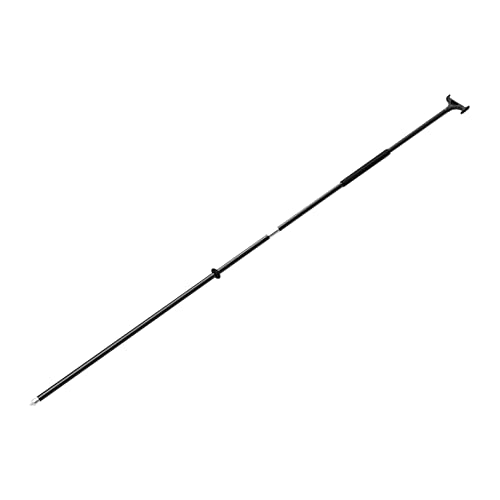
Pelican combines an ergonomic foam-lined handle with an integrated hook for both pushing and anchoring in shallow waters. The two-piece fiberglass shaft includes a rubber ring to prevent rope slippage, enhancing reliability during anchor tasks. Best for anglers and small skiffs that frequently anchor in shallow areas. Limitation: rubber ring may wear over time; inspect for rub-through with heavy rope.
BOTE Sandspear

The BOTE Sandspear serves as both a stakeout and push pole for shallow-water use on SUPs or micro skiffs. It emphasizes versatility in staking positions and pushing to reposition craft in calm, shallow environments. Best for SUP owners who want a single tool for both pushing and stakeout. Caution: not ideal for deep water or hurricane-strength winds where a longer anchor might be preferred.
Buying Guide
What length should I choose?
Longer poles provide greater reach in deeper shallow-water zones, reducing the need to lean. Shorter models are lighter and easier to maneuver on small craft. Choose a length that allows you to reach the bottom in typical water depths you encounter without overbalancing your skiff.
What material matters most?
Fiberglass blends with nylon and aluminum offer a balance of strength, buoyancy, and corrosion resistance. Poles with stainless steel tips resist rust, which is important in saltwater or brackish conditions. Be mindful of weight; heavier poles are harder to control on tiny boats.
Two-piece vs telescoping?
Two-piece designs provide reliable joint strength and straightforward storage. Telescoping poles offer quick reach adjustments but can be heavier and slightly less rigid at full extension. If you frequently switch boat sizes, a versatile telescoping model can save space.
Grip and handling
Ergonomic T-handles with non-slip grips improve control, especially in wet conditions. Some handles include hooks for multitasking, such as pulling lines or lifting anchors. Ensure comfortable grip length to reduce fatigue during extended sessions.
Best for what scenarios?
– Pushing in calm, shallow waters: a lightweight, ergonomic pole with a secure locking system is ideal.
– Frequent anchoring in soft mud or sand: look for a robust tip, anti-slip rope guide, and two-piece durability.
– Compact storage needs: consider telescoping or two-piece designs with easy disassembly.
Care and maintenance
Rinse after exposure to saltwater to minimize corrosion. Inspect tips for wear and replace as needed. Dry storage helps prevent mold or mildew on foam grips. Store in a cool, dry place to maintain joint integrity.
FAQ
Q: Can these poles be used on larger boats?
A: Many are designed for small skiffs and kayaks; verify length and weight ratings before use on larger craft.
Q: Are the poles buoyant?
A: Some models are buoyant or float, aiding retrieval if dropped in water.
Q: Do these poles come with mounting options?
A: Most are multi-purpose and can be mounted on paddle holders or kept ready for quick deployment, but confirm your boat’s compatibility.
Q: Is a stainless tip necessary for saltwater?
A: A stainless steel tip helps resist corrosion in salty environments, enhancing longevity.
Q: Which pole is best for beginners?
A: A lightweight two-piece or telescoping model with an ergonomic grip offers easier handling and storage for new users.