Best Radar Gun for Softball: Accurate Speed Tools for Players and Coaches
Answer: A softball-focused radar gun helps players track pitch and exit speeds, monitor progress, and tailor training. The top picks below suit different buyers, from individual athletes to coaches building practice plans. Best for: solo players seeking portability, coaches needing hands-free setup, new players requiring simple interfaces, and data-driven athletes aiming for detailed analysis.
Summary Table: Top 5 Radar Guns for Softball Athletes
| Product | Key Strength | Best For | Notable Limitation |
|---|---|---|---|
| Pocket Radar Smart Coach | ±1 mph accuracy, app integration | In-game and practice data with video overlay | Requires Pocket Radar app for full features |
| PLAYAPUT Baseball Radar Gun With Tripod | Large dual displays, 3–150 mph range | Coached training with clear readouts | Tripod setup needed for hands-free use |
| Upgrade Smart Baseball Radar 2.0 | ±1 mph, dual modes | Youth to advanced players needing adaptable range | More features may require learning curve |
| Portable Baseball Radar With Large LCD | Bright LCD, speed recall | Solo practice and real-time feedback | Display size varies by model |
| NET PLAYZ Speed Radar | Hands-free operation, wide detection | Independent training sessions | Can be bulkier for travel |
Pocket Radar Smart Coach Speed Gun
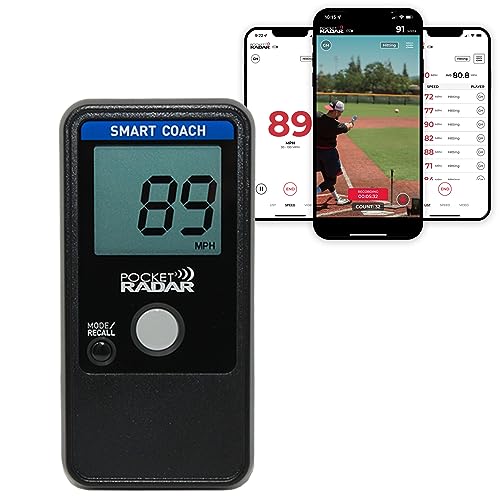
The Pocket Radar Smart Coach is a compact, pro-level option known for high precision in real-world settings. It delivers ±1 mph accuracy at notable distances (120 feet for baseball, 150 feet for softball), making it suitable for both in-game and practice environments. The unit pairs with a free companion app to overlay velocity data onto videos, supporting mechanics analysis and skill development. Its value rises with the Pocket Radar PLUS subscription, which unlocks pitch charting, slo-motion video, and connections to development and streaming partners.
Best for: individual softball players and small teams that value mobile, on-field data alongside video feedback. Choose this if you want real-time velocity data plus the ability to review mechanics in videos. Caution: full feature use relies on app integration and optional subscription services.
Selected strength: professional-grade reliability without bulky equipment. Best for players who travel or train in varied locations and want to track progress over time using consistent readings.
PLAYAPUT Baseball Radar Gun With Tripod

This radar gun features a large, bright dual-display and a wide 3–150 mph range, with ±1 mph/kph accuracy. It supports handheld and hands-free use, thanks to tripod compatibility and a robust display designed for coaching scenarios. The speed recall feature stores the last ten readings, enabling quick trend checks during drills. Best for: coaches and players who want easy visibility during group sessions and the ability to review recent performance. Limitation: hands-free operation is optimized when used with the included tripod.
Upgrade Smart Baseball Radar 2.0

The Smart Partner 2.0 radar gun emphasizes next-generation accuracy, delivering readings within ±1 mph across a 3–150 mph range. It offers dual modes (SS for beginners and MS for advanced training) and an easy-to-read LCD display. The device automatically saves the last ten speed records for progress tracking. Best for: players and coaches who train across multiple skill levels and want a flexible tool that grows with a player’s development. Caution: more advanced features may require familiarization with the app ecosystem.
Portable Baseball Radar With Large LCD

This device emphasizes a large, bright LCD and a robust speed range of 3–150 mph with ±1 mph accuracy. It includes a speed recall feature to store recent measurements, aiding ongoing skill assessment. Best for: solo players and younger athletes who benefit from a clear, easy-to-read display during drills. Limitation: the display and controls can vary slightly by model, so verify the exact readouts before training sessions.
NET PLAYZ Speed Radar

The NET PLAYZ radar gun emphasizes hands-free operation with a tripod setup and a voice-announce feature that delivers speed readings aloud. It measures up to 199 kph (150 mph) and supports multiple sports beyond baseball and softball. Best for: players who want a self-contained training station and audible feedback during solo practice. Caution: position the radar within the optimal measurement zone for accuracy, typically 20–50 feet from the ball’s path.
TAG ONE Sports Radar With AI Smart Coaching
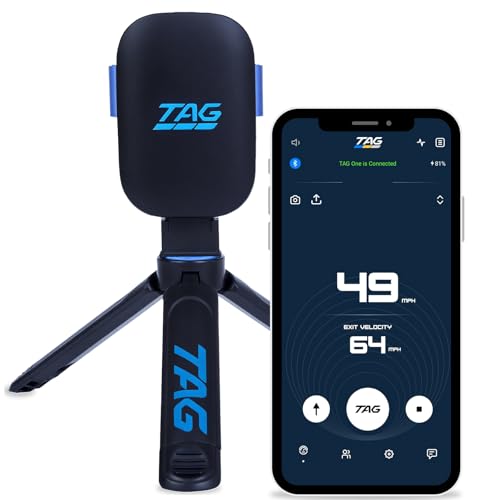
TAG ONE combines multi-sport speed tracking with app integration and AI coaching to guide training. It measures 20–225 mph with ±1 mph accuracy at up to 130 feet, and supports data capture, video, and sharing through the TAG Sports App. Best for: serious players and teams looking for comprehensive data insights and AI-driven guidance. Limitation: higher feature set may require more setup and app familiarity, especially for new users.
JASCOPRO Upgrade Baseball Radar Gun

The JASCOPRO radar uses 24GHz radar technology to provide fast, stable readings with ±1 mph accuracy. It covers 3–150 mph and features a dual-display system: side LED for instant speed reads and a rear LCD for coaches. It includes SS/MS modes and a speed recall function for tracking improvement over time. Best for: players who want robust visibility for both solo coaching and team drills. Caution: users should confirm compatibility with any third-party training apps if integration is a goal.
Buying Guide: Key Considerations For Choosing A Softball Radar Gun
- Accuracy And Range: Look for ±1 mph accuracy and a range that covers common softball speeds (roughly 40–120 mph for pitching, higher for exit velocity in batting drills).
- Display Type: Large, bright displays help in outdoor practice. Dual displays or side displays can aid coaches while a handheld unit is better for travel.
- Modes And Recall: Modes for beginners and advanced players, plus speed recall or history logs, support structured training progress tracking.
- App Integration: Some models offer companion apps for video overlay, charting, and data export. Consider whether you prefer built-in readings or app-based analytics.
- Hands-Free Use: Tripod compatibility and hands-free operation benefit team settings and solo practice with stable readings.
- Portability and Setup: Lighter units are easier to carry; consider whether you need on-field setup, gym use, or both.
- Multi-Sport Use: If you train other sports, a multi-sport radar with broader measurement support can be cost-effective.
FAQ
- Q: Do all radar guns work well for softball pitches?
- A: Most models measure up to around 120–150 mph, which covers typical softball speeds, but check the specified range for accuracy.
- Q: Is app integration necessary?
- A: Not necessary for basic speed readings, but apps can enhance analysis with video overlays and data sharing.
- Q: What is “speed recall”?
- A: It stores the last several readings to track progress over time without writing anything down.
- Q: Should I buy a hands-free radar gun for solo practice?
- A: Yes if you train alone often; tripod-ready models provide stable measurements without another person.
- Q: Which model is best for beginners?
- A: Models with clear displays, basic modes, and simple data export are typically best for beginners.
- Q: Are higher-priced models always better?
- A: Higher price often correlates with advanced features like AI coaching and broader sport support, but the best choice depends on your training needs and budget.