Best Resistance Bands for Ankles: Top Sets for Glutes and Leg Workouts
Answer: For ankle-focused training, these five resistance-band sets offer adjustable resistance, comfortable cuffs, and practical versatility for glutes, legs, and rehab. They’re best for beginners seeking gradual progress, athletes targeting hip and leg strength, and people doing physical therapy or post‑injury rehab. Below you’ll find concise comparisons to help you choose the right set for your goals.
| Product | Best For |
|---|---|
| KUTIZE Ankle Resistance Bands | 3-level resistance, secure cuffs, hip/glute activation |
| RENRANRING Ankle Resistance Bands with Cuffs | Multiple resistance levels, comfortable padding |
| SPRI Xercuff Leg Resistance Band | Full lower-body movement, gym or home use |
| THERABAND Resistance Tubing With Cuffs | Controlled lower-body training, Pilates and therapy |
| Fit Simplify Resistance Loop Bands | Beginner to advanced, rehab-friendly set |
KUTIZE Ankle Resistance Bands With Cuffs

Versatile full-body equipment focused on glutes, legs, and hips with 3-level resistance. Includes breathable neoprene ankle cuffs with dual D-rings to prevent slippage and secure velcro for a snug fit. Suitable for kickbacks, hip thrusts, lunges, and yoga routines. Best for users seeking progressively challenging lower-body activation and comfortable cuffs. Caution: avoid over-tightening and ensure proper cuff placement to prevent movement during dynamic moves.
RENRANRING Ankle Resistance Bands With Cuffs

Three-resistance-level ankle bands with cushioned cuffs designed for comfort during glute and leg workouts. Helps with ankle, knee, and hip activation, including activities like ankle strengthening, leg presses, and jump training. Best for beginners needing adjustable resistance and a secure, soft-fitting cuff. Limitation: latex content may affect sensitivity for some users; verify material compatibility if you have allergies.
SPRI Xercuff Leg Resistance Band Cord

Resistance cord with non-slip padded ankle cuffs designed for lower-body work. Supports forward, backward, side-to-side, and diagonal movements to target glutes, hips, and thighs. Best for users who want versatile leg-strength routines and a compact setup for gym or at-home use. Choose this if you prioritize multi-directional movement and a secure cuff. Limitation: bands are sold separately, so you’ll need to buy multiple cords for varied resistance.
THERABAND Resistance Tubing With Cuffs
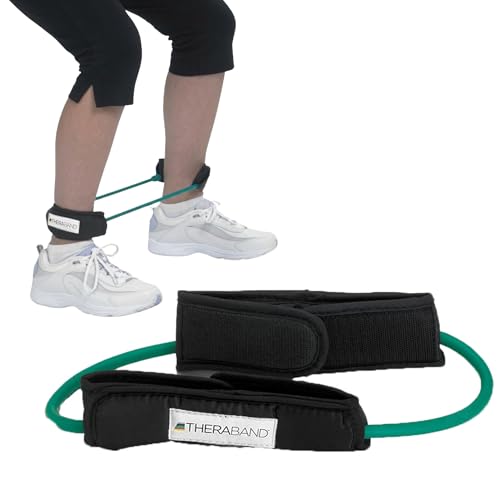
Heavy-resistance tubing with padded cuffs for lower-body workouts, including hips, glutes, and legs. Designed for controlled movements—suitable for Pilates, physical therapy, and at-home training. Best for users who want a heavier resistance option with comfortable cuffs to sustain longer sessions. Limitation: tubing length and resistance level may be less adjustable than loop bands; consider pairing with additional bands for progression.
Fit Simplify Resistance Loop Bands (Set Of 5)

Loop resistance bands in five levels—extra light to extra heavy—designed for general exercise, stretching, rehab, and strength routines. The included carry bag adds portability for workouts away from home. Best for beginners through intermediate users building rehab-friendly routines and gradual strength gains. Caution: loop bands may snap under extreme overstretch; inspect bands before use and avoid overextension.
Buying Guide
What should you consider when choosing ankle resistance bands?
- Resistance range: Look for sets that provide multiple resistance levels to adapt as you gain strength. For beginners, start with lighter bands and progressively move to heavier options.
- Cuff comfort and security: Cushioned or neoprene cuffs with adjustable Velcro straps reduce slippage and skin irritation during long sessions.
- Material and durability: Natural latex offers good elasticity but may affect latex-sensitive users. Non-latex or latex-free options are available in some sets.
- Intended use: If your focus is glute activation and hip strength, prioritize bands designed for ankle and leg movements; for rehab or therapy, choose bands labeled for physical therapy compatibility.
- Portability: Consider sets with a carry bag or compact design if you plan to train away from home or travel often.
- Versatility: Some sets enable multi-directional movement and additional exercises beyond simple ankle extensions, which can maximize workout variety.
Practical buyer questions
- Are ankle resistance bands safe for beginners? Yes, when starting with lighter bands and proper form.
- Should I choose loop bands or cuffs with bars? Loop bands are simple and versatile, while cuffs with cords offer directional training and sturdy ankle retention.
- Can these bands aid rehab? Some sets are marketed for physical therapy and rehab; confirm suitability with your clinician or trainer.
- Is latex a concern? If you have latex sensitivity, look for non-latex options or latex-free bands within the product listings.
- How many bands should I own? A 3–5 level set generally provides enough progression for most users.
- Can bands replace free weights? Bands complement weight training and offer joint-friendly resistance; they’re best for progressive overload in targeted movements.
Frequently Asked Questions
- What is the best resistance level for ankle workouts? Start with lighter levels for warmups and form work, then progress to heavier levels as you gain control and strength.
- How do I prevent slipping cuffs during workouts? Ensure proper cuff fit, check for wear, and place the band at a comfortable angle to minimize movement.
- Can these bands be used for physical therapy at home? Many are suitable; follow professional guidance and avoid movements that cause pain.
- Are these bands durable for daily use? Quality sets offer durable elastic material and reinforced cuffs; inspect for wear before each session.
- Do I need more than one set to see results? A well-chosen set with progressive resistance can support ongoing strength gains and rehab-friendly routines.