Best Resistance Bands for Speed and Agility Training
Speed and agility rely on rapid hip, leg, and core engagement. The right resistance bands can boost explosive power, strengthen stabilizing muscles, and improve reaction time. This guide selects five top options that cater to different athletes and budgets, from beginners to advanced. Each picks prioritizes speed and agility while offering practical limitations to consider.
| Product | Best For | Notable Limitation |
|---|---|---|
| Fit Simplify Resistance Loop Bands (Set of 5) | Beginner to intermediate; rehab and versatility | Loop bands may require anchor or floor space for full routines |
| Kbands Speed And Strength Leg Bands (agility programs) | Youth to advanced athletes; structured drills | Higher price may be a factor for casual users |
| Kinetic Bands Acceleration Speed Cord | Multi-sport power training | Requires setup; belt-based system |
| Kbands Infinity Rubber Loop Mini Bands | Ankle/hip strength and quick transitions | Smaller bands may limit range for larger athletes |
| YNXing Dynamic Resistance Trainer | All-around explosive speed work | Longer setup and routine planning helps |
Fit Simplify Resistance Loop Exercise Bands (Set of 5)

This five-band loop set covers light to extra-heavy resistance, making it suitable for progressive speed and agility work. Best for beginners to mid-level athletes who want versatile resistance options for hip abduction, squats, lunges, and lateral shuffles. The included carry bag supports workouts away from home, which helps athletes maintain consistency.
Why selected: The set’s range supports gradual resistance ramping as speed work intensifies. The bands’ loop design is widely used for mobility and rehab routines, which can complement agility drills. A caution: loop bands can roll or slip if not anchored properly, so ensure a stable setup for dynamic moves.
Kbands Speed And Strength Leg Resistance Bands
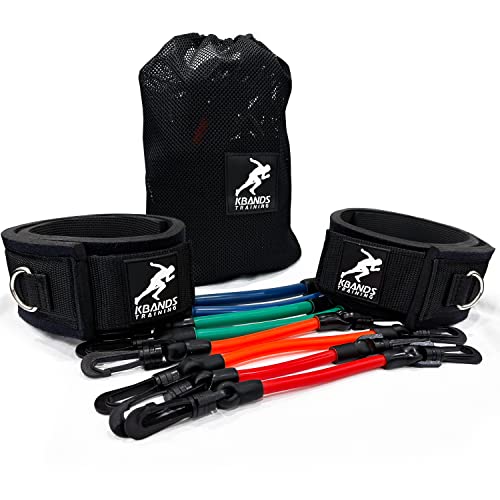
Designed to build hip strength and explosiveness, this set pairs leg resistance with digital training programs. It is best for athletes integrating speed work into sprint routines, agility cuts, and plyometrics. The padded thigh bands reduce rolling during high-output drills, supporting safer acceleration work.
Why selected: The combination of hip-focused resistance and guided programs helps athletes structure speed and agility sessions. Best for athletes who want a formal drill framework. Limitation: The gear can be pricier than entry-level sets, so consider your training plan expectations before purchasing.
Acceleration Speed Cord Bungee Multi-Sport Resistance Training
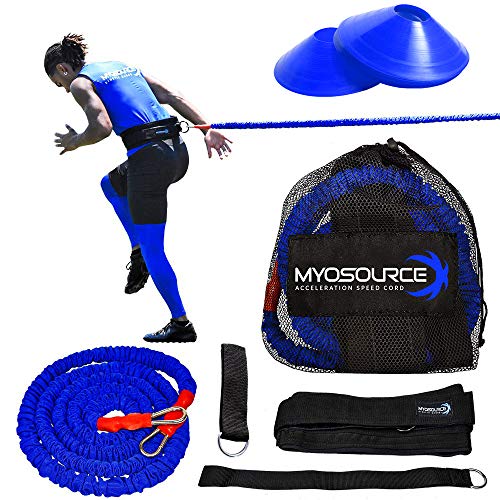
This multi-sport resistance training belt uses adjustable cords to boost acceleration, power, and agility. It supports linear and multidirectional work, aiding sprint mechanics, quick changes of direction, and vertical jump work. It comes in multiple belt sizes for a comfortable fit during explosive drills.
Why selected: Its versatility makes it suitable for athletes needing a portable option for speed sessions. Better for higher-intensity drills. Caution: Proper belt fit and supervision are important to avoid overextension or awkward pulls during rapid movements.
80Lbs Resistance Bungee Cord Speed Training Set

This dual-resistance cord set combines stretchable cords with handles and a training belt for focused speed and agility work. It supports fast directional changes, power development, and sport-specific drills. The kit’s extended length enables varied reach and resistance application across drills.
Why selected: The set’s multiple cords offer progressive resistance and a wide range of training options. Choose this if you want adjustable resistance during dynamic drills. Limitation: The system requires space and proper anchoring to maximize safe use during high-velocity movements.
Buying Guide: Key Considerations For Speed And Agility Bands
Purpose and sport: Align the band type and resistance range with your main activities—sprint work, change-of-direction drills, or plyometrics.
Fit and comfort: Check belt or thigh strap padding, especially for longer sessions or higher-intensity training.
Resistance range: For speed-focused workouts, a broad range helps you progress from light to heavy loads without outgrowing a single band.
Durability: Look for latex quality, finish, and stitching in loops or straps to withstand repeated rapid movements.
Portability: If you train away from home, consider a kit with a carry bag and compact setup.
FAQs
- What band type is best for speed and agility training?
– A mix of loop bands and belt-based resistance systems works well for hip strength, lateral movement, and sprint mechanics. - Can resistance bands replace traditional sprint training?
– They supplement sprint work by building strength and power but should not fully replace sprint-specific workouts. - How do I choose the right resistance level?
– Start with lighter bands to learn form, then progress to heavier bands as you gain control and speed. - Are ankle bands or thigh bands better for agility?
– Ankle and hip/thigh bands target different movement patterns; many athletes benefit from using both at different times. - How should I warm up when using resistance bands?
– Begin with dynamic leg swings, hip circles, bodyweight lunges, and light band activation moves to prepare joints and muscles.