Best Running Belts for Marathon: Lightweight Options for Long-Distance Comfort
The best running belt for a marathon prioritizes a secure fit, ample storage, and minimal bounce. This guide highlights five top belts that meet those needs, helping endurance runners decide which model fits their training and race day needs. Each option is analyzed for who it’s best for, what it can carry, and any notable limitations to consider during long runs, strategies for packing, and fit tips.
Quick comparison at a glance: the following table summarizes the key traits of the selected products. Use it to quickly determine which belt matches your phone size, hydration needs, and bounce tolerance.
| Product | Best For | Key Benefit | Notable Limitation |
|---|---|---|---|
| WATERFLY Running Belt Fanny Pack (Black) | Phone-heavy sessions; slim waist | Large main pocket with two smaller pockets; secure fit | May ride higher on some body types |
| Fitgriff Running Belt | Everyday and multi-activity use; budget-friendly | All-phone compatibility; strong protective pockets | Not fully waterproof in heavy rain |
| WATERFLY Breathable 3 Pocket Belt | Race day bibs and multiple small items | Three pockets; breathable mesh; slim profile | Phone fit may vary with case size |
| AiRunTech Hydration Belt (2x 10oz) | Hydration-focused runs; longer training | Two included bottles; anti-slip design | Bottle design may affect pocket space |
| AiRunTech Hydration Belt with Bottle (6.5″ pocket) | Compact carry with hydration | Moderate pocket space; hydration included | Smaller bottle sizes limit long runs |
WATERFLY Running Belt Fanny Pack: Marathon-Ready

Best for: runners who want a spacious, low-bulk waist belt with multiple pockets and a secure fit. The premium running belt uses lightweight Lycra that wicks sweat and breathes, reducing chafing on long miles. The main pocket fits a large phone, with two smaller pockets for keys, cash, or gels. An SBS zipper is designed for durability. The one-size-fits-27 to 48 inches waist range makes it versatile for many body types. This belt emphasizes zero bounce and stable comfort.
Choice rationale: This model stands out for a combination of capacity and stability. Its three-pocket layout helps you separate essentials, and the fabric is designed to wash clean without pills or stiffening. It’s well suited for marathon trainees who carry a lot during long runs, including bib management options with a potential bib clip attachment. A potential limitation is fit variation with very particular torso shapes; testing fit before race day is advised to minimize movement.
Fitgriff Running Belt: Everyday Utility

Best for: runners who want broad phone compatibility and solid protection for valuables during varied activities. The main compartment safely holds most smartphones, while a secondary pocket stores keys and small items. It offers stronger water and sweat protection, though it is not fully waterproof in heavy rain. The design emphasizes separation of items to prevent screen scratches and helps keep things organized during long workouts.
Why chosen: The belt’s emphasis on universal phone fit and protective layering makes it a dependable choice for many marathoners who juggle multiple small items. It’s not ideal if you expect downpour conditions without rain exposure protection; in such cases, selecting a model with proven waterproofing or additional rain gear would be better.
WATERFLY Breathable 3 Pocket Belt
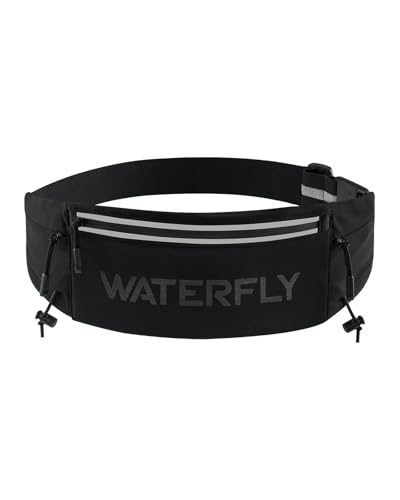
Best for: runners who need three pockets and prefer a breathable back panel. The front and back mesh promote moisture management and quick drying, maintaining comfort over long distances. The pockets are designed to hold essentials like a phone up to large sizes, energy gels, keys, and small items. The waistband is slim and designed to minimize bounce with a snug fit.
Selected for: its breathable design and multiple-pocket layout, which is advantageous for staging bib numbers and organizing race-day essentials. Limitation to note is that phone size compatibility can vary with different phone-and-case combinations, so users should verify fit with their device before race day.
AiRunTech Hydration Belt (Two 10 Oz Bottles)

Best for: runners who prioritize hydration on longer runs without carrying a separate bottle in hand. This belt includes two 10-ounce BPA-free bottles with leakproof nozzles, enabling easy access to water during movement. It is designed to stay low on the hips to reduce friction and bouncing, and features a 6.5-inch pocket that fits most phones up to a 6.5-inch screen. The belt is contoured for a secure fit during activity.
Choosing this belt: it suits endurance runs where hydration is critical. A caution is that the bottle pockets and the main pocket share space; when fully packed, there is less room for bulkier items. It’s best for runners who carry minimal extras beyond water, keys, and a phone.
AiRunTech Hydration Belt With Bottle

Best for: runners who want a compact hydration belt with a dedicated pocket for larger items. The belt includes a 6.5-inch pocket suitable for most smartphones and a BPA-free bottle option. The design focuses on anti-slip, snug fit with a stable low-positioning belt to minimize bounce. It’s a practical choice for shorter runs with hydration needs in mind or as a race-day accessory for warm weather.
Limitations to consider: the included bottle sizes are smaller than some long-run hydration systems, so plan for longer segments if you rely heavily on liquids. This model excels when you want a light setup with a hydration option rather than a full trainer pack.
Fitletic Running Belt with Side Pocket
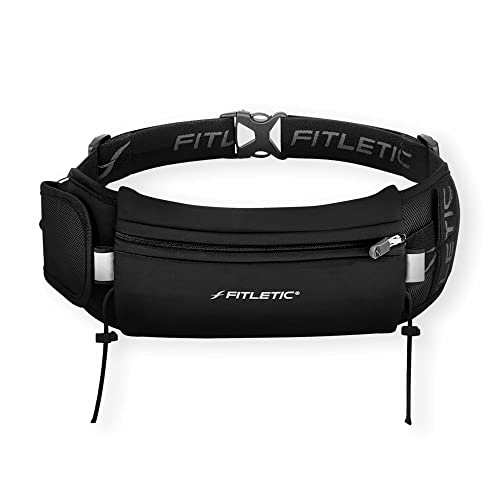
Best for: runners who want a race bib holder and gel loops in addition to standard phone storage. The Ultimate II belt features an inner pocket for ID and cards, four gel loops, bib toggles, and room for essentials. The No-Bounce design keeps the belt stable during fast paces or hilly courses. It’s a robust option for marathoners who carry gels, bibs, or multiple small items.
Limitation: the belt is somewhat larger than minimalist belts, so it may feel bulkier to runners who prefer a slim profile. Proper cinching helps mitigate bounce, but test-fit iterations are recommended for a comfortable long run.
Fitletic Hydration Running Belt – Hydra 16
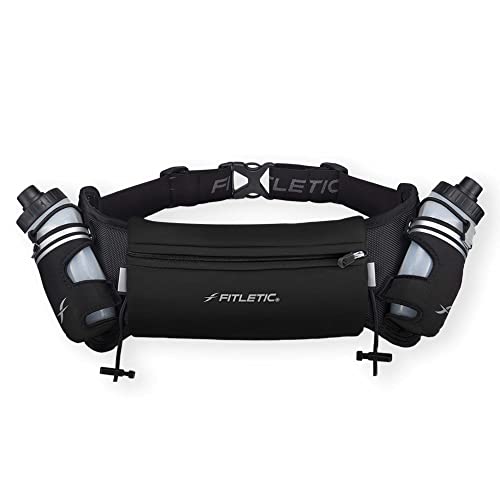
Best for: runners who want a hydrating belt with built-in water bottles and multiple features. The Hydra 16 belt includes 16 ounces of hydration capacity, a main pocket with inner organizers, two external gel holders, and reflective accents for safety. It’s designed for comfort with hip-hugging shaping that reduces bounce and supports a stable run over long distances.
Important note: this model prioritizes hydration and storage balance, so if you need maximum phone space or additional bulky items, you may want a larger pocket or alternative layout. It’s ideal for steady long runs where hydration is a top priority.
Buying Guide: Important Considerations For Marathon Runners
What should you look for when choosing a running belt for a marathon?
- Fit and bounce control: Look for a belt with a snug, hip-hugging design and adjustable straps. A no-bounce claim is helpful, but test fit with your typical running motion to confirm.
- Storage capacity and layout: Decide how many pockets you need and whether you want a dedicated pocket for a phone, keys, cards, gels, bibs, and/or hydration. Three pockets are a common sweet spot for many runners.
- Hydration options: Decide between no bottles, one bottle, or two bottles. Hydration belts can add weight; if you don’t rely on sipping during the run, a bottle-free design may be preferable.
- Phone compatibility: Consider your phone’s screen size and your typical case. Some belts fit large phones, while others are optimized for mid-size devices.
- Weather resilience: If you expect rain, choose a water-resistant or waterproof belt. Fully waterproof models are rare in running belts; water resistance is a practical compromise.
- Comfort and materials: Breathable fabrics and moisture-wicking back panels keep you cooler on long miles. Check for soft edges and secure closures to reduce chafing.
Frequently Asked Questions
- How do I prevent my belt from bouncing during a marathon?
- Should I carry hydration on race day?
- What size phone fits best in most belts?
- Are running belts waterproof?
- Can I wear a running belt with bib numbers?
- What should I pack in a belt for a marathon?
Choose a belt with a snug, hip-hugging fit and adjustable straps. Look for models with anti-slip designs and test-fit before race day to adjust placement and tension.
Hydration needs vary by distance and weather. For marathons, a few runners prefer a belt with bottles, while others use water stations. Consider your pace, weather, and personal hydration plan.
Most belts accommodate phones up to about 6.5 to 7 inches in screen size, but check the pocket dimensions and phone-case thickness to ensure a proper fit.
Most belts offer water resistance rather than full waterproofing. In heavy rain or extended exposure, moisture can seep through seams. Consider additional rain gear if conditions are extreme.
Yes. Many belts include bib toggles or loops to secure race bibs, reducing flutter and preventing loss during the course.
Common items include a smartphone, ID or credit cards, keys, a small amount of cash, energy gels or chews, and a lightweight wind or rain layer if needed. Choose a layout that minimizes clutter and movement.