Best Running Gloves for Winter: Top Picks for Cold-Weather Comfort
If you run outdoors in winter, you need gloves that keep your hands warm while preserving dexterity and touchscreen accuracy. This guide highlights five top winter-running gloves designed for cold days, wind, and light moisture. Each option targets a different need—best for high grip, best for touchscreen use, best for ultra-light feel, and more. Whether you’re a daily commuter, a weekend trail runner, or a casual walker, you’ll find gloves that suit your activities and climate.
Summary table of chosen products:
- SIMARI Winter Gloves: Best grip and reflective details for night visibility.
- Aerynx Lightweight Winter Gloves: Best balance of warmth and touch sensitivity.
- Unigear Running Gloves: Best all-around liner with anti-slip palms.
- Aerynx Winter Gloves X2: Best 3-layer warmth with wind-blocking mid-layer.
- Deemii Winter Gloves: Best 3M insulation for extended cold exposure.
SIMARI Winter Gloves For Warmth And Grip
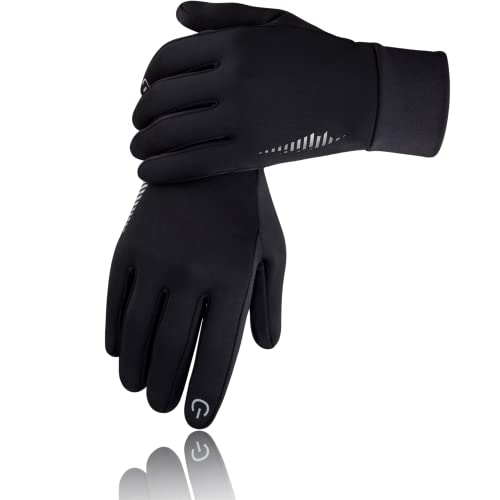
Best for: Runners who prioritize a strong grip and night safety. SIMARI gloves feature silicone palms for secure grip and reflective patterns on the back for visibility in low light. The lining combines warm flannel with a two-layer construction, delivering reliable warmth without bulk.
Why selected: The silicone grip plus reflective accents support safer handling of gear on winter runs, while the touch-screen capable fingertips ensure easy phone use without removing gloves.
Caution: Not waterproof; use a shell on heavy rain or snow to maintain dry hands during long sessions.
Aerynx Lightweight Winter Gloves X1

Best for: Runners who want a light, breathable liner with solid touchscreen responsiveness. Aerynx X1 uses a 320 gsm fleece shell with upgraded 3-finger touchscreen yarn on the thumb, index, and middle fingers for precise texting and map use.
Why selected: The combination of warmth and dexterity makes it suitable for cool runs where you don’t want bulky gloves. The water-repellent finish adds a layer of protection in light rain or snow.
Caution: Not fully waterproof; use a shell if you expect heavy rain or prolonged wet conditions.
Unigear Running Gloves: Versatile Liner Choice

Best for: Runners who want a versatile, breathable liner that works alone or under bulkier outer gloves. Unigear features anti-slip palms and durable conductive fabric on the thumb and forefinger tips for reliable touchscreen use.
Why selected: Its moisture-wicking properties and textured palms help keep hands comfortable when sweating on winter runs, with the option to layer up in harsher conditions.
Caution: Designed as liners; performance may vary when used as standalone gloves in extreme cold.
Aerynx Winter Gloves X2: Three-Layer Warmth
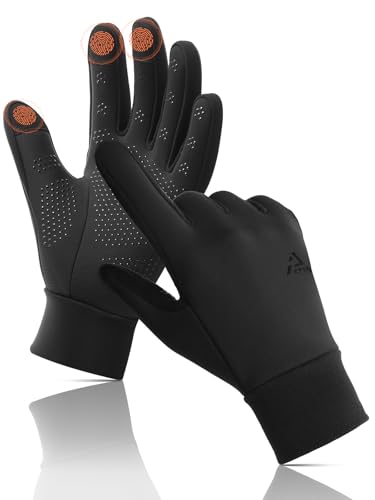
Best for: Those who endure more wind and need reliable wind-blocking and water-repellent protection. The 3-layer design includes a wind-blocking mid-layer and 320 gsm fleece for sustained warmth in 32–50 °F ranges.
Why selected: The multi-layer construction improves warmth without bulk and supports extended outdoor sessions in cold climates. Conductive yarn on thumb/index/middle fingers enhances touchscreen compatibility.
Caution: Layer with a shell in extended wet or freezing conditions for best protection.
Deemii Winter Gloves With 3M Thinsulate

Best for: Runners and outdoor enthusiasts who face consistently cold days and want advanced insulation. 3M Thinsulate insulation delivers superior warmth while maintaining dexterity for running, cycling, and driving.
Why selected: The dual-layer construction with a soft fleece lining locks in heat and the silicone-grip palm ensures secure handling of gear. Reflective logo improves visibility for early-morning or late-evening runs.
Caution: Outer layer is water resistant but not fully waterproof; avoid prolonged exposure to heavy rain without a protective shell.
Buying Guide: How To Choose Winter Running Gloves
- Warmth vs. Dexterity: If you value precise finger movement for maps and phones, choose gloves with conductive fingertips and a lightweight design. For harsher conditions, look for multi-layer insulation.
- Water Resistance: For light rain or snow, water-repellent or water-resistant outer layers work well. For heavier precipitation, pair with a waterproof outer shell.
- Grip And Reflectivity: A good grip is essential for handling gear and keeping your smartphone secure. Reflective elements help with visibility during low-light runs.
- Touchscreen Compatibility: Ensure the fingertips are designed for reliable touchscreen use, especially if you rely on GPS apps or music while running.
- Fit And Cuffs: Elastic cuffs help seal out cold air. Check size guidelines and look for an ergonomic cut that allows full wrist movement without bunching.
- Layering Options: Some gloves function well as liners under heavier outer gloves. If you train in extremely cold weather, consider a pair that can be layered.
- Durability And Care: Look for reinforced palms and machine-washable materials to extend glove life after regular winter use.
Frequently Asked Questions
- Are touchscreen gloves necessary for winter running?
They are convenient for staying connected and using apps without removing gloves, but not strictly necessary if you can tolerate taking them off briefly in cold weather. - What temperature range are these gloves suitable for?
Most listed options perform well around 32–50 °F, with some designed to layer for colder days. - Should I choose liners or full gloves?
Liners are versatile and can be layered under warmer outer gloves for extended cold exposure; full gloves provide warmth without layering. - Are these gloves waterproof?
Many are water-repellent rather than fully waterproof; pair with a waterproof shell in wet, heavy rain conditions. - How important is grip in winter gloves?
A secure grip helps prevent dropping gear and improves safety during runs and commutes in winter conditions.