Best Winter Running Spikes for Safer Trails and Roads
Answering your search for reliable winter running spikes, this guide compares top options for icy trails, packed sidewalks, and mixed terrain. Ideal buyers include road runners seeking grip on hard-packed ice, trail runners needing traction on icy singletrack, and hikers who want lightweight, easy-to-pack solutions. Below is a quick buying table of the five most relevant products, followed by detailed sections to help you choose.
| Product | Best For | Key Benefit |
|---|---|---|
| Kahtoola MICROspikes Ghost | Trail runners and lightweight hikers | Ultra-light weight with 12 spikes per foot |
| Kahtoola EXOspikes | Winter hiking and mixed terrain | Tough TPU traction matrix with 12 spikes |
| BLACK DIAMOND Distance Spike | Runners on icy road and snowy trails | Stainless steel spikes with hybrid softshell upper |
| Kahtoola NANOspikes | Road running and hard-packed snow | Low-profile design with 10 tungsten spikes |
| Yaktrax UltraGrip | Lightweight walking and running on ice | Carbide spikes with low-profile harness |
Kahtoola MICROspikes Ghost Winter Footwear Traction
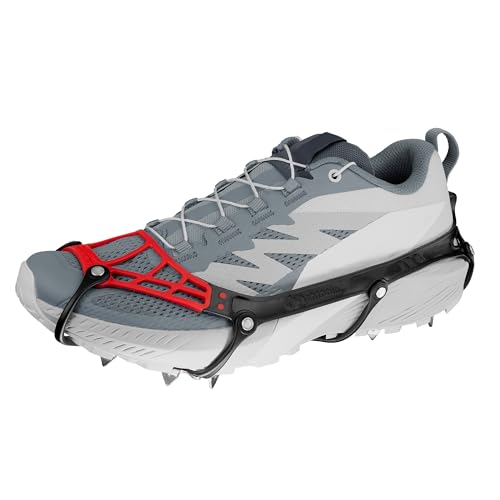
Best for: Trail runners and lightweight hikers who want minimal bulk with strong grip. The Ghost version replaces some steel with TPU and a rugged toe harness, reducing weight while keeping 12 spikes per foot for icy and uneven surfaces. The design emphasizes packability without sacrificing traction, making it a solid choice for runners who travel light.
Why selected: It blends ultralight construction with effective bite on ice. The articulated rivets and independent spike movement help shed snow and prevent buildup, maintaining consistent traction. A compact tote bag adds convenience for travelers and seasonal gear storage.
Considerations: While extremely light, the reduced metal content may appeal most to those prioritizing weight over maximum raw bite on extreme ice. Best used with flexible footwear like trail runners or light hikers.
Kahtoola EXOspikes Footwear Traction

Best for: Winter hiking and trail running on mixed terrain, including frozen mountain trails and icy roads. EXOspikes use a TPU Traction Matrix that is durable and abrasion resistant, with 12 spikes per foot for three levels of traction—ice, uneven surfaces, and loose snow.
Why selected: The open design sheds snow efficiently while adapting to many flexible footwear types. The combination of tungsten carbide tips for ice and aluminum steps for grip on uneven surfaces offers a versatile solution for variable winter conditions.
Caution: The matrix tread and open design may feel bulkier than ultra-light options, so consider your preferred weight and footwear fit if you prioritize a minimal footprint.
BLACK DIAMOND Distance Spike Traction Device
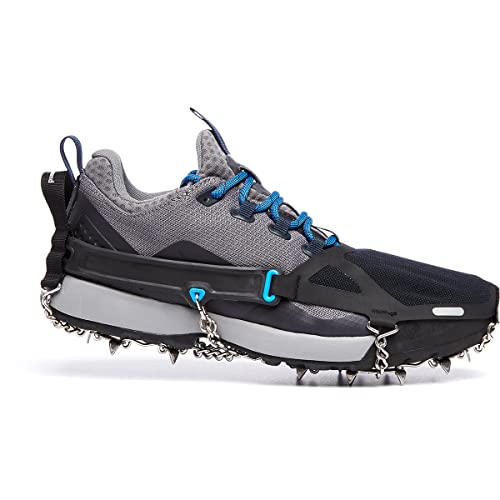
Best for: Runners and fastpackers seeking aggressive traction on icy and snowy terrain. The Distance Spike uses 14 stainless steel spikes per foot for dependable grip and stability on technical routes, with a hybrid softshell upper to seal out snow.
Why selected: The higher spike count increases bite on ice, while the softshell upper keeps snow from accumulating at the foot. This makes it a solid pick for technical winter routes where stability matters most.
Limitation: Stainless steel spikes can be slightly heavier; choose this if grip on technical ice outweighs weight considerations.
Kahtoola NANOspikes Footwear Traction

Best for: Road runners and walkers on hard-packed snow or icy sidewalks who want a minimal bounce and gait-neutral feel. The NANOspikes are redesigned for a low profile with 10 tungsten carbide spikes per foot and an improved secure fit.
Why selected: The compact design minimizes changes to foot strike, aiding natural running mechanics on slick surfaces. The heel tab and tow bail improve ease of use, making them a practical choice for daily commutes in winter weather.
Caution: Their lower spike count means slightly less bite on very hard ice compared with higher-spike models; choose this if shoe versatility and gait comfort are your priority.
Yaktrax UltraGrip Ice Cleats

Best for: Lightweight winter walking and running on snow and ice, especially when comfort and ease of use are priorities. The UltraGrip uses carbide spikes and a low-profile 3D harness to fit a wide range of footwear.
Why selected: The low-profile design preserves a natural stride, and the three-point harness provides a secure, adjustable fit. This option is well-suited for those who value quick on/off and minimal impact on gait.
Limitation: Some users may prefer higher spike counts for extremely icy conditions; consider this if you frequently encounter hard ice on frequent routes.
Buying Guide: Key Considerations For Winter Spike Shoes
- Terrain and use-case: Choose spikes with higher spike counts and robust harnesses if you encounter technical ice or mixed mountain trails. Opt for lighter designs for city runs on packed snow.
- Footwear compatibility: Ensure the spikes fit your running shoes or lightweight hiking shoes. Flexible uppers pair well with ultralight spikes, while hard shells suit more rugged footwear.
- Weight vs. durability: Lighter models enhance speed and comfort but may bite less on ice. Heavier, more durable models provide greater bite and longevity for frequent winter use.
- Ease of use: Look for quick on/off features, heel tabs, and easy removal when transitioning between surfaces (e.g., road to trail).
- Storage and portability: Compact totes or bags help keep spikes organized and protected when not in use.
FAQ
- Q: Do winter spikes work on all footwear? A: Most are designed to fit a range of running shoes and lightweight hiking footwear, but check size ranges and strap systems before buying.
- Q: Are there safety considerations with spikes? A: Follow manufacturer guidance on fit and avoid using spikes on bare rocky trails where the spikes may snag or slip.
- Q: How many spikes per foot should I look for? A: For icy conditions, 10–14 spikes per foot offer strong bite; for light use, 8–10 may suffice.
- Q: Can spikes be worn for running on pavement? A: They can be worn briefly on icy sidewalks, but long runs on pavement may wear spikes faster.
- Q: How do I maintain spikes? A: Rinse off mud, let dry, and store in their bag to minimize corrosion and wear.
- Q: Which option is best for commuting? A: Ultracompact designs with easy on/off and a secure fit work best for daily urban use.