Best Shoulder Braces for Volleyball: Support, Recovery, and Injury Prevention
Answering the need for reliable shoulder support during volleyball play and recovery, these braces help with pain relief, rotator cuff protection, and immobilization when needed. Best fits include athletes seeking performance stability, weekend players managing mild injuries, and those recovering from shoulder strain. The following selections emphasize breathable materials, adjustable fit, and targeted compression to curb overextension during spikes, serves, and digs. This guide compares five top options to help you choose the right brace for practice, games, and rehabilitation.
Summary at a glance: the top five braces for volleyball use cases include adjustable compression for active play, versatile sizes for left or right arms, and pockets for ice or heat therapy where available. The table below highlights the core strengths of each pick.
| Product | Best For | Key Benefit | Limitations |
|---|---|---|---|
| Komoko Shoulder Brace (Kmeivol) | All-around athletes | Durable neoprene, versatile fit | Rubber material may feel warm during long sessions |
| FIGHTECH Rotator Cuff Shoulder Brace | Rotator cuff support | 4 sizes, strong stabilization | Rigid sizing may limit comfort for some |
| BraceUP Shoulder Brace | Recovery with ice/heat therapy | Ice pad pocket, fully adjustable | One size may not fit all body types |
| Sparthos Shoulder Brace | Active wear with mobility | Moderate stabilization without restricting movement | Not for severe immobilization |
| NEXVOXA Shoulder Brace | Ergonomic daily support | Two sizes, ergonomic design | Two-size option may require precise sizing |
Komoko Shoulder Brace by Kmeivol
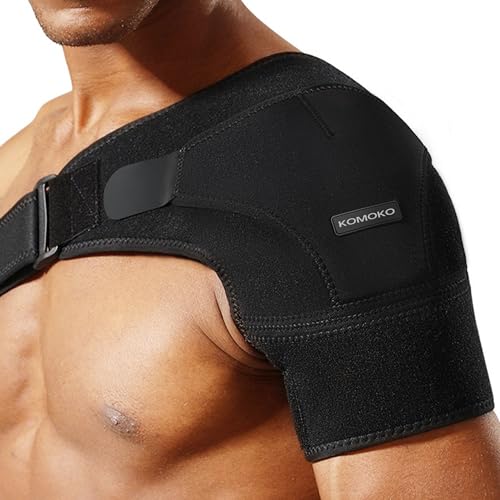
This brace is designed for speedier shoulder recovery and stability. It is built to resist abrasion and tears with durable neoprene and precision stitching. The design aims to support the shoulder while allowing movement, making it suitable for activities like running and weightlifting. Best for athletes who want continuous wear during practice and light activities to prevent overextension and protect the rotator cuff. A potential limitation is heat buildup in warmer conditions due to neoprene material.
FIGHTECH Rotator Cuff Shoulder Brace

Designed for medium to strong support, this brace provides steady, constant pressure to speed recovery and prevent re-injury. It can be used as a separate rotator cuff brace or in conjunction with dislocation or SLAP recovery protocols. Best for athletes who need reliable protection during training or games and want a reminder not to overextend the injured shoulder. A caveat is that it may feel restrictive for those who require full range of motion during certain drills.
BraceUP Shoulder Brace With Ice Pad Pocket

BraceUP emphasizes adjustability and therapy integration with an ice pad pocket for temperature-based recovery. Fully adjustable chest and bicep straps accommodate many body types, making it versatile for both men and women. The ice or heat therapy option supports inflammation reduction and pain management. The main limitation is that the pocket size or pad may not be included in all listings, potentially requiring separate purchase.
Sparthos Shoulder Brace
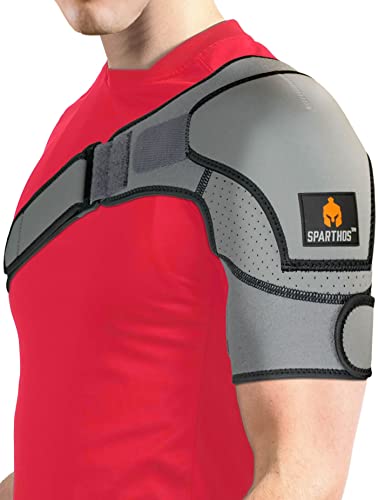
Offering moderate stabilization while preserving mobility, this brace is ideal for mild to moderate pain and common shoulder strains. It supports rotator cuff recovery and AC joint discomfort without overly restricting movement. Best for players who need ongoing support during practice but still require a full range of motion for drills. Not suitable for severe immobilization or post-surgical stability needs.
NEXVOXA Shoulder Brace
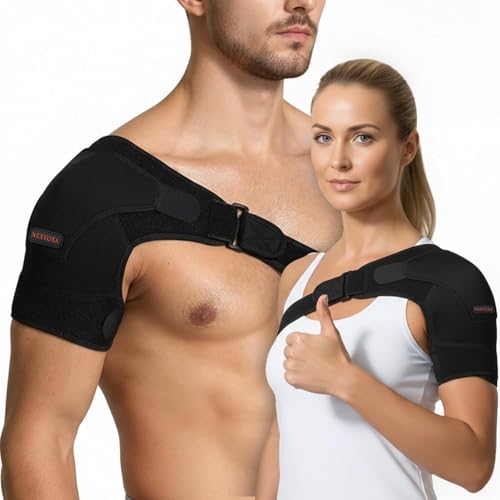
Follows an ergonomic design tailored by ergonomic and orthopedics researchers. It comes in two sizes and uses adjustable straps for comfort and stable support, making it well-suited for athletes, office workers, and those recovering from shoulder strain. Best for daily wear and long sessions where posture and shoulder alignment need consistent support. A consideration is ensuring correct sizing to achieve the claimed ergonomic fit.
Buying Guide
What should you look for when choosing a volleyball shoulder brace?
- Support level: Determine whether you need light stabilization for daily wear, moderate support for training, or firm stabilization for recovery. Braces with adjustable compression allow customization to your activity level.
- Fit and adjustability: Look for adjustable straps, open or closed design options, and left/right compatibility. A snug fit reduces slipping and maximizes targeted compression.
- Material and breathability: Neoprene offers durable support but can trap heat. Consider options with breathable panels or moisture-wicking fabrics for longer sessions.
- Therapy integration: Ice pad or hot/cold therapy pockets can aid recovery. Ensure pads are included or readily available for your brace.
- Mobility vs. immobilization: If you need to maintain a wide range of motion for drills, choose a brace that stabilizes without overly restricting movement.
- Versatility: Some braces fit both arms and can double as rotator cuff, AC joint, or dislocation protection—useful for recurring injuries.
Who should consider these braces?
- Volleyball players returning from rotator cuff or AC joint pain who require controlled stabilization.
- Athletes aiming to prevent overextension during spikes, serves, and blocks.
- Individuals seeking relief from mild shoulder strain or bursitis during practice and daily activities.
Practical tips for use
- Put on the brace before activity to ensure proper alignment and compression.
- Follow sizing charts carefully to avoid over-tightening, which can impede circulation.
- Use ice or heat therapy as recommended after sessions to manage swelling and soreness.
- Rotate between different braces if you have multiple shoulder needs (e.g., rotator cuff vs. dislocation risk).
FAQ
- Can a shoulder brace prevent injuries during volleyball? Yes, when used as part of a broader training and injury-prevention plan, a brace can limit overextension and stabilize the joint during dynamic moves.
- Are there braces that fit both arms? Some models are designed for left/right use and may offer universal sizing, but sizing charts should be checked for accurate fit.
- Do braces restrict range of motion? Certain braces provide firm stabilization; others are designed to preserve mobility. Choose based on your activity and recovery stage.
- Is ice therapy compatible with all braces? Many braces include ice pad pockets, but pads and packs may be sold separately in some listings.
- How long should I wear a shoulder brace daily? Follow medical guidance or product instructions; many athletes wear during practice and resting periods as advised by a clinician.
- What materials are best for sensitive skin? Look for breathable fabrics and seams that minimize irritation; consider hypoallergenic options if needed.