Best Shoulder Braces for Weightlifting and Recovery: Find the Right Support
When choosing a shoulder brace for weightlifting, focus on stability, compression, and comfort to protect the joint during lifts and aid recovery. These five options are picked for athletes and active individuals who want dependable support without sacrificing range of motion. Whether you’re rehabbing a rotator cuff, preventing strains, or seeking better joint control during lifts, the right brace can make a meaningful difference. The table below contrasts the key strengths of each product.
| Product | Best For | Notable Benefit |
|---|---|---|
| Komoko Shoulder Brace (KMEIVOL) | Rotator cuff rehab and general shoulder protection | Durable neoprene, adjustable fit, ice-pack ready |
| Sparthos Shoulder Brace (Adjustable) | Active lifting and mobility with stable support | Easy chest/arm strap adjustments for independence |
| FIGHTECH Rotator Cuff Shoulder Brace | Post-injury recovery and ongoing stabilization | Medium-to-strong support with targeted compression |
| Anaconda Fightwear Shoulder Brace | High-impact training and contact sports prep | 3D compression with detachable gel pad |
| NEXVOXA Shoulder Brace | Ergonomic wear for desk work and workouts | Two sizes for better ergonomic fit and stability |
Komoko Shoulder Brace For Rotator Cuff Support
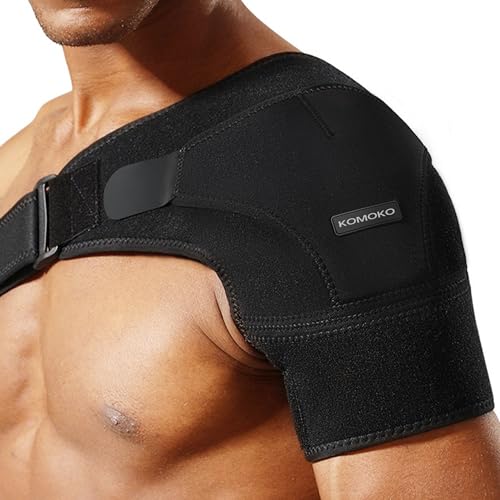
The Komoko shoulder brace targets quick rehabilitation and stability. It is designed to prevent overextension while supporting rotator cuff injuries and AC joint discomfort. Best for a weightlifter seeking a reliable rehab aid or someone needing steady compression during workouts. The neoprene construction and reinforced stitching provide durability for repeated use. Caution: not recommended for severe immobilization or for those with latex sensitivity in sensitive users.
Sparthos Adjustable Shoulder Brace
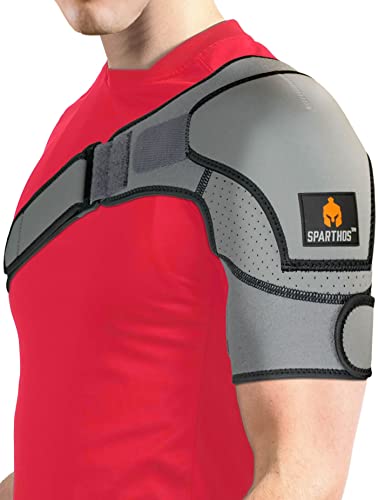
The Sparthos brace offers adjustable chest and arm straps for a custom fit, providing gentle compression and stabilizing support without overly restricting movement. It’s well-suited for mild-to-moderate shoulder pain, post-injury recovery, or ongoing shoulder strain. It’s better for active athletes who need a comfortable brace that won’t impede lifting. Limitation: not intended for severe immobilization or heavy external loads.
FIGHTECH Rotator Cuff Shoulder Brace

FIGHTECH provides stable, medium-to-strong support designed to speed recovery and deter re-injury. It supports scenarios like rotator cuff tear, bursitis, and tendonitis while allowing comfortable wear during daily activities and sleep. Choose this if you want persistent stabilization and a reminder to avoid heavy lifting with the affected arm. Caution: designed for stabilization, not immobilization in severe cases.
Anaconda Fightwear Shoulder Brace

Anaconda’s brace emphasizes high-impact training protection with a detachable gel pad for shock absorption. It stabilizes the joint using 3D compression and molds to the shoulder shape without feeling bulky. Best for athletes in contact sports or heavy lifting who need extra impact protection. Limitation: may feel bulkier than lightweight sleeves for some users during quick, unrestricted movements.
NEXVOXA 1 PC Shoulder Brace
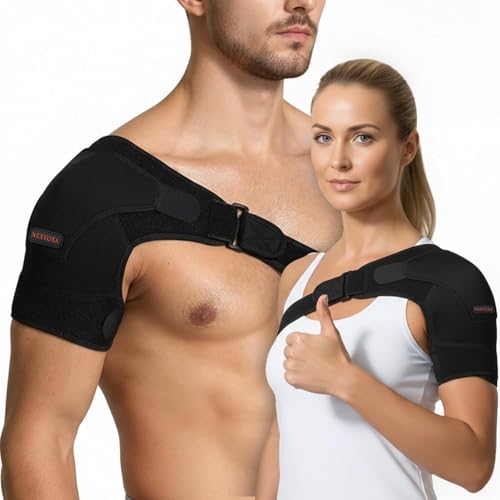
NEXVOXA focuses on ergonomic design with balanced compression for daily wear, desk work, and workouts. It’s offered in two sizes to fit a broader range of shoulder shapes and reduce chafing from long wear. Best for office workers who rotate through light workouts and need steady, all-day support. Caution: ensure proper sizing to prevent discomfort from poor fit.
Buying Guide: Key Purchase Considerations
- Purpose: Decide if you need rehab support, daily stabilization, or high-impact protection for training.
- Fit And Sizing: Look for adjustable straps, multiple sizes, and breathable materials to prevent irritation.
- Support Level: Choose between light, medium, and strong compression based on pain level and activity type.
- Mobility: Consider braces that maintain range of motion for weightlifting and athletic performance.
- Comfort Features: Gel pads, ice-pack compatibility, and flat seams reduce hotspots during long sessions.
Frequently Asked Questions
- What is the main difference between light and heavy compression braces?
– Light compression supports minor soreness and daily wear, while heavy compression provides stronger stabilization for injuries or post-surgery recovery. - Can I wear a shoulder brace while lifting heavy weights?
– Yes, if the brace is designed for athletic use and properly fitted to allow safe movement and stability. - How do I know which size to choose?
– Refer to the product’s sizing chart and measure your arm circumference and shoulder width when available. - Are gel pads necessary for shoulder braces?
– Gel pads offer extra shock absorption in high-impact training but are not required for all users or activities. - Can a shoulder brace worsen shoulder stiffness?
– If worn too tightly or for extended periods, it may cause discomfort; always follow manufacturer guidelines and consult a clinician if you have persistent stiffness. - Should I wear a brace after surgery?
– Follow your surgical team’s instructions; some braces are intended for post-op use, while others are for general stabilization and recovery.