Best Soccer Ball Options for a 7 Year Old: Safe, Durable and Easy to Handle
Finding the right soccer ball for a 7-year-old means balancing size, touch, durability, and price. The best options below are selected to suit young players who are learning basic kicks, dribbling, and control while enjoying the game. Each pick is described for who it’s best for and why, with practical notes on size and construction to help you compare quickly. This guide targets parents, coaches, and guardians shopping for a child around primary school age.
Summary table of chosen products
| Product | Best For | Size | Why It Stands Out |
|---|---|---|---|
| Adidas Starlancer Club Soccer Ball, 1 Pack | Casual play and backyard practice | Size varies by listing | Soft touch, durable construction, great air retention |
| Franklin Sports Size 3 Competition Soccer Ball | Beginner to intermediate training | Size 3 | Soft cover, weather-friendly, official sizing |
| Franklin Sports Mystic Kids Soccer Ball — Size 4 | Younger players practicing skills | Size 4 | Soft touch, high-quality cover, pump included |
| Champion Prodigy Soccer Ball — Size 4 | Structured drills and casual games | Size 4 | Matte finish, 32-panel design, durable PVC and butyl bladder |
| Champion Sports Viper Soccer Ball — Size 5 | Later-stage training or older kids | Size 5 | Soft touch cover, reliable air retention |
Adidas Starlancer Club Soccer Ball, 1 Pack

- Model features a resilient butyl bladder for consistent air retention during casual games.
- Machine-stitched construction provides a soft touch with high durability, making it suitable for frequent use by kids.
- Designed to keep its shape well, which helps new players develop confidence with each touch.
Best for: Families seeking a reliable, everyday ball for backyard practice and light scrimmages. Choose this if you want a trusted brand with practical performance for a child who is still mastering control and passing accuracy. Caution: Some listings may vary in size; verify the size before purchase to ensure it matches your child’s development stage.
Franklin Sports Size 3 Competition Soccer Ball
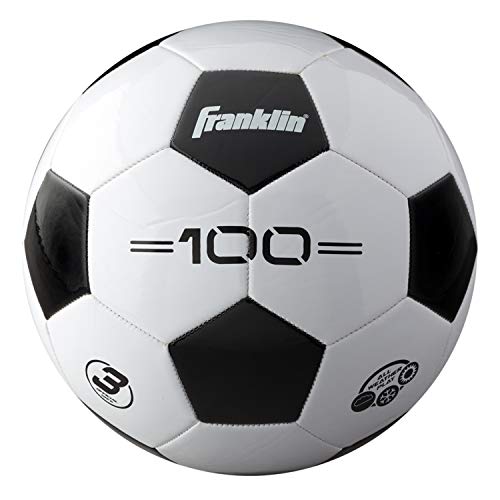
- Soft cover cushioning reduces sting on headers, which is especially helpful for young players still learning control.
- All-weather PVC cover adds water resistance, helping the ball stay playable in rain or damp fields.
- Available in official sizes; size 3 is a common starting point for younger players practicing basic dribbling and shooting.
Best for: Beginners and early learners who need a forgiving surface and predictable performance. Better for: practices focused on ball handling and short passes. Limitation: If your child progresses quickly, you may need to move up to a larger size in a few months.
Franklin Sports Mystic Kids Soccer Ball – Size 4

- Official Size 4 designed for younger players developing skills like dribbling and control.
- Premium PVC cover offers a high-gloss, abrasion-resistant surface that holds up to all-season play.
- Foam cushioning under the cover provides a soft, responsive touch for easier ball control and softer headers.
Best for: Youth players transitioning from size 3 to size 4, or for family practice sessions at home. Choose this if you want a ball that balances soft feel with durable construction. Limitation: Some players may outgrow size 4 after several months of rapid growth or skill development.
Champion Prodigy Soccer Ball (Size 4)

- 32-panel design and a matte finish support better flight stability and ball control for practicing passes and dribbles.
- PVC cover with a butyl bladder provides durability and good air retention for frequent sessions.
- Versatile for indoor and outdoor use, making it suitable for backyards or gym practice.
Best for: Players who want reliable training ball that feels true on contact and performs well in both indoor and outdoor environments. Choose this if you want a ball that helps with technique through consistent bounce and control. Caution: The matte finish can show scuffs more than polished surfaces after rough play.
Champion Sports Viper Soccer Ball, Size 5

- Soft touch PU synthetic leather cover lends comfortable feel during longer sessions.
- Airlock butyl bladder emphasizes air retention to reduce inflations between uses.
- Designed for ages 12 and up, but can still be suitable for older children practicing advanced skills.
Best for: Older children or players who have progressed beyond size 4 and want to train with a fuller game-ready ball. Better for: field practice on grass or turf where a standard size 5 ball is typical. Limitation: Size 5 may be too large for most 7-year-olds learning basic control, so consider starting with a smaller size and progressing upward.
Buying Guide: Key Purchase Considerations
- Size vs. Age: For 7-year-olds, usually sizes 3 or 4 are most appropriate. Size 5 is common for older kids or advanced players.
- Touch and Feel: A soft cover helps with comfortable ball control as beginners practice dribbling and shooting.
- Durability: Look for cloth or leather-like surfaces with reinforced stitching and a reliable bladder for long-lasting play.
- Air Retention: A butyl bladder tends to hold air longer than latex; consider this for less frequent inflations.
- Indoor vs. Outdoor: If your child practices indoors or on smooth surfaces, a ball with good stopping control and a matte finish can help prevent slips.
- Maintenance: Pumps or inflation gauges can be helpful, especially for younger players who frequently adjust air pressure to maintain feel.
Frequently Asked Questions
- What size ball should a 7-year-old use? – Generally size 3 or size 4 is recommended for young players, with size 3 often suitable for beginners and size 4 for those advancing skills.
- Is a soft-touch ball better for beginners? – Yes. A ball with a cushioned cover helps reduce sting on contact and supports easier control during early practice.
- Why is air retention important? – Good air retention keeps the ball’s feel consistent during practice and reduces the need for frequent inflations.
- Should I choose a ball for indoor or outdoor use? – Outdoor balls tend to be more durable and suited for longer practice on grass or turf, while indoor balls prioritize control for gym surfaces.
- Is it worth getting a pump included? – Pumps help ensure the ball stays at the correct pressure, which is helpful for young players learning proper touch.
- When should I upgrade sizes? – If your child consistently dominates the ball, or shows improved passing and shooting accuracy, consider moving up from size 3 to size 4, and later to size 5 as needed.