Best Soft Foam Softballs for Practice: Safe Training Balls for All Skill Levels
Opening the right practice ball can boost confidence and skill without risking injuries. This guide highlights five foam softball options ideal for beginners, kids, and casual play, covering indoor and outdoor use. Each product section notes who it’s best for and why it was selected, plus a practical caveat. A brief buying guide and FAQs follow to help you compare features and make a quick decision.
| Product | Best For | Why It Stands Out |
|---|---|---|
| Avesfer Practice Foam Softballs | Beginner players, kids | 11-inch, lightweight, safe PU foam with a mesh bag for easy organization |
| Urspasol Practice Foam Softballs | All ages, casual training | Official 12-inch size, very light, includes mesh carry bag |
| Franklin Sports Foam Practice Softballs | Youth training | ULTRA-SOFT, easy-to-see neon color for tracking in drills |
| Swax Training Softball 2-Pack | Indoor/outdoor spaces with smaller footprint | 11” size, reduced flight distance for safer spaces |
| PHINIX 11 Inch Foam Softball 4 Pack | Family practice | Ultra-soft, light weight, great for kids and beginners |
Avesfer Practice Foam Softballs 11 Inch — 6 Pack

The Avesfer set includes six 11-inch foam softballs designed for safe batting, throwing, and catching. Crafted from PU foam, they offer softness with rebound stability, making them suitable for beginners and younger players. Ideal for indoor practice and light outdoor sessions, these are best for practicing fundamentals without contact injuries.
- Best for beginners and younger players seeking a soft, forgiving ball.
- Lightweight at about 1.7 oz per ball; includes a mesh bag for easy storage.
- Caution: Foam can wear with aggressive use or rough surfaces; use on padded or soft ground.
Urspasol Practice Foam Softballs 12 Inch
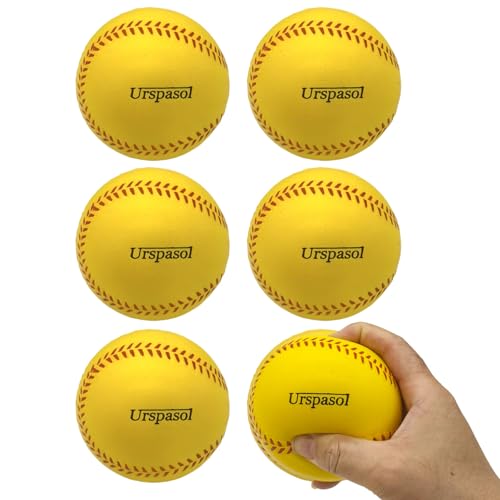
Urspasol offers an official 12-inch size with a light 62g weight, crafted from durable PU foam for a realistic feel with safer impact. The 6-pack comes with a mesh bag for portability, making it well-suited for kids and teens practicing at parks or team drills, as well as casual home sessions.
- Best for all ages and skill levels wanting a realistic feel with low risk.
- Lightweight construction supports extended practice without fatigue.
- Caution: Larger size may require more space; avoid confined indoor areas with fragile surroundings.
Franklin Sports Foam Practice Softballs

Franklin Sports offers oversized, ultra-soft foam softballs with bright neon coloring to enhance visibility for kids learning throwing, catching, fielding, and hitting. Suitable for indoor and outdoor use, these squishy balls prioritize safety while encouraging repetitive practice in varied environments.
- Best for youth training and drills that require easy tracking and safe contact.
- Indoor/outdoor versatility with high-visibility coloring.
- Caution: The very soft construction may deform with heavy impact; use on forgiving surfaces.
Swax Training Softball 2-Pack

Swax’s 2-pack features official 11-inch practice balls designed for safer indoor and outdoor training. The reduced-flight design helps players build confidence before progressing to full-speed swings, making it a solid choice for limited spaces such as garages or gyms.
- Best for confined spaces and beginners building real-contact timing.
- 50% reduced flight distance aids controlled practice drills.
- Caution: Fewer balls may increase drill time if you rely on multiple reps in group settings.
PHINIX 11 Inch Foam Softball 4 Pack

PHINIX offers a four-pack of ultra-soft 11-inch foam softball balls, weighing about 1.5 ounces each. The lightweight design makes them friendly for beginners and younger players, enabling longer practice sessions with less fatigue and reduced impact on indoor surfaces.
- Best for families and beginners focusing on technique rather than power.
- Ultra-soft construction improves safety during early-handling drills.
- Caution: Slightly less durability under heavy, repetitive hits compared to firmer practice balls.
Buying Guide: Key Considerations For Foam Softballs
- Size and weight: 11-inch is standard for baseball-style practice; 12-inch is common for softball training. Lighter weight reduces fatigue and injury risk.
- Material and softness: PU foam provides a safe, plush feel. Softer balls are best for beginners; firmer foam can offer more realistic bounce for experienced players.
- Indoor vs outdoor use: Look for low-velocity, safe designs for indoor use; outdoor-friendly options may tolerate rougher surfaces.
- Visibility: Neon or bright colors help young players track the ball during drills and games.
- Portability and storage: Mesh carry bags or included bags make transport to parks or fields easier.
- Durability: Rebound and shape retention vary by brand; consider the expected drill intensity when choosing.
- Safety emphasis: For beginners and kids, safety-first foam balls reduce risk of injuries during throws, catches, and swings.
Frequently Asked Questions
- What size foam softball is best for beginners?
11-inch foam softballs are common for beginner practice and general training, offering a balance of visibility and ease of handling.
- Are foam softballs safe for indoor use?
Yes. Most foam balls are designed for indoor nets, gyms, or basements without damaging surfaces.
- Do foam softballs fly similarly to standard balls?
They have a reduced flight distance or softer impact, which helps with controlled practice in small or crowded spaces.
- Should I choose a 6-pack or a 4-pack?
Choose based on practice frequency and group drills. More balls reduce downtime between reps during team sessions.
- Is weight important for learning throwing and catching?
Yes. Lighter foam balls reduce forearm fatigue and injury risk, making early drills easier and safer.
- Can foam balls be used for coaching drills?
Absolutely. Foam balls are commonly used for teambuilding, net drills, and skill-building exercises.