Best Static Rope for Rappelling and Climbing Gear
Find the best static rope for rappelling, tree work, rescue, or outdoor climbs. This guide highlights five top options, detailing who each rope is best for, and why it suits specific activities. Compare strength, length, diameter, and handling to choose confidently for your next ascent or descent. Buyers will value straight answers about suitability, wear resistance, and ease of knotting.
| Product | Diameter | Length | Breaking Strength | Best For |
|---|---|---|---|---|
| Lopevex 1/2″ Static Climbing Rope (150 ft) | 1/2 inch | 150 ft | 9000 lbs | Heavy-duty rigging, tree work, and long descents |
| VEVOR 12.7mm Static Rope (200 ft) | 12.7 mm | 200 ft | 30 kN | Outdoor climbs, escape, and rescue scenarios |
| AOLEBA 10.5 mm Static Rope (various lengths) | 10.5 mm | 10–230 ft options | 23 kN | CE-certified, versatile outdoor use |
| Lopevex 1/2″ Static Rope (100 ft) | 1/2 inch | 100 ft | 9000 lbs | Tree work, camping, emergency rescue |
| Hopeseily Static Rope 1/2″ (100 ft) | 12 mm | 100 ft | 32.4 kN | Safer handling, high visibility, dependable control |
Lopevex 1/2 Inch Static Rope — 150 Ft

The Lopevex 1/2 inch static rope is engineered for high-strength performance with a 9000 lb static tensile rating. Its 48-strand braided core enhances load-bearing stability, making it suitable for tree pulling, rigging, and long rappels. The 150 ft length supports extended descents without frequent re-roping, and the outer polyester sheath resists moisture, UV exposure, and abrasion. Best for professionals who need durable, versatile arborist rope that remains manageable during knotting and handling.
- Best for: heavy-duty rigging, tree work, long rappels
- Why selected: combination of high strength, long length, and flexible handling
- Caution: extended exposure to sun and grit can still wear the sheath over time; inspect for fraying
VEVOR 12.7mm Static Rope 200ft
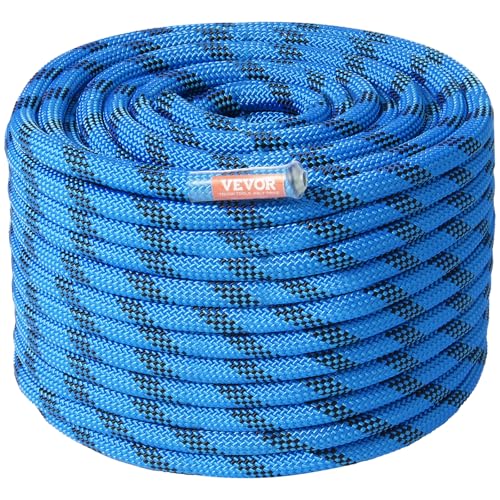
The VEVOR rope has a 12.7 mm diameter and 200 ft length, offering a 30 kN breaking tension. Its low-stretch construction reduces elongation to about 4%, enabling precise, controlled descents. The braided polyester design improves abrasion resistance, making it well-suited for outdoor climbs, rescue scenarios, and escape needs. It is a reliable option when a balance of diameter, strength, and length matters.
- Best for: outdoor climbing, rescue and escape use
- Why selected: strong breaking tension with manageable elongation
- Caution: larger diameter may be heavier; consider weight sensitivity for long carries
AOLEBA 10.5mm Static Rope — 10–230 ft

The AOLEBA rope uses a 10.5 mm diameter with multiple length options from 10 to 230 ft. It meets CE EN 892 standards and has a pull force around 23 kN. The bright coloration improves visibility in varied weather, which helps with quick rope tracking and safety checks. It emphasizes abrasion resistance and strong knot-holding ability for reliable climbing and rescue work.
- Best for: CE-certified reliability and visibility in outdoor settings
- Why selected: versatile length options and standard compliance
- Caution: ensure length matches task to avoid unnecessary weight or slack
Lopevex 1/2 Inch Static Rope — 100 Ft

This 100 ft Lopevex rope mirrors the 150 ft version with a 9000 lb strength and the same 48-strand braided construction. It’s ideal for shorter tree work, anchor setup, or rapid deployment during emergencies. The weather- and abrasion-resistant outer sheath helps maintain flexibility and reduce fraying over time. Choose this when you need a compact option without sacrificing load capacity.
- Best for: shorter rappels and quick setup
- Why selected: same high strength in a shorter length
- Caution: shorter length may require more rope shifts during long climbs
Hopeseily Static Rope 1/2″ x 100ft

The Hopeseily rope features a 48-strand polyester core with a bright red sheath for high visibility. Its 100 ft length and 3% elongation offer stable, predictable handling for demanding tasks. The rope’s construction emphasizes abrasion resistance and secure knot performance, making it a solid all-around choice for outdoor rappelling, rescue, and camping use.
- Best for: visible, dependable handling in varied terrain
- Why selected: high-visibility color and low elongation
- Caution: ensure knotting technique matches rope diameter to prevent slippage
Buying Guide
Key considerations help align rope choice with your intended use and safety requirements. Diameter, length, strength, and material all influence handling, weight, and performance. Read on for practical decision points.
What diameter do you need?
Thicker ropes (around 12-13 mm) provide higher strength and durability, but are heavier and harder to carry on long climbs. Narrower options (around 10.5–12 mm) offer lighter handling with sufficient strength for most rappelling and rescue tasks. Match diameter to your activity and leg/back load comfort.
How long should the rope be?
Longer ropes reduce the need for frequent re-roping but add weight. For tree work or camping, 100–150 ft is common. For outdoor escape or rescue scenarios, 200 ft or more can be beneficial. Consider your typical descent height and rigging setup.
What about strength and stretch?
Static ropes prioritize minimal elongation to keep descent controlled. Look for low elongation (around 3–4%) and a high breaking strength (often 30 kN or more). Higher strength supports heavier loads and dynamic operations in rugged environments.
Are there certifications to look for?
CE EN 1891 Type A (UIAA/EN standards) is a common benchmark for static climbing ropes. Certification indicates safer performance under expected loads, but always verify the specific standard listed by the manufacturer and ensure it matches your regional safety requirements.
What about visibility and handling?
Ropes with bright sheath colors improve visibility in low-light conditions and cluttered terrains. A braided outer sheath enhances abrasion resistance, which matters for rocky terrain or frequent rubbing against branches and hardware. Consider how easy it is to knot and clip for your task.
How should you inspect and maintain?
Regularly inspect for fraying, core damage, or stiffness. Store rope away from direct sunlight and chemicals. Clean when necessary and retire a rope if any core strands are exposed, seams open, or performance degrades significantly.
Quick comparison tips
- Best for heavy-duty rigging: Lopevex 150 ft or 100 ft versions with 9000 lb strength
- Best all-around value for outdoor use: AOLEBA 10.5 mm with CE certification
- Best for visibility and controlled descents: Hopeseily 12 mm, red sheath
FAQ
- What is a static rope? A static rope has minimal stretch, making it suitable for rappelling, rescue, and rigging where controlled movement is essential.
- How do you choose rope length? Choose length based on typical descent height, rigging setup, and the need for redundancy or backup anchors.
- Is a higher diameter always better? Not necessarily. Higher diameter increases strength but adds weight and bulk, which may be undesirable for long carries or tight spaces.
- Do ropes require certifications? Certifications indicate adherence to safety standards, but always verify compatibility with your region’s safety regulations and your equipment’s requirements.
- Can I reuse rope after abrasion? Inspect for core damage or fraying. If in doubt, retire the rope to avoid potential failure during use.
- What maintenance helps longevity? Keep rope clean, dry, and away from UV exposure when not in use. Store loosely coiled away from solvents and sharp edges.