Best Stretch Belt for Exercise: Top Straps for Flexibility and Physical Therapy
Answering the common question of which stretch belt for exercise works best depends on your goals. For beginners seeking safe, guided stretching, look for non-elastic straps with multiple loops. For rehab or mobility work, select straps that offer durable construction, comfortable handles, and clear loop guidance. This guide highlights five top belts that balance stability, versatility, and user safety for home workouts, physical therapy, and athletic training.
Buyers often want a quick shortlist. Below is a summary table of the five reviewed products to guide your decision before diving into each option.
| Product | Best For | Key Benefit | Notable Limitation |
|---|---|---|---|
| Abiarst Stretching Strap with 10 Loops | General flexibility and rehab | Long loops, durable fabric, skin-friendly dye | Non-elastic; may feel stiff at first |
| CTRL Sports Stretching Strap With Loops | Structured self-monitoring | Numbered loops and neoprene handles | Non-elastic nylon; heavier design |
| Trideer Stretching Strap with 10 Loops | Comprehensive mobility | Sturdy polypropylene; versatile for many workouts | Uncolored generic packaging |
| Oak-Sports Stretch Strap With Loops | Beginner to intermediate stretches | Non-elastic nylon; 75 inches long | Limited color options |
| OPTP The Original Stretch Out Strap | Therapy and mobility baseline | Classic design trusted by therapists | Older design may feel basic to some users |
Abiarst Stretching Strap Yoga Straps
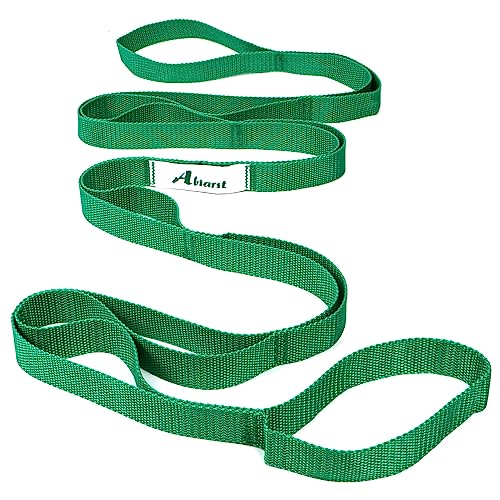
Best for: beginners and physical therapy routines requiring longer reach. This strap uses a durable fabric that won’t fray, and features 10 loops across a 75-inch length. The skin-friendly dye helps with sensitive skin users, and the wide 1-inch strap provides stable grip during deep stretches. Use for daily mobility work, Yoga, Pilates, or light gymnastics practice. Limitations: non-elastic design means you control the stretch intensity; beginners may need time to acclimate to the loop spacing.
CTRL Sports Stretching Strap With Loops

Best for: users who want self-monitoring guidance during stretching. This non-elastic strap includes numbered loops and neoprene handles to cushion the hands and feet, aiding safer progression through moves. The nylon construction offers stability and resistance, suitable for physical therapy, ballet, dance, and fitness routines. Caution: the non-elastic design requires deliberate control; overzealous force can increase strain if not paced properly.
Trideer Stretching Strap With Loops

Best for: users seeking broad versatility for warmups, post-workout conditioning, and rehab. Made from sturdy polypropylene, this strap emphasizes stability and long-lasting use. It supports a wide range of activities—from yoga to Pilates and physical therapy—and helps with knee range of motion and injury prevention. Limitation: some users may prefer extra padding on grips for extended sessions.
Oak-Sports Stretching Strap With Loops

Best for: beginners and casual practitioners who want a manageable stretch routine. This 75-inch nylon strap with 10 loops and a comfortable width supports leg, back, and shoulder stretches. It’s light, easy to carry with a small bag, and designed for simple, repeatable sequences. Caution: ensure loops are evenly engaged to prevent uneven tension during a stretch.
OPTP The Original Stretch Out Strap

Best for: therapy-focused users and clinicians seeking a trusted baseline strap. The original design, introduced in 1993, remains a staple recommended by physical therapists for mobility and flexibility work. It supports a broad range of exercises, including leg and upper-body stretches, and promotes safer range-of-motion improvements. Limitation: lacks some of the advanced loop features found in newer models, which may affect precise position tracking for some users.
Buying Guide: How To Choose The Right Stretch Belt For Exercise
Purpose matters. Decide whether you mainly need rehab support, general flexibility, or sport-specific mobility. For safe entry, prioritize non-elastic nylon or cotton straps with multiple loops and clear grip points. Consider loop count, strap length, and width to fit your height and body proportions. Durable materials and comfortable handles reduce hand fatigue during longer sessions. If you track progress, look for numbered loops or marked positions to help you repeat successful stretches.
Material and build quality affect longevity. Non-elastic options provide consistent tension, which is ideal for guided mobility and post-injury rehab. Elastic-free designs finish with reinforced stitching to withstand frequent use. If you perform many routines in different environments, a compact strap with a carrying bag improves portability. Always check care instructions; washable fabrics extend lifespan and maintain skin-friendly properties.
Usage scenarios. For yoga and Pilates, choose straps with a comfortable grip and stable loops. For physical therapy or knee and hamstring work, a strap with precise loop spacing helps reproduce clinician-recommended positions. For dancers and athletes, consider straps with higher durability and a longer length to accommodate full-range movements. Safety tip: start with light tension and progressively increase as form improves to avoid joint or muscle strain.
Frequently Asked Questions
- What is a stretch belt for exercise best used for? It’s used to improve flexibility, range of motion, and muscle recovery across yoga, Pilates, and physical therapy routines.
- Do non-elastic straps limit progress? Non-elastic straps provide controlled tension, which helps with safe progression but require mindful pacing as you increase flexibility.
- Are loops or no-loops better? Looped designs guide hand and limb placement, offering repeatable positions, while non-looped straps may require more self-guided tracking.
- How do I choose the right length? A longer strap supports taller individuals and deeper stretches, while shorter straps are more portable and easier for beginners.
- Can these straps aid post-surgery mobility? Yes, many straps are designed for rehabilitation use, but always follow medical guidance for post-operative exercises.
- What maintenance helps longevity? Regular washing, air drying, and avoiding harsh chemicals preserve fabric integrity and loop function.