Best Stretch Cords for Swimming to Boost in-Pool and Dryland Training
Stretch cords for swimming help lifelike resistance whether you’re in the water or training on land. This guide highlights five top options to match different needs: in-pool resistance, belt-based tethering, dryland strength work, and adjustable fits. Best for athletes seeking to improve speed, endurance, and stroke efficiency across all four strokes.
The table below compares the five selected products at a glance to aid quick decisions.
| Product | Best For | Resistance Range | Key Benefit |
|---|---|---|---|
| Advanced swim training | 12–31 lbs | High resistance for sprint work and strength endurance | |
| Endurance and technique work | 8–24 lbs | Versatile resistance for longer sets | |
| FINIS Dryland Cords | Dryland strength and mobility | Variable bands (full upper body) | Targets arms, chest, shoulders, and core |
| FEROK PRO Swimming Resistance Band With Hand Paddles | Pool-compatible resistance with paddles | Medium resistance in bundle | Pool-simulated strokes with added paddle feedback |
| UCEDER Swim Belt With 2.2M Bungee Cord | In-place swimming and tether training | 2.2 m cord length (adjustable belt) | Stable belt system for stationary workouts |
NZ Manufacturing StretchCordz Long Belt Red 12-31 Lbs
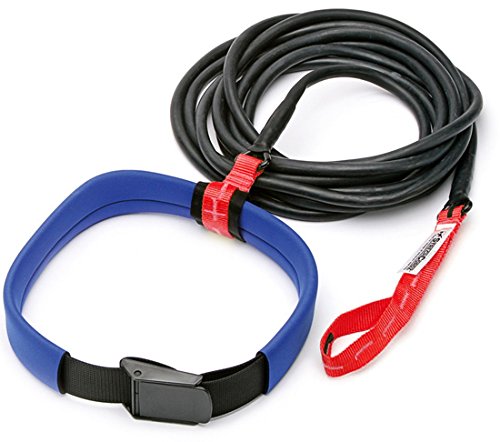
The Red Belt offers a wide resistance range of 12–31 pounds, making it suitable for stronger swimmers and sprint-focused sets. It features a padded 2-inch waist belt that fits up to a 44-inch waist and connects to 20 feet of latex tubing with a sliding attachment for unrestricted movement. Best for advanced athletes or intermediate swimmers working on top-end power. A potential limitation is the higher resistance, which may be challenging for beginners or those rebuilding form after an injury.
NZ Manufacturing StretchCordz Long Belt Slider Green 8-24 Lbs

The Green Belt provides 8–24 pounds of resistance, offering a versatile option for steady-state sets and technique work. Its 2-inch padded belt accommodates up to a 44-inch waist, and the system uses a 20-foot latex tube with a sliding attachment for freedom of movement. Choose this if you want a balance of resistance and control during in-pool workouts. Avoid this if you primarily need the highest possible resistance for power sprints.
FINIS Dryland Cords – Swim Resistance Bands

FINIS Dryland Cords are designed for off-season or rehabilitation work, focusing on strengthening key muscle groups across the arms, chest, shoulders, and core. They serve as a comprehensive resistance tool for improving range of motion and swim-specific strength. Best for athletes needing a total-body dryland routine aligned with swim performance. A limitation is that the cords are used off the water, so gains must transfer to in-water technique and timing.
FEROK PRO – Swimming Resistance Band With Hand Paddles

FEROK PRO combines resistance bands with hand paddles to closely mimic pool swimming resistance. The ergonomic paddles reduce friction and improve comfort during sessions. Includes a training guide with routines, providing a guided approach for workouts. Best for swimmers seeking a pool-like feel during dryland or transfer training. A potential limitation is that paddles add surface area that may alter grip or stroke feel for some users.
UCEDER Swim Belt With 2.2M Bungee Cord

The UCEDER Swim Belt delivers a 2.2-meter bungee cord for adjustable resistance in a stationary pool setup. The belt uses natural latex and neoprene for a skin-friendly, durable fit and includes a nylon loop to anchor to fixed points like pool ladders or rails. Best for swimmers who want a reliable in-place workout and adjustable tension. A minor limitation is the cord length, which may require poolside anchoring to maximize resistance in certain layouts.
Buying Guide
What should you consider when choosing stretch cords for swimming?
- In-water vs. dryland use: In-pool systems (belt-based or band) simulate swim resistance, while dryland cords build strength without water drag. Pick based on training season and goals.
- Resistance range: Higher ranges suit sprint training and advanced athletes; lower ranges work well for technique, rehab, or beginners.
- Fit and comfort: Look for padded belts and skin-friendly materials. Adjustable belts help accommodate different waist sizes and ensure secure resistance without slipping.
- Attachment and freedom of movement: Sliding attachments or multiple tubes can affect how freely you move. Choose options that align with your stroke style and space.
- Portability and setup: A compact, lightweight system is ideal for travel or gym use. Consider ease of anchoring in the pool or at a fixed point.
Frequently Asked Questions
- What resistance level is best for beginners?
Start with the lower end of the spectrum (roughly 8–14 lbs) or a light dryland set to build proper form before increasing resistance.
- Can these cords replace pool training entirely?
No. They supplement in-water practice but do not fully replicate all hydrodynamic aspects of swimming in a lane.
- Are belt-based systems suitable for all pool types?
Most are compatible with standard lap pools, but ensure anchoring stability and clearance for the belt’s movement.
- Which option is best for rehabilitation?
Dryland cords with guided routines can support gradual strength rebuilding, but consult a clinician if recovering from injury.
- Do these cords improve swimming speed?
Yes, by strengthening propulsion muscles and improving stroke timing when used consistently with proper technique.