Best Studded Tires for Bikes: Top Choices for Snow, Ice, and Off‑Road Riding
Looking for studded tires to conquer snow, ice, or loose terrain on bikes? This guide covers five solid options that balance traction, durability, and compatibility across fat bikes and e-bikes. Each option targets riders who prioritize safety in winter conditions, be it commuters, trail riders, or fat-tire enthusiasts. Below you’ll find quick comparisons, why each tire stands out, and practical buying tips to help you choose the right model for your riding style.
A quick comparison table summarizes the featured tires, highlighting size, best use, and notable traits to help you decide at a glance.
| Product | |||
|---|---|---|---|
| WEEROCK 20×4.0 Studded Snow Tire | 20×4.0 | 20″ fat bikes, e-bikes in snow | High-density carbide studs for ice grip |
| WEEROCK 26×4.0 Studded Snow Tire | 26×4.0 | 26″ fat bikes, snow trails | Excellent flotation on soft surfaces |
| WEEROCK 26×4.0 Studded Snow Tire (Second Variant) | 26×4.0 | Fat bikes in winter environments | Same studded traction with robust construction |
| MAKELEN 20×4.0 / 26×4.0 Studded Tires | 20×4.0 or 26×4.0 | Versatile for multiple fat bikes | Deep tread with steel studs for grip |
| Terrene Cake Eater Light Studded 27.5×4.5 | 27.5×4.5 | All-season fat bikes with ice traction | Lightweight, tubeless-ready design |
WEEROCK 20×4.0 Studded Snow Tire

Size and fit: 20 x 4.0 inches. Package includes two tires and inner tubes. Best for 20″ fat bikes and e-bikes in snowy conditions. A wide profile provides flotation on soft surfaces, helping you stay on top of snow and sand instead of sinking. Studs deliver grip on icy patches to reduce sudden slips.
Who it’s best for: Riders with 20″ fat bikes who ride primarily in winter environments and want reliable ice traction. Why chosen: The combination of wide stance and carbide studs targets maximal stability on ice and packed snow.
Limitation: Elevated stud count can increase rolling resistance on dry pavement; best used where snow is prevalent.
WEEROCK 26×4.0 Studded Snow Tire

Size and fit: 26 x 4.0 inches. Designed for 26″ fat bikes, e-bikes, and snow bikes. The extra width provides superior flotation and traction in loose snow, while carbide studs offer ice grip for slippery days.
Who it’s best for: Mountain and fat-tire riders who encounter mixed winter terrain, including snow and ice. Why chosen: Its combination of flotation and studded bite makes it versatile for deep-snow trails.
Limitation: The larger tire adds weight and may affect acceleration on dry pavement or clear trails.
WEEROCK 26×4.0 Studded Snow Tire (Variant)
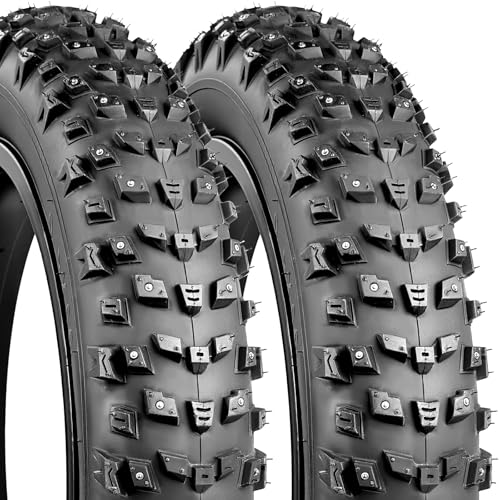
Size and fit: 26 x 4.0 inches. Targeted at 26″ fat bikes and snow bikes, with two tires per package. It mirrors the flotation and icy grip performance needed for winter routes.
Who it’s best for: Fat bikers who want consistent performance across a standard 26″ fat-tire setup. Why chosen: Similar spec family with proven stability in winter conditions.
Limitation: Check compatibility with your rim width; very wide tires require appropriate rims and suspension clearance.
MAKELEN 20×4.0 / 26×4.0 Studded Tires
Size options: 20×4.0 and 26×4.0. Deep tread with steel studs for maximum grip on snow, ice, and loose sand. Dual-size versatility makes them compatible with a wider range of fat-bike configurations.
Who it’s best for: Riders seeking a single product line that covers multiple common fat-bike sizes. Why chosen: The deep tread and reinforced steel studs provide strong traction in challenging winter terrain.
Limitation: On very dry pavement, studded tires can be noisier and less efficient than non-studded tires.
Terrene Cake Eater Light Studded 27.5×4.5

Size and fit: 27.5 x 4.5 inches. Tubeless-ready, with stud-capable design featuring 180 pockets for optional studs. Optimized for snow and ice traction without unnecessary weight.
Who it’s best for: Fat-bike riders who value fast-rolling performance and the option to add studs for icy conditions. Why chosen: Lower rolling resistance combined with strong traction makes it a versatile winter tire.
Limitation: Availability of studs is optional; without studs, performance relies on tread geometry and rubber compound.
Terrene Cake Eater Light Studded 27.5×4.0

Size and fit: 27.5 x 4.0 inches. Studded option with emphasis on traction on snow and ice, designed for comfortable handling on winter trails.
Who it’s best for: Riders seeking a lighter studded-fat-tire option that still delivers solid ice traction. Why chosen: Combines a manageable width with sturdy grip features for winter rides.
Limitation: Slightly narrower tire choice may limit flotation in very deep snow compared to 4.5+ inch tires.
Schwalbe Unisex Al Mighty Evolution Line Tyre

Size and fit: 26″ x 4.80, foldable. This is a general-purpose tire with a focus on all-season performance and a robust tread design for mixed surfaces.
Who it’s best for: Riders seeking a non-studded option that still delivers solid protection and durability across seasons. Why chosen: Reliable German engineering for broad compatibility when snow is light or intermittent.
Limitation: Not designed for aggressive studded traction; best used where studded tires are not mandatory.
Buying Guide: Key Considerations For Studded Bike Tires
- Riding conditions: Focus on studded tires for icy roads, packed snow, and thawed conditions. In loose snow, wider tire profiles help with flotation.
- Size compatibility: Fat bikes span 20″, 26″, and 27.5″ categories. Confirm your rim width and frame clearance before selecting a 4.0 or 4.5 inch tire.
- Stud configuration: Steel or carbide studs improve ice grip. Decide if you need full stud coverage or optional studs depending on your expected frequency of icy rides.
- Tubeless vs tubed: Tubeless-ready tires reduce pinched flats and allow lower tire pressures for better flotation. Check your rims and sealant suitability.
- Weight and rolling resistance: Studded tires add weight and can increase rolling resistance on dry pavement. Use them primarily in winter and commute routes with ice or snow.
- Durability and warranty: Look for reinforced sidewalls and stud durability if you ride rough terrain or frequently hit obstacles.
- Maintenance: Inspect studs and tread regularly. Replace worn tires promptly to maintain traction.
Frequently Asked Questions
- Are studded tires necessary for winter biking? Answer: They are highly beneficial on icy and packed snow surfaces, improving grip and rider confidence.
- Can I use studded tires on dry pavement? Answer: They work, but they are less efficient and louder; save them for winter routes when traction matters most.
- What sizes are common for fat bikes? Answer: Common sizes include 20×4.0, 26×4.0, and 27.5×4.0 to 4.5 inches, depending on the bike’s frame and wheel compatibility.
- Should I choose tubed or tubeless with studs? Answer: Tubeless setups generally perform better with lower risk of pinch flats and easier traction control in winter.
- Do all studded tires fit all rims? Answer: No. Confirm bead seat diameter, tire width, and rim clearance before purchasing.
- What’s the best choice for mixed winter terrain? Answer: A wide 4.0–4.5 inch studded tire on a compatible fat bike offers reliable flotation and solid ice traction.