Best Tennis Racket for 10 Year Olds: Top Junior Rackets for Growth and Fun
Finding the right tennis racket for a 10-year-old is about balance, weight, and control. The best options listed here are designed for beginners and developing players, helping young athletes build technique with confidence. This guide highlights five junior racquets that suit new-to-intermediate players, plus practical buying tips for parents and guardians.
Buyer’s quick-start table:
| Product | Best For | Why It Stands Out | Limitations |
|---|---|---|---|
| HEAD Speed 25 Junior | Young beginners and casual players | Lightweight, pre-strung, kid-friendly grip | Not the widest string pattern for advanced topspin |
| HEAD Radical Jr. 26 | Growing players needing solid control | Medium weight gives more stability at net | Older frame style may feel heavier to very young beginners |
| HEAD Speed 23 Junior | Smaller kids building fundamentals | Very light, easy to maneuver | Shorter length limits reach on bigger courts |
| HEAD Instinct 25 Junior | Beginner to early-intermediate | Pre-strung aluminum, head-light balance | Limited customization options |
| Wilson US Open 25 Junior | Young players who enjoy bold visuals | Lightweight, appealing design | Standard spec, may not suit all grip sizes |
HEAD Speed 25 Junior Tennis Racquet, Blue
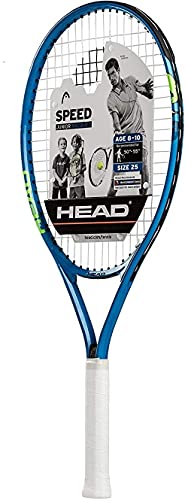
Overview and best use: This pre-strung racquet is designed for kids learning the game, focusing on coordination and control. The lightweight aluminum frame supports easy swings, ideal for first-timers and casual youth players. The kid-friendly grip helps young players hold securely and swing with stability.
Who it’s best for: Best for parents seeking a ready-to-play option with minimal setup, especially for beginners ages about 8-11 who want a forgiving feel and quick progression. Why selected: The combination of pre-strung convenience and a light, durable frame supports early skill development.
Caution: While the racquet prioritizes weight and size, more advanced players may outgrow it quickly as technique improves.
HEAD Radical Jr. 26

Overview and best use: A solid option for growing players needing more stability and control as they gain confidence. The 26-inch frame offers a balanced feel suitable for developing technique and consistency on both groundstrokes and volleys.
Who it’s best for: Choose this if your child has started rallying and needs a slightly heavier frame to improve shot control. Why selected: The frame size and balance provide better stability than ultralight models for more accurate contact.
Caution: This model can feel heavier than ultra-light options, so ensure your child is comfortable with a slightly longer reach before committing to longer play sessions.
HEAD Speed 23 Junior Tennis Racquet, Yellow
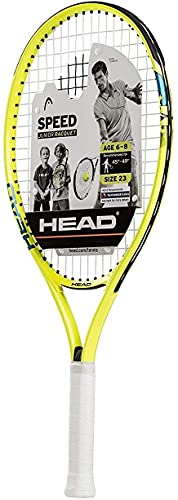
Overview and best use: A bright, ultra-light option designed for early learners. Its lightweight construction makes swing initiation easy, helping kids develop proper form without strain.
Who it’s best for: Best for younger players with shorter arms and limited reach who still want dependable maneuverability. Why selected: The 23-inch size is a classic starting point for children progressing from toy racks to real play.
Caution: Shorter length reduces reach on wide courts; consider pairings with child height and playing area when planning lessons.
HEAD Instinct 25 Junior Tennis Racquet, Pre-Strung Aluminum

Overview and best use: This pre-strung racket is crafted for beginners, offering easy maneuverability and confidence-building control. It targets ages around 8 and up, with a 25-inch size commonly used for developing players.
Who it’s best for: Choose this if your player is transitioning from smaller sizes and needs a comfortable, light option with a forgiving feel. Why selected: Head-light balance reduces vibration and enhances stability during swings.
Caution: As with other beginner models, it may lack the customization options of higher-end junior frames.
Wilson US Open 25 Junior Recreational Tennis Racket – Blue

Overview and best use: This Wilson model is designed for recreational play and kids aged around 9-10, featuring a lightweight frame and a playful US Open-inspired hoop design for motivation and fun during practice.
Who it’s best for: Ideal for learners who enjoy a vivid, kid-friendly look and want a lightweight racket to sustain long practice sessions. Why selected: The AirLite alloy construction offers a good balance of power and control for developing strokes.
Caution: The design emphasizes fun and lightness; players seeking more advanced control or heavier swing weight may want to consider other options in this list.
Buying Guide: How To Pick The Right Junior Racket
What size is best for a 10-year-old?
Most 10-year-olds are comfortable with racquet lengths from 23 to 25 inches. Start with the smaller end if your child struggles with swings, then move up as technique improves. Shorter racquets are easier to maneuver for players with developing coordination.
Weight and balance matter
Look for lightweight models (usually under 265 grams unstrung) with head-light balance for easier handling and reduced vibration. A lighter racket helps maintain form during longer practice sessions and minimizes arm fatigue.
Pre-strung vs. custom strings
Pre-strung racquets offer quick play out of the box and ensure consistent stringing for beginners. If your child develops a more aggressive swing or topspin, consider a model that allows re-stringing or a higher-quality grip.
Grip size and comfort
Grip circumference should allow the child to wrap their fingers comfortably around the handle without over-gripping. Ergonomic, kid-friendly grips foster proper swing mechanics and reduce fatigue.
Durability for active kids
Aluminum frames are common in junior models due to their durability and lower cost. If your child plays frequently, a sturdy frame reduces breakage risk during lessons and games.
Best uses and court types
For beginners practicing groundstrokes and serves on a standard court, a light frame with a forgiving string pattern helps build confidence. If your child focuses on net play, consider a slightly heavier option with better balance to support volleys.
FAQ
- What size racket should a 10-year-old use? Answer: Most 10-year-olds benefit from 23–25 inch racquets, depending on height and arm length.
- Should I choose pre-strung or string-it-yourself models? Answer: Pre-strung models offer immediate play and consistent tension; stringing yourself is an option as your child progresses and needs customization.
- Is weight more important than length? Answer: Both matter; weight affects swing feel and fatigue, while length influences reach. For beginners, prioritize light weight and appropriate length.
- What grip size is appropriate? Answer: Grip size should allow a comfortable full-hand hold without over-gripping; check by placing a finger between the fingers and palm when holding the racquet.
- How often should a junior racquet be replaced? Answer: Replace when the racquet no longer supports proper technique, becomes uncomfortable, or the frame shows damage due to frequent use.