Best Bike Trainers for Road Bike Indoor Training
Answer: If you want an indoor riding setup that mirrors outdoor road cycling, these five bike trainers offer stable bases, adjustable resistance, and easy bike mounting for road bikes. They are best for endurance riders, beginners expanding winter training, and cyclists seeking quieter or more compact options for home use. Each option below supports most 26″–29″ wheels (including 700C) and provides clear instructions for switching from indoor to outdoor riding.
The following table compares the chosen trainers at a glance.
| Product | ||||
|---|---|---|---|---|
| Bike Trainer, Magnetic 26-29″ | 26″–29″ including 700C | 6-level magnetic | Stable with included front wheel riser | All-season indoor cycling for casual to intermediate riders |
| Alpcour Bike Trainer Stand (Magnetic) | Most road/MTB bikes 26″–28″ | 6 fixed levels | Quiet magnetic flywheel, low-friction | Quiet, compact setup for regular training |
| Sportneer Bike Trainer (Magnetic) | 26″–28″ or 700C | 6 levels | Remote control for resistance, quick setup | Wide compatibility, adjustable resistance, easy mounting |
| DORTALA Indoor Bike Trainer Stand | 26″–28″ | 8 levels | Double locking system for safety | Secure, portable folding trainer with adjustable resistance |
| Saris Fluid2 Indoor Bike Trainer | Road and mountain bikes | Progressive fluid resistance | Quiet, smooth ride | Realistic road-like feel, easy setup |
Bike Trainer With Magnetic Resistance For Road Bikes
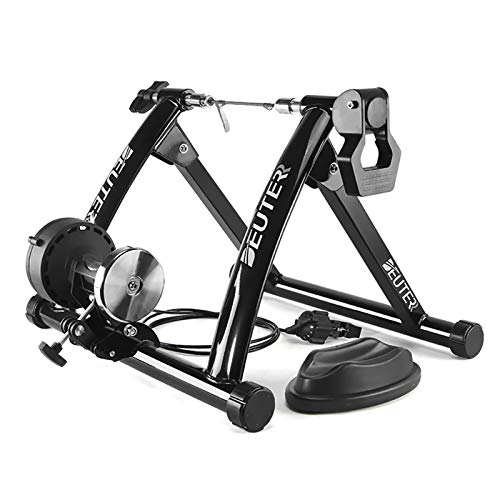
Product overview: A magnetic resistance bike trainer designed for wheels 26″–29″ including 700C. It uses a six-level resistance system and includes a front wheel riser block for stability. The frame supports up to 330 pounds and features a drive-by-wire resistance that adjusts from the handlebars. This model is well suited for cyclists who want a straightforward, budget-friendly indoor training option that feels like real cycling with consistent resistance changes.
Who it’s best for: Road bike riders who train indoors during poor weather and want quick setup, stable performance, and a single-unit solution. It’s a good choice for casual to intermediate riders who value simple controls rather than premium noise reduction. A potential limitation: higher resistance might feel less refined than premium fluid systems at very high speeds.
Why selected: It combines broad wheel compatibility, solid structure, and a convenient handlebar-mounted resistance control, making it a versatile entry to mid-range trainer use.
Alpcour Magnetic Bike Trainer Stand
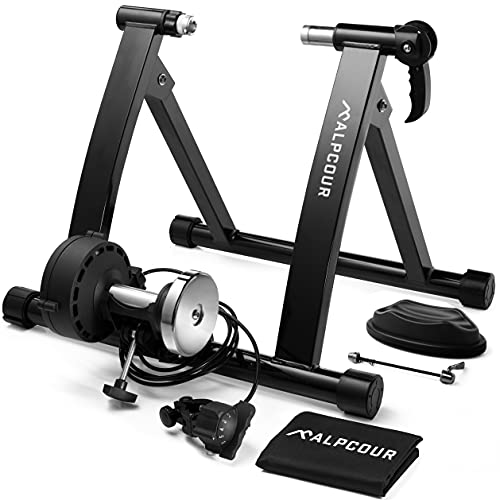
Product overview: Portable, foldable magnetic trainer with six resistance levels and a built-in steadiness frame. It emphasizes quiet operation and low friction, aiming to deliver a stable ride for both road and mountain bikes. A wide base and low stance enhance balance during sprints and climbs. This model includes a front wheel riser and a remote-like control for resistance adjustments.
Who it’s best for: Cyclists who want a quiet, compact trainer suitable for regular winter rides or limited-space setups. It’s a good pick for those who value a foldable design and easy transport. Caution: Some users may prefer a more premium feel for high-intensity intervals or very aggressive climbing sequences.
Why selected: Its quiet magnetic technology, foldable design, and six resistance levels deliver a dependable balance between performance and convenience for everyday indoor training.
Sportneer Bike Trainer With Quick Release

Product overview: A versatile trainer that fits most road and mountain bikes with 26″–28″ or 700C wheels. It ships with a quick-release skewer and a front-wheel riser block. The remote-style handlebar control toggles six resistance levels, simulating flat to hilly rides. The design emphasizes quick mounting and stable performance for workouts, intervals, and endurance sessions.
Who it’s best for: Riders who want broad wheel compatibility, a straightforward mounting process, and the ability to simulate varied terrains from flat to steep climbs. Better for: riders who value quick changes to resistance during a workout and easy setup. Avoid this if: you require a premium drivetrain feel or ultra-quiet operation at the highest resistance.
DORTALA Indoor Bike Trainer Stand

Product overview: A portable steel trainer with an eight-level resistance and a double-locking system. It supports wheels from 26″ to 28″ and features a folding design with non-slip feet for floor protection. The quick-release capability enables tool-free installation, and the double locking system helps maintain safety during intense workouts.
Who it’s best for: Riders seeking a secure, foldable trainer that travels well and provides generous resistance options for interval training. A limitation: folding mechanisms may feel less rigid at very high speeds compared with non-folding frames, and setup may require careful locking to ensure stability.
Saris Fluid2 Indoor Bike Trainer
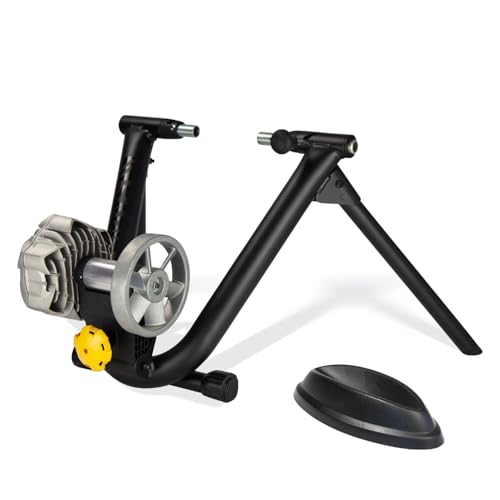
Product overview: A fluid resistance trainer that aims to mimic real-road feel with progressive resistance. It emphasizes a quiet, smooth ride thanks to a balanced flywheel and patented design. The setup is straightforward, and the frame folds for compact storage, making it a practical choice for regular use.
Who it’s best for: Road riders who want a realistic riding experience with steady, progressive resistance and low noise. Better for: riders who ride frequently and value a consistent feel across intervals. Caution: As with any fluid trainer, resistance intensity may increase with pedal cadence, so plan workouts accordingly.
Buying Guide: Key Considerations For Choosing A Road Bike Trainer
- Wheel compatibility: Ensure the trainer supports 26″–28″ or 700C wheels, and check axle compatibility if your bike uses a thru-axle.
- Resistance type: Magnetic resistance is budget-friendly and low-maintenance; fluid resistance offers a more realistic road feel but may be pricier and heavier. Consider how you plan to train (endurance, intervals, sprints).
- Noise and stability: Look for a quiet flywheel or fluid mechanism and a stable base. A front-wheel riser block helps reduce wobble and road-like feel during workouts.
- Portability and storage: Folding designs and compact footprints suit small spaces. If you travel or commute to a training space, portability matters.
- Ease of setup: Quick-release skewers and tool-free mounting save time between outdoor rides and indoor sessions.
- Accessory inclusion: Check for included skewers, adapters, wheel risers, and bag storage when evaluating value.
- Best-use scenarios: Choose based on your priorities—quiet operation, realism of ride, or maximum compatibility with different bikes.
Frequently Asked Questions
- Q: Which trainer is best for road bike riders who want a real-road feel? A: Fluid trainers or high-quality magnetic-fluid hybrids typically offer the most realistic resistance and smoother pedal feedback.
- Q: Do I need a front wheel riser block? A: A riser block helps stabilize the bike and can improve steering feel during intense intervals.
- Q: Can these trainers fit thru-axle bikes? A: Some models offer adapters or non-standard versions to accommodate thru-axles; check product details for compatibility.
- Q: Are folding trainers as stable as non-folding ones? A: Folding designs are convenient, but stability depends on frame construction and base design. Look for wide, low-profile bases for best stability.
- Q: Is setup time a concern with these trainers? A: Many models include quick-release skewers and straightforward assembly, which minimizes setup time between sessions.
- Q: Is noise a deciding factor? A: Yes. Quiet operation is important for multi-person households and late-night workouts; look for fluid or high-quality magnetic systems with noise-reduction features.