Best Trolling Motor for Pontoon Boats: Top 5 Choices for Easy Fishing Mobility
Finding the right trolling motor for a pontoon boat means balancing power, control, and ease of use. This guide highlights five top options, explaining who they’re best for and why they stand out. Ideal buyers include anglers who want GPS-assisted position holding, casual boaters who value simple deployment, and those needing robust performance in open water or choppy conditions.
Summary of chosen products:
| Product | Best For | Key Benefit |
|---|---|---|
| Minn Kota Terrova Bow-Mount with GPS | Serious anglers | Spot-Lock GPS positioning, remote control |
| Minn Kota Pontoon Bow-Mount PowerDrive | Pontoon boaters with pedal control | Easy deployment and simple foot control |
| Newport NV-Series 62lb 12V | Big boats in saltwater or rough conditions | High thrust, rugged build |
| Haswing Cayman 55lb 48″ Bow Mount | Quiet operation with long remote range | Low noise, long-range wireless control |
| Newport NV-Series 55lb 30″ Shaft | Compact setups and smaller pontoons | Balanced power and maneuverability |
Minn Kota Terrova Bow-Mount With GPS – 55 Lb

Best for anglers seeking hands-free positioning. This Terrova model features Advanced GPS Trolling System with Spot-Lock, allowing you to lock your position while you focus on casting. The included wireless remote shows an LCD screen for precise automatic positioning and speed control. It supports drift, follow, and dodge modes to navigate challenging waters. The One-Touch Deploy & Stow Lever makes water entry and storage quick and simple.
Who it’s best for: dedicated anglers who want precise position holding and easy remote control. Caution: GPS electronics add complexity and require care in rough weather to maintain positioning accuracy.
Minn Kota Pontoon Bow-Mount PowerDrive – 55 Lb

This PowerDrive model emphasizes deployment ease and foot pedal control. It uses a Deploy-Assist Lever to slide into the water, and an Aluminum Quick Release Bracket for simple removal and reinstallation. The foot pedal enables reliable speed and steering control, with a quiet, secure lock during operation. It’s best for pontooners who prioritize simple setup and dependable steering for casual cruising or anchored fishing.
Who it’s best for: pontoon users who want straightforward deployment and responsive pedal control. Caution: The basic model may lack GPS features found on higher-end units, so precise position hold isn’t available.
Newport NV-Series 55lb – Transom Mount

With 55-pound thrust and a 30″ shaft option, this Newport NV-Series motor balances power and compactness. It includes a 5-LED battery meter and a versatile tilt/lock mechanism for stable operation in varied water conditions. A 3-blade propeller delivers decent torque and efficiency for trolling, especially on mid-sized pontoon boats. Best for: boaters who need reliable propulsion without excessive length or weight. Caution: The 30″ shaft is shorter, which may not be ideal in high bow seas or on taller consoles.
Minn Kota Endura C2 50 Lb – Transom Mount
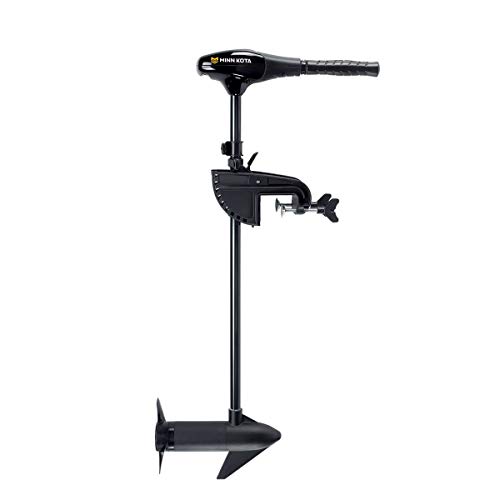
Endura C2 combines durability with reliable power for smaller or mid-sized pontoons. It features a Telescoping Tiller for comfortable, all-day control and a 10-Position Lever Lock Bracket for quick angle adjustments. The Power Prop is designed for heavy vegetation, enabling better performance in thick cover. Choose this if you want a sturdy, no-fuss motor with straightforward maintenance. Caution: No GPS features; position control relies on manual steering and tilt adjustments.
Buying Guide
What kind of pontoon boat and water conditions are you targeting?
For calm lakes and smaller pontoons, 50–55 lb thrust motors provide ample power. For larger boats or windy, choppy water, consider 60 lb or higher with longer shafts (54–60 inches) to keep the propeller submerged and effective.
GPS and position-holding features: are they worth it?
GPS Spot-Lock can dramatically reduce drift and free up your hands for fishing. It’s most beneficial for anglers who anchor frequently or fish in currents. If you boat mostly in calm waters, a non-GPS model may suffice and save on cost.
Deployment and control: what’s your preferred interface?
Foot pedals offer intuitive control for hands-free steering, while wireless remotes with LCD screens provide precise positioning data from anywhere on the boat. Some models also support quick deployment levers for fast water entry.
Shaft length and mounting style: how tall is your boat?
Shallower waters require shorter shafts (around 30 inches), while taller transoms benefit from 42–54 inch shafts. Bow-mount models generally deliver higher efficiency for pontoon setups, whereas transom-mount designs can be easier to retrofit on smaller pontoons.
Reliability and maintenance considerations
Look for reinforced materials such as composite shafts for durability and corrosion-resistant components for saltwater use. Propeller design matters for vegetation clearance, especially in weedier lakes or marshy shores.
FAQ
- What is the best trolling motor for a pontoon with GPS? Models like the Minn Kota Terrova offer GPS Spot-Lock and remote control, ideal for hands-free fishing and precise position holding.
- Is a longer shaft better for pontoons? Yes, longer shafts (42–54 inches) help keep the propeller below the wake and improve efficiency on larger pontoons.
- Should I choose a transom or bow-mount? Bow-mounts provide better maneuverability and control for larger boats; transom-mounts are simpler to install on smaller pontoons.
- Do I need a high-thrust motor for calm lakes? Not necessarily. For small to mid-sized pontoons, 50–55 lb thrust is often sufficient in calm conditions unless wind or current is a factor.
- Are electric trolling motors reliable for saltwater? Some models are designed for saltwater use with corrosion-resistant components, but always verify suitability and maintenance requirements for the salt environment.