Best Trolling Motors for Kayaks: Top Picks for Stable, Quiet, and Efficient Paddling
Answering your search for reliable trolling motors for kayaks, this guide highlights five well-suited models for paddlers seeking extra propulsion, stability, and control on both freshwater and saltwater. Each choice targets a different kayak need—from compact, lightweight setups to higher-thrust options for bigger water. Ideal buyers: casual paddlers seeking easy mobility, anglers needing quiet operation, saltwater kayakers, and those who want a balance of weight and efficiency. The following summary table helps compare core specs at a glance.
| Product | Thrust | Shaft | Best For |
|---|---|---|---|
| Newport Kayak Series 55lb Thrust | 55 lb | 24″ fiberglass | Saltwater kayak setups requiring strong push and depth flexibility |
| Newport NV-Series 36lb | 36 lb | 30″ shaft | Lightweight, portable saltwater/kayak use |
| Minn Kota Endura C2 30 lb | 30 lb | 30″ shaft | Freshwater kayaking with easy control |
| Newport NV-Series 62lb | 62 lb | 36″ shaft | Big kayaks and heavier loads, saltwater ready |
| AQUOS Haswing 55lb | 55 lb | 26″ shaft | Versatile salt/freshwater with wireless remote |
Newport Kayak Series 55lb Thrust Transom Mounted Motor
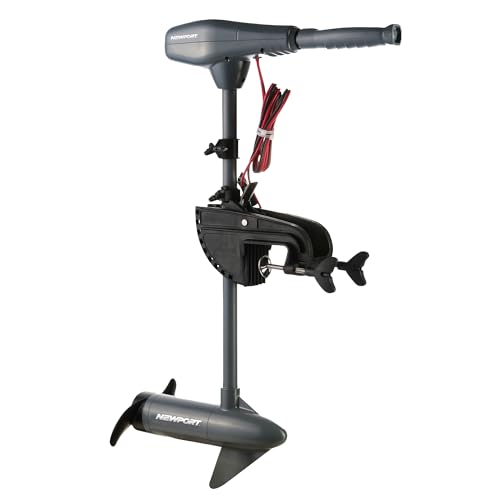
Best for saltwater kayaks that need strong propulsion with precise depth placement. This model features a 24-inch fiberglass shaft for variable depth positioning and eight-speed control (five forward, three reverse), plus a six-inch telescoping handle for easy handling. The all-aluminum motor head uses corrosion-resistant hardware suitable for saltwater use and operates on a lead-acid 12V system. Choose this if you kayak in choppy coastal waters or require robust thrust without a bulky setup. Caution: heavier for portability compared with smaller models.
Newport NV-Series 36lb Thrust Trolling Motor

Best for lightweight, portable saltwater and freshwater use on kayaks, canoes, and small boats. It delivers efficient 36 lb thrust with 12V or 24V compatibility and includes an LED battery indicator. The motor is designed for reliable saltwater performance with corrosion-resistant construction, and the two-blade propeller optimizes runtime. Choose this when portability and battery efficiency are priorities, or when you need a reliable option for smaller vessels. Limitation: not ideal for larger watercraft or heavy loads.
Minn Kota Endura C2 Transom-Mount 30 Lb Thrust
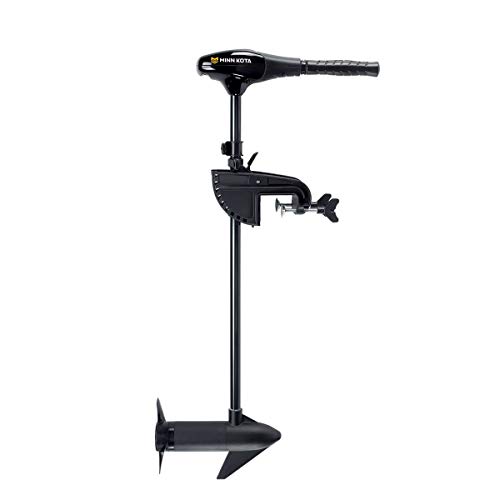
Best for freshwater kayaking with a focus on easy steering and durable build. Features a 6-inch telescoping tiller for comfortable control and a push-to-test battery meter integrated with the motor head. The reinforced composite construction resists UV damage and the 3-1/4″ motor diameter is matched with a power prop for improved performance in vegetation. Consider this if your paddling involves variable vegetation and you want stable, simple operation with straightforward installation. Caution: optimized for freshwater use; saltwater performance may vary.
Newport Kayak Series 36lb Thrust Transom Motor
Best for kayaks needing balanced thrust and depth adjustability. This 36 lb thrust model mirrors the 55 lb Newport design with a 24-inch fiberglass shaft and eight-speed control, enabling smooth operation on saltwater setups. The all-aluminum motor head and corrosion-resistant hardware are built for lasting use in marine environments. A practical choice if you want similar features to the higher-thrust Newport model but on a lighter, more portable system. Caution: lower thrust than the 55 lb version may struggle with strong currents or heavier loads.
Buying Guide: Key Considerations For Kayak Trolling Motors
- Water Type: Saltwater models require corrosion resistance. If you kayak in saltwater often, prioritize motors with robust aluminum heads and corrosion-proof hardware.
- Thrust Level: Match thrust to kayak size and typical loads. Lighter kayaks benefit from 30-40 lb thrust, while larger or exposed conditions may justify 55-62 lb thrust.
- Shaft Length: Longer shafts help keep the prop in the water column when riding waves or changing depth. Choose 30″ to 36″ shafts for most kayaks depending on the hull height and river depth.
- Control System: Tiller vs. remote. Tiller is simple and reliable; wireless remotes provide hands-free control but may require extra battery management and mounting considerations.
- Battery Compatibility: Ensure the motor matches your battery setup (12V is common; some models support 24V). Battery life directly affects run time.
- Weight And Portability: Heavier motors may require stronger mounting and transport considerations. For frequent portability, lighter models are preferable.
- Mounting Compatibility: Confirm the trolling motor mount fits your kayak’s transom or mounting area. Some universal mounts offer broader compatibility but may require installation effort.
Frequently Asked Questions
- What is the best trolling motor thrust for a standard kayak?
– Generally, 30-36 lb thrust suits most standard kayaks; larger or heavier setups may benefit from 55-62 lb thrust depending on conditions and load. - Are saltwater trolling motors worth it for kayaks?
– Yes, if you paddle in saltwater often, corrosion-resistant motors extend life and maintain performance under harsher conditions. - Should I choose a motor with a longer shaft?
– Longer shafts help keep the prop in clean water when the water level varies or you face chop; they are beneficial for higher stern clearance or deeper hulls. - Is a wireless remote necessary?
– Wireless remotes offer convenience but add potential battery management complexity. If you value simplicity, a tiller control is reliable and straightforward. - Can I use a universal mount on my kayak?
– A universal mount can fit many setups, but verify weight capacity and mounting hardware for your specific kayak and motor. - Do these motors work in freshwater too?
– The models listed are designed for both saltwater and freshwater operation; however, performance can vary with water type and vegetation.