Best Water Packs for Running: Lightweight Hydration Gear to Stay Fueled on the Go
When you’re running, proper hydration is essential, and a reliable water pack makes a big difference. This guide highlights five top hydration vests and backpacks that suit different runners, from minimalist brief-stretch belts to fully-loaded vests with 2L bladders. Ideal buyers include beginners seeking bounce-free comfort, runners training for long distances, and athletes needing quick-access storage. Each option below is evaluated for fit, breathability, capacity, and practicality on the trail or road.
Product overview table:
| Product | Type | Water Capacity | Best For |
|---|---|---|---|
| N NEVO RHINO Lightweight Hydration Backpack | Backpack | 2 L | All-around daily runs and light trails |
| INOXTO Running Hydration Vest | Vest | 1.5 L | Ultralight, breathable comfort |
| Zelvot Running Vest | Vest | 2 L | Longer races, high-storage needs |
| SWIFTVEST Running Vest | Vest | Unknown capacity | Multi-pocket organization |
| Sportneer Hydration Backpack Vest | Vest | 1.5 L | Secure fit and bounce control |
Lightweight Hydration Backpack From N NEVO RHINO

Best for: runners who want a lightweight daily hydration option without excess bulk. This pack weighs about 8.5 oz and includes a 2 L water bladder. The fabric is waterproof and tear-resistant with PU-coated nylon, designed to bear up to 25 lbs. The hose is BPA-free and the bite valve is leakproof, ensuring consistent flow when locked. The back panel uses soft air mesh to improve ventilation and keep your back cooler during warm runs.
Why chosen: It offers a balance of light weight, reliable hydration, and ergonomic support, ideal for newcomers or those who prefer a compact setup.
Caution: While designed for light to moderate activities, heavier loads may cause more bounce or strain on longer runs if not adjusted properly. Ensure chest and shoulder straps are secured to your torso.
INOXTO Running Hydration Vest

Best for: runners seeking an ultralight vest with breathable back support and easy access pockets. The vest weighs about 140 grams and carries 1.5 liters in the bladder. It features a ventilated mesh cover for better air circulation and a snug fit with adjustable hip belt and shoulder straps to tailor the balance of weight across the torso. Pockets on the belts accommodate water bottles and small items.
Why chosen: Its minimal weight and ergonomic design reduce fatigue on long runs while providing essential hydration without bulk.
Limitation: The compact 1.5 L capacity may require more frequent refills on longer or hotter runs, depending on climate and pace.
Zelvot 2L Hydration Vest With Gear Holders

Best for: runners who want substantial front storage plus a high-capacity bladder for trail or long-distance events. The vest includes a 2 L water bladder and multiple waterproof pockets, a detachable holster, and helmet- or pistol-like fastening options for secure storage on demanding runs. It offers an adjustable shoulder and waist fit to reduce bounce on varied body types.
Why chosen: The combination of ample storage and a large bladder makes it a strong choice for endurance runners and hikers who carry gels, keys, and emergency gear along with hydration.
Caution: The presence of multiple pockets adds bulk; it’s better suited to runners who prioritize capacity and stability over a featherweight build.
SWIFTVEST 6-Pocket Hydration Vest
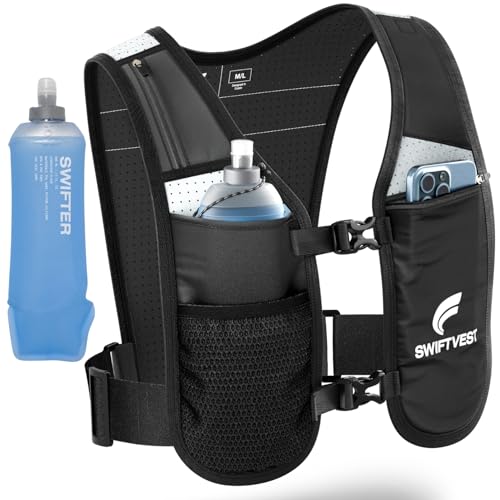
Best for: runners who want organized storage and visibility. This vest features six pockets, a waterproof front phone pouch, reflective detailing, and quick-dry fabric for comfort in varying weather. It supports easy access to gels, keys, and a phone while maintaining a secure fit under movement.
Why chosen: The six-pocket layout provides a practical solution for runners who prefer everything in order and within reach, helping minimize interruptions during workouts.
Limitation: The bladder capacity isn’t specified in the listing, so plan hydration in tandem with other water sources if training for long distances.
Sportneer Hydration Backpack Vest

Best for: runners who want a secure bounce-free fit with thoughtful hydration and storage. The vest weighs around 0.54 lbs and includes a 1.5 L bladder, a ventilated back panel, and a posture-support structure to evenly distribute weight. It offers a main compartment plus front bottle pockets and an extended storage area for essentials.
Why chosen: The design targets stability and comfort, making it a strong pick for tempo runs and mixed terrain where bounce can slow pace.
Caution: As with all 1.5 L systems, plan for shorter runs or carry additional hydration on longer outings if you anticipate high fluid needs or hot conditions.
Buying Guide: How to Choose Your Running Water Pack
- Capacity versus weight: Larger bladders deliver longer hydration between fills but add bulk. For short to mid-length runs, 1–1.5 L is often sufficient. For marathon training, consider 2 L or more with a comfortable, bounce-minimized design.
- Fit and bounce: Look for adjustable shoulder, chest, and hip straps. A snug fit reduces bounce and chafing during sprints or uneven terrain. Consider furthest torso measurements and try models with waist belts for stability.
- Ventilation and comfort: Back panels made of breathable mesh or aerated fabrics help maintain coolness on hot days. Adjustable straps should distribute weight evenly across shoulders and hips.
- Storage and accessibility: Decide how many pockets you need and where items will be stored. Front pockets offer quick access to gels and phones; rear compartments keep bulkier items organized.
- Materials and durability: Look for durable nylon or similar fabrics with water resistance. Check for leakproof bladders and BPA-free materials for safety and easy cleaning.
- Weather readiness: If you train in varied conditions, choose water-resistant fabrics and reflective elements for visibility in low light.
FAQ
- What size hydration bladder is best for running? For most runners, 1.5–2 L is a practical range, balancing hydration with comfort. For longer endurance events, consider larger bladders in a pack designed to minimize bounce.
- Are hydration vests comfortable for beginners? Yes, especially models with light overall weight and adjustable straps. Start with shorter sessions to build acclimation and adjust fit for stability.
- Can I run with a backpack instead of a vest? Backpacks designed for hydration often distribute weight similarly; choose a lightweight option with minimal bulk and secure straps to prevent movement.
- How do I prevent leaks in the bladder? Ensure the bladder cap is tight, insert the bite valve correctly, and keep the hose clamp closed when not in use. Regular cleaning helps prevent mold and odor.
- What features matter most for cold-weather runs? Look for insulated hoses, water bladders with insulated sleeves, and windproof fabrics to minimize heat loss and maintain comfort.
- Is reflective gear important for early morning runs? Yes. Reflective elements improve visibility in low-light conditions, increasing safety on roads and trails.