Best Water Vest for Kids: Safe, Comfortable Options for Young Swimmers
If you’re shopping for a child’s water vest, you want options that blend buoyancy with comfort, fit, and durability. The following five products are among the most relevant for kids ages roughly 2 to 9, covering a range of weights and activity levels. They’re suitable for boating, pool time, and beginner swim lessons, with features that help parents monitor safety and encourage confidence in the water. The buyer profile: careful guardians seeking a trusted, USCG-approved option, comfortable wear, and a clear size range.
| Product | Best For | Weight Range | Key Benefit |
|---|---|---|---|
| Stearns Kids Life Vest | Young children who need reliable buoyancy | 50–90 lbs | USCG-approved Type III for kids; durable nylon shell |
| MoKo Swimming Vest for Kids | Beginner swimmers who want visibility | 46–77 lbs | Bright color and pattern; snug fit with arm mobility |
| SwimWays Marvel Swim Trainer | Kids learning to swim with extra support | 33–55 lbs | 2-in-1 design: life vest with arm floaties |
| Chriffer Kids Swim Vest | Active toddlers and early learners | 30–55 lbs | Dual lock system; comfy U-shaped front |
| Speedo Unisex-Child Flotation Vest | Progressing swimmers seeking classic design | Varies | UV protection; secure fit with leg strap |
Stearns Kids Life Vest, USCG Approved Type III

Best for younger children who need dependable buoyancy and a trusted safety standard. The Stearns vest is USCG-approved for 50–90 pounds, with a durable nylon shell and PE flotation foam. The Type III design prioritizes comfort and mobility for active days at the pool, beach, or boat. Choose this if you want a long-standing child PFD with a proven safety record and a straightforward fit for kids who fall within the specified weight range.
Best for long-lasting use and calmer confidence-building in water activities. A potential limitation is the weight-specific sizing; if a child weighs outside the range, fit and buoyancy may be less optimal. Always supervise children near water and ensure correct vest placement before entering the water.
MoKo Swimming Vest for Kids 46-77 lbs
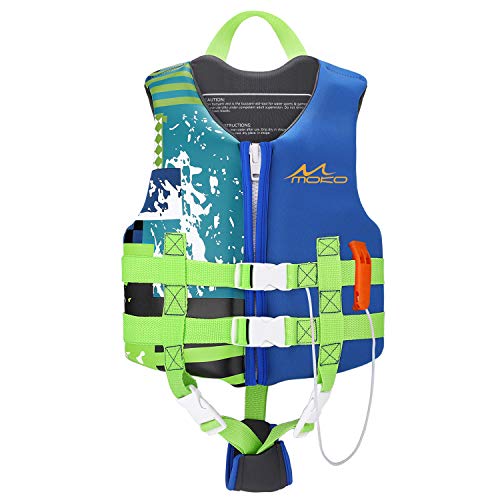
Best for beginners who need higher visibility and ease of use. MoKo’s vest uses 25mm EPE padding for buoyancy, sized for 46–77 pounds, with a bright color and whale pattern to help parents spot kids quickly in water. Arm mobility remains good, aiding learning and play. Choose this if you want a snug, forgiving fit that stays in place and makes kids feel secure during critical learning phases.
Limitation to note: proper sizing is essential; ensure the vest fits snugly without restricting movement. If a child grows quickly, recheck the fit often and replace as needed.
AEOCOO Puddle Float Jumper 20-30 Lbs

Best for very young swimmers needing extra support during splashy pool days. The AEOCOO puddle jumper focuses on safety with a triple buckle design, reinforced back stitching, and a U-shaped collar for chin comfort. It’s adjustable for 20–30 pounds and designed to keep arms free for natural movement. Choose this if you’re managing toddlers who require a reliable, easy-to-adjust vest with added arm mobility.
Limitation: intended for 20–30 pounds; verify weight with current measurements. If a child nears the upper limit, check for a more appropriate size to maintain buoyancy and safety.
Zeraty Toddler Swim Vest Neoprene

Best for younger swimmers who need a comfortable, skin-friendly option. Zeraty uses neoprene, polyester and EPE foam with three safety buckles and adjustable nylon straps. It’s designed to fit ages 2–9+ with a weight range up to 88 pounds. Choose this if you want a soft, snug vest that minimizes chafing while offering secure fit for learning to swim in a variety of water activities.
Limitations: neoprene materials can take time to dry and may be less breathable in hot weather. Regularly inspect buckles and seams for wear and tear after frequent use.
Buying Guide: How to Pick the Right Kids Water Vest
What size should I buy? Start with the child’s current weight and chest measurement. Look for weight ranges that include a cushion above their actual weight to accommodate growth. Adjustable buckles help achieve a snug, secure fit.
Is USCG approval important? For many families, yes. USCG Type III or other approved PFDs offer tested buoyancy and safe usage guidance. Always confirm the weight range and intended water activity matches your plans.
What materials matter? Nylon shells with foam cores are common and durable. Neoprene opt ions provide comfort and warmth for cooler water but can be less breathable. Consider climate and typical water temperatures when choosing material.
How important is visibility? Bright colors and patterns improve visibility in crowded pools or open water. Across these options, high-visibility colors are a practical feature for quick parent or guardian recognition.
What about wear and care? Inspect buckles and seams before each use. Rinse after saltwater exposure and air dry. Follow care instructions from the manufacturer to maintain buoyancy and fabric integrity.
FAQ
- What weight range should I look for in a kid’s water vest? Look for the child’s weight plus a little room for growth, typically within 30–90 pounds depending on the model.
- Do water vests need to be USCG approved? USCG approval is common and recommended for safety-certified use, especially in pools, lakes, and boats.
- Are there risks with too much buoyancy? Excess buoyancy can hinder learning by limiting dive and maneuvering ability. Choose a vest that supports buoyancy appropriate to the child’s skill level.
- How do I know the vest fits properly? There should be a snug fit with no gaps at the chin or armpits. Straps should be secure but comfortable, and the vest should not ride up when the child moves.
- Can kids wear water vests for everyday swimming? Yes, many kids wear them for pool time and lessons, but supervision is essential at all times around water.
- How should I care for a child’s water vest? Rinse after use, air-dry away from direct sun, and check buckles and seams regularly for wear or damage.