Best Weight Stands for Plates: Durable Racks to Organize Your Home Gym
Frequently asked by home gym shoppers: which weight stand best fits 1-inch versus 2-inch Olympic plates, and which design saves the most space? This guide compares top-weight stands designed to store weight plates safely, clearly outlining who each option is best for. Whether you’re building a compact garage gym or a dedicated lifting room, these picks offer sturdy builds, organized layouts, and practical storage for different weight sets.
| Product | Best For | Capacity | Notes |
|---|---|---|---|
| Weight Plate Rack, Weight Tree, 1-Inch Home Gym Storage Stand | Smaller 1-inch plate collections | 300 lb | Compact triangle design for tight spaces |
| Olympic Weight Plate Rack 400LBs, Heavy Duty | 2-inch Olympic plates in mid-sized spaces | 400 lb+ | Vertical tree design, six posts |
| CAP Olympic Bumper Plate Tree Rack, 440 lb | Mixed bumper and cast iron plates | 440 lb | Includes barbell holders |
| Marcy A-Frame 2-Inch Plate Organizer | 2-inch Olympic plates with bar storage | 300 lb | A-frame design with secure collars |
| Amazon Basics 2-Inch Plate Tree Rack | Economy 2-inch storage | 300 lb | 5-spoke design for stability |
The selections below are organized to help buyers decide quickly who each product suits. Each entry notes best-for scenarios, space considerations, and any practical caveats to avoid surprises after purchase.
Weight Plate Rack, Weight Tree — 1-Inch Plates
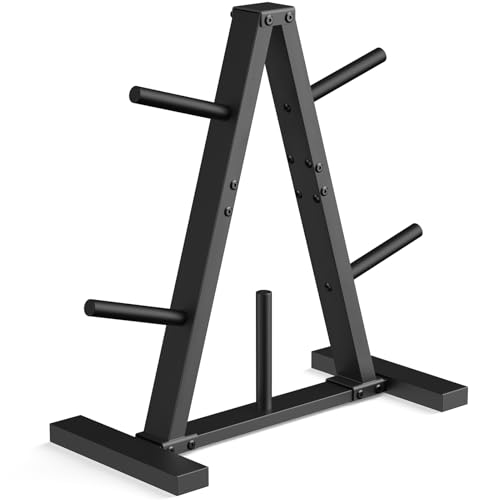
Best for buyers with a standard 1-inch plate collection. This weight tree uses a black powder-coated steel construction with five posts to accommodate multiple sizes. Capacity reaches 300 pounds, making it a solid match for light-to-moderate home gyms. The triangular design helps save floor space, which is ideal for compact rooms. Best for: small to mid-sized home gyms needing organized 1-inch plates. Caution: not designed for heavy bumper plates or 2-inch Olympic sets.
Olympic Weight Plate Rack 400LBs — 2-Inch Plates

Best for households with a larger 2-inch plate set and limited floor space. This rack supports 400+ pounds with six 2-inch center posts and a vertical tree design that keeps plates off the floor. It’s well-suited for garages or training rooms where space is at a premium but plate volume is high. Caution: ensure your space can accommodate the vertical footprint and bar storage needs.
CAP Olympic Bumper Plate Tree — 440 lb

Best for serious home gyms that mix bumper and standard plates. It offers up to 440 pounds of total capacity with four barbell holders integrated into the tree. The vertical design saves floor space while keeping weights accessible. Caution: not designed for free-swinging storage of long barbells without securing space around the rack.
Marcy A-Frame 2-Inch Plate Organizer
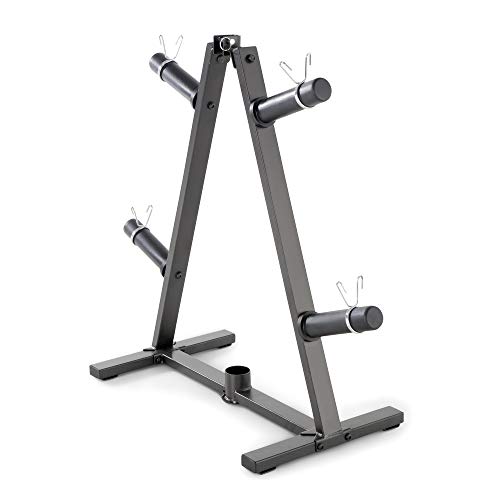
Best for users who want a sturdy, straightforward 2-inch plate organizer with bar storage. The A-frame design supports up to 300 pounds and includes secure collars to keep weights in place. It’s a good pick for those who prefer a visible, stable approach to plate organization. Caution: not ideal for bumper plates, which may require different storage geometry.
Amazon Basics 2-Inch Plate Tree Rack

Best for buyers seeking an economical, reliable 2-inch plate tree. It features a five-spoke design with a 300-pound capacity and a durable steel build with a black powder-coated finish. This option is well-suited for budget-conscious shoppers who still want solid stability and easy access for daily workouts. Caution: ensure load distribution remains even to maintain balance.
Buying Guide
What plate size does your rack need to accommodate?
Determine whether your plates are 1-inch or 2-inch center holes. Some racks support both, while others are specialized for one size. For mixed environments, a dual-capacity stand or a separate 1-inch and 2-inch configuration may be best.
How much space do you have?
Vertical weight trees save floor space but require height clearance. A-frame and triangular designs reduce footprint on the floor and are ideal for small rooms. Measure your workout area to ensure safe access around the stand.
What is your plate collection size?
Look at total weight capacity and number of posts. Higher capacities (440–660 lb) are better for bumper plates or heavy lifters, while 300 lb racks suit casual or mid-volume programs. Consider future expansion when selecting capacity.
Do you need built-in barbell storage?
Some racks include barbell holders to keep bars upright and accessible. If you frequently rearrange equipment, integrated bar storage can improve organization and reduce clutter.
Material and durability considerations
Most options use steel with powder-coat finishes for corrosion resistance and durability. Confirm assembly quality and leg stability to prevent wobble during lifts. Heavier stands generally offer better stability on uneven floors.
Maintenance and safety tips
Periodically inspect posts, collars, and welds for wear. Keep a clear area around the rack to minimize tripping hazards. Use proper collars to secure plates and prevent slippage during workouts.
Summary of top picks
- Best for 1-inch plates: Weight Plate Rack, Weight Tree — 1-Inch Plates (compact, space-saving).
- Best for 2-inch plates with high capacity: Olympic Weight Plate Rack 400LBs (multi-post, sturdy).
- Best with bar storage: CAP Olympic Bumper Plate Tree Rack (barbell holders included).
- Best budget 2-inch option: Amazon Basics 2-Inch Plate Tree Rack (economical, solid stability).
Frequently asked questions
- What’s the difference between a weight tree and a plate rack? A weight tree primarily organizes plates around a central post, while a plate rack arranges plates across multiple posts for easy access and organization.
- Are bumper plates compatible with all racks? Not always. Some racks are designed specifically for bumper plates, while others support standard iron plates. Check the post size and compatibility.
- How many plates can these racks hold? Capacities range from about 300 lb to 660 lb depending on model and design. Always confirm the posted capacity and distribute weight evenly.
- Is built-in bar storage necessary? It depends on space and workflow. If you often move barbells around, built-in holders can reduce clutter and improve safety.
- Should I choose a vertical tree or an A-frame? Vertical trees maximize floor space and are good for larger collections; A-frames offer sturdy access and may be easier to load from a standing position for some users.
- How do I install these stands on a wooden floor vs. concrete? Most stands are freestanding; place a non-slip mat underneath to prevent movement and protect flooring.