Best Weighted Balls for Hitting: Boost Power and Mechanics Across Baseball and Softball
If you’re looking to improve your hitting power and swing mechanics, weighted training balls are a practical tool. These 16-ounce and 3- or 2.8-inch variants help develop strength, speed, and accuracy for players at all skill levels. This guide highlights five top options that consistently target exit velocity, bat control, and pitching tempo. It’s especially useful for beginners building fundamentals and competitive players refining technique. Below you’ll find quick comparisons, who each product is best for, and practical buying tips to choose the right set for your drills.
Summary table of selected products:
| Product | Best For | Weight/Size | Key Benefit |
|---|---|---|---|
| GoSports 2.8″ Weighted Training Baseballs | Basesball beginners to pros | 16 oz, 2.8 inches | Improved batting technique with instant feedback |
| GoSports 3.82″ Weighted Training Softballs | Softball players aiming to add power | 16 oz, 3.82 inches | Power development for hitting and pitching mechanics |
| Anywhere Sports 2.85″ 16 oz Baseballs | Budding to advanced hitters | 16 oz, 2.85 inches | Pro-level swing feedback and durability |
| Anywhere Sports 3.8″ 16 oz Softballs | Softball training all levels | 16 oz, 3.8 inches | Power and throwing control improvements |
| GoSports Plyometric Weighted Balls (6 Pack) | Power and mobility training for throwing | Various weights | Dynamic strength and improved mechanics |
GoSports 2.8 Inch Weighted Training Baseballs

Best for: Beginners and players seeking immediate feedback to refine batting and throwing form. The six-pack set uses 16-ounce balls with a 2.8-inch diameter, creating a realistic feel while adding resistance to drills. Use for swing progression and pitch control during tee, soft toss, and velocity drills. Caution: The smaller diameter requires concentration to maintain contact and may feel different from standard baseballs.
GoSports 3.82 Inch Weighted Training Softballs
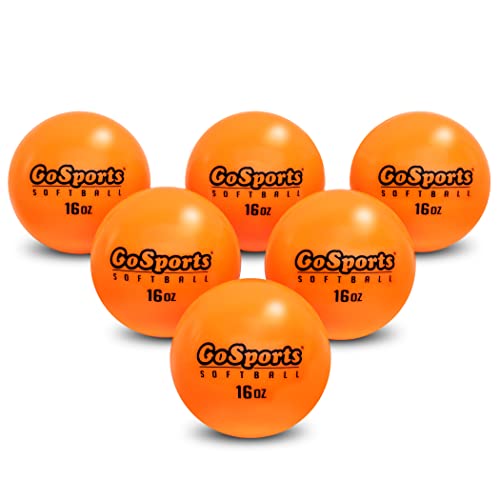
Best for: Softball players at all levels who want to improve power and mechanics with a larger training ball. The 3.82-inch, 16-ounce weighted softballs are ideal for practicing hitting and pitching fundamentals, offering a stable flight path and clear feedback. Limitation: Slightly bulkier than standard softballs, which may require adjustment for younger players or smaller hands.
SUPERIORNET 9 Pack 3″ Weighted Balls

Best for: Players seeking a bright, attention-grabbing training tool and a versatile set for hitting and pitching. This 9-pack includes 3″ weighted balls filled with iron sand and a 75g PVC shell for softness with durability. Use for drills that improve contact stability and feedback on swing arc. Caution: Data notes a softer shell; verify grip and control for intense drills to prevent mishits.
Anywhere Sports 2.85” Weighted Baseballs
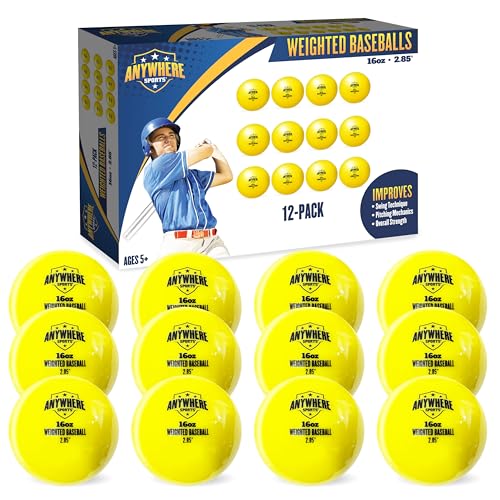
Best for: Players who want pro-level swing feedback during hitting, throwing, and pitching drills. The 2.85-inch, 16-ounce design emphasizes swing path and contact timing. Durable construction supports heavy use in practice. Limitation: Some users may require an acclimation period due to weight distribution in longer routines.
Anywhere Sports 2.85” Weighted Baseballs (Softball Variant)

Best for: All-skill-level players focusing on hitting and throwing symmetry. These 3.8” softballs weigh 16 ounces and emphasize power delivery and throwing consistency. Use for throwing drills and situational hitting; avoid if you require a lighter practice ball for beginners with limited grip strength.
GoSports Plyometric Weighted Balls

Best for: Players focusing on power development and throwing velocity through plyometric training. The PRO Set includes multiple weights (100g to 450g) to vary resistance and execute dynamic drills. This supports faster arm speed and improved range of motion. Limitation: Weights are lighter for some hitters, so combine with heavier baseballs or softballs for balanced training progress.
Buying Guide: What To Consider When Selecting Weighted Balls For Hitting
- Goal alignment: Decide whether you want to improve swing mechanics, power, throwing velocity, or overall athleticism. Baseball-weighted balls target bat speed, while softball weights emphasize pitch control and contact timing.
- Weight and size: Heavier balls (16 oz) are common for power-building drills, but some players benefit from lighter variants to master form first. Size differences (2.8″ vs 3.82″ vs 3.0″) affect grip, swing arc, and feedback.
- Durability and materials: Look for durable PVC shells and quality filling (iron sand or ballast) that maintain weight and resist cracking during repeated strikes.
- Portability and storage: Sets with a compact box or bag help organize drills and travel to practice venues.
- Skill level suitability: Beginners may start with smaller, lighter variations to learn mechanics; advanced players should use heavier or multi-weight sets for progressive overload.
- Drill compatibility: Consider how the ball will be used—tee work, soft toss, flat-ground batting practice, or pitching drills—and choose accordingly.
Frequently Asked Questions
- What weight should I start with for hitting drills? Start with 16 oz balls if you already have basic swing mechanics; beginners may begin with lighter practice balls to learn form before adding resistance.
- Can weighted balls substitute for regular practice? They should complement standard batting and pitching drills, not replace them entirely, to prevent technique drift.
- Do weighted softballs or baseballs differ in training benefits? Yes. Heavier softballs can improve pitching mechanics and arm strength for softball players, while weighted baseballs focus more on bat speed and contact timing.
- How should I integrate weighted balls into a training routine? Include cadence-focused drills (tee work, soft toss) and progression plans that gradually increase weight or vary weight combinations across sessions.
- Are there safety considerations? Warm up properly, avoid overuse, and use a surface that reduces impact on joints during high-intensity drills.
- Which set offers the best all-around value? Sets with multiple weights and both baseball and softball options provide the most versatility for mixed training plans.