Best Arm-Training Workout Machines for Home Gyms
If you’re looking for compact, versatile gear to train arms at home, these hand-picked arm trainers offer adjustable resistance, stable designs, and real upper-body benefits. Best for beginners establishing a routine, intermediate users seeking progression, or anyone needing portable, space-saving equipment for upper-body workouts.
| Product | Best For | Key Benefit |
|---|---|---|
| WAKISA Twister Arm Trainer (3 in 1) | All fitness levels | Wide resistance range and full-body options |
| MAIDOMA Twister Arm Trainer (30-120 lbs) | Progressing lifters | 6 resistance levels and compact design |
| Abahub Twister Arm Exerciser | Home workouts | Fully adjustable with long arm positions |
| RENRUI Twister Arm Trainer | Beginners to intermediate | 5 resistance levels with ergonomic handles |
| LYKAN Twister Arm Trainer | Portable home users | Detachable design and multi-muscle focus |
WAKISA Twister Arm Trainer 3 in 1

The WAKISA model uses an adjustable hydraulic resistance system from 22 to 440 lbs, enabling users to tailor effort as they gain strength. It includes a 3-in-1 setup that supports arm movements, chest workouts, and an ab roller feature, making it suitable for a full upper-body routine. Best for beginners who want a beginner-to-advanced progression with a single device, and for home gyms with limited space.
Best for: beginners to intermediate exercisers seeking versatility and scalable resistance. Why selected: high adjustability and a stable titanium-built frame support consistent form during varied movements. Caution: extended use may warm the hydraulic cylinder; allow cooldown between sessions.
MAIDOMA Twister Arm Trainer 30-120 Lbs

MAIDOMA offers 6 resistance levels from 30 to 120 lbs, with two sets of spring bars to vary load. It targets multiple upper-body muscles, including chest, arms, shoulders, back, and even core through multidirectional movement. It’s a compact option ideal for home gyms and travelers who want portable strength training. Best for: users who want clear, level-based progression without heavy equipment. Better for: users who prefer a light-to-moderate resistance focus over heavyweight training.
Limitation: spring-based resistance can feel stiffer in low-gravity arms; ensure grip and wrist comfort with the soft outer wrap and anti-slip handle.
Abahub Twister Arm Exerciser
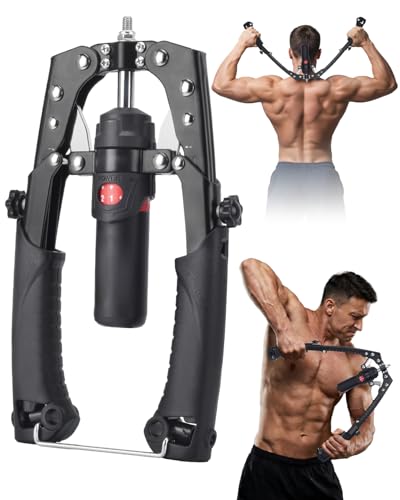
Abahub’s model emphasizes fully adjustable resistance from 22 to 440 lbs and 12 adjustable arm positions, enabling a wide range of reach and target areas for arms, shoulders, and chest. The design includes ergonomic, non-slip handles and a safety-friendly hook for storage. Best for: people who want a highly customizable fit and a gift-worthy compact trainer for home use. Caution: the hydraulic cylinder may heat with extended sessions—let it cool before continued use.
Why selected: strong adjustability and a thoughtful safety design make it suitable for households with varied users and goals.
RENRUI Twister Arm Trainer

RENRUI provides five resistance levels ranging from 40 to 130 lbs, focusing on progressive training for arms and chest. Its ergonomic handles and heavy-duty chrome-plated tubes support durability and grip stability. Best for: beginners exploring resistance progression and form-focused workouts. Choose this if you want a straightforward, level-based setup with solid construction. Limitation: the range stops at 130 lbs, which may be limiting for advanced lifters seeking heavier loads.
LYKAN Twister Arm Trainer
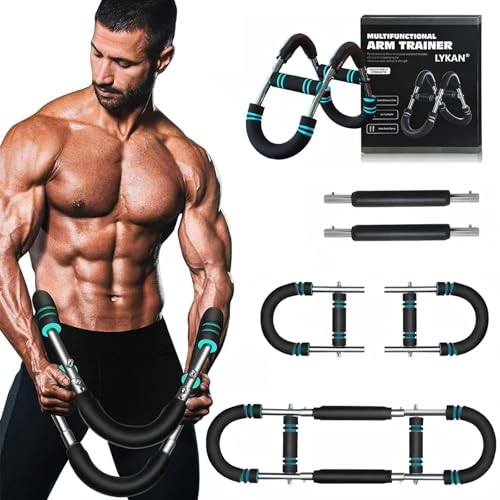
LYKAN’s model emphasizes a portable, detachable design with three resistance levels (40, 70, 100 lbs). It targets multiple muscle groups across the upper body, including chest, arms, shoulders, back, and core, following a guided training chart. Best for: home gym users who want a compact, travel-friendly option with multi-muscle engagement. Caution: ensure secure detachment and reattachment during workouts to prevent movement under load.
Buying Guide
Key considerations help you choose the right arm-training machine for your goals and space.
- Resistance range and progression: Look for adjustable ranges (e.g., 22–440 lbs) and multiple levels to accommodate beginners through advanced users.
- Adjustability: Arm length or height adjustments ensure proper form for different body sizes and exercise variety.
- Durability and materials: Sturdy frame, reinforced joints, and high-strength springs or hydraulic cylinders support long-term use.
- Stability: A triangular center design or reinforced base helps prevent wobble during dynamic movements.
- Portability and storage: Detachable or collapsible designs suit small spaces and travel needs.
- Ergonomics and safety: Non-slip grips, wrist-friendly handles, and secure locking bolts reduce risk during workouts.
- Intended exercises: Choose devices that provide targeted arm, chest, shoulder, and core engagement based on your goals.
How to choose between models?
- For total upper-body training on a budget: consider models with broad resistance ranges and multi-movement capabilities (like 3-in-1 setups).
- If you want stricter progression and longevity: prioritize models with higher durability and a clear, multi-level resistance system.
- If space is at a premium: favor portable or detachable designs that store easily without sacrificing exercise variety.
Usage tips
- Warm up with light movements before engaging maximum resistance.
- Maintain controlled movements and avoid snapping the arms to protect joints.
- Balance sessions by alternating pushing and pulling movements to prevent muscle imbalances.
FAQ
- Q: Are these arm trainers suitable for beginners? A: Yes, most models provide low starting resistance and gradual progression.
- Q: Can these devices train core muscles as well? A: Yes, many movements engage the core in addition to arms and chest.
- Q: Do they require assembly? A: Some assembly is typically needed; check the included instructions for setup steps.
- Q: Are the resistance levels consistent across models? A: Resistance mechanisms vary (hydraulic, springs); refer to each product’s specified range.
- Q: Is portability a factor to consider? A: If you travel or have a small space, look for detachable or compact designs.
- Q: What safety features should I look for? A: Non-slip handles, secure bolts, and clear usage guidance help prevent injuries.