Best Yoga Bands for Stretching: Top Picks for Flexibility and Mobility
Looking for reliable yoga bands to improve flexibility, stretching, and overall mobility? This guide highlights five top options suited for beginners through seasoned athletes. Each option emphasizes durability, design for ease of use, and practical features like loops, handles, or non-elastic construction. Whether you’re into yoga, Pilates, physical therapy, or dance warmups, these choices help you progress safely and effectively. The table below compares key attributes to help you choose quickly.
| Product | Brand | Best For | Key Feature |
|---|---|---|---|
| Trideer Stretching Strap | Trideer | General stretching and rehab | 10 loops; long-lasting polypropylene |
| Stretching Strap With Loops (Purple) | Oak-Sports | Progressive stretch work | Non-elastic nylon; 75 inches |
| Stretching Strap With Loops (CTRL Sports) | CTRL Sports | Physical therapy and yoga basics | Numbered loops; neoprene handles |
| Abiarst Stretching Strap | Abiarst | Long-hold flexibility and rehab | 75 inches; durable fabric |
| Slim Panda Yoga Strap | Slim Panda | Beginner-friendly stretches | Cotton strap; adjustable D-ring |
Trideer Stretching Strap: Durable 10-Loop Yoga Strap

Best for long-term use and versatile stretching routines. This non-elastic strap provides stability during warmups, post-practice stretches, and physical therapy. The 10-loop design allows fine-grained grip options, helping users target hamstrings, shoulders, and hips. The sturdy polypropylene construction and reinforced stitching aim to last for years, making it a reliable choice for daily practice.
Who it’s best for: beginners and intermediates who want a dependable, all-purpose stretch strap for home workouts, Yoga, Pilates, or rehab routines. Why selected: durability, comprehensive loop system, and suitability for various stretches. Caution: non-elastic design means it won’t substitute for resistance-based training when added tension is needed.
Oak-Sports Stretching Strap With Loops (Purple)

Best for guided, looped stretching with a focus on physical therapy and gradual progression. The nylon strap is non-elastic, offering stable resistance, and includes ten loops plus a 75-inch length for diverse positions. Its lightweight, durable build suits home gyms and clinics alike, helping users improve flexibility and relieve stiffness.
Who it’s best for: those who want a straightforward, loop-based stretch tool with clear grip points. Why selected: non-elastic design with multiple loops promotes consistent form. Caution: longer length may be harder to manage for very short arms, and not ideal for high-resistance training.
CTRL Sports Stretching Strap With Loops

Best for structured progress with self-monitoring. This strap features numbered loops and neoprene handles for comfort, aiding controlled stretching and rehabilitation exercises. The included carrying bag makes it suitable for travel, clinics, or gym sessions, and the nylon strap adds stability during extensive routines.
Who it’s best for: users who value trackable progress and a comfortable grip during longer holds. Why selected: loop numbering supports repeatable positioning; caution: non-elastic design limits dynamic resistance and may not suit power-focused workouts.
Abiarst Stretching Strap: 10 Loops For Full Body Stretch
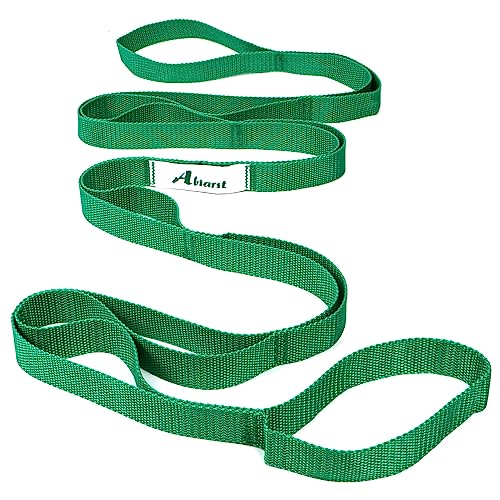
Best for comprehensive full-body flexibility work and rehab routines. This strap uses a durable fabric with ten loops and a length of about 75 inches, enabling safe long-hold stretches for hamstrings, hips, and spine. It’s well-suited for physical therapy-inspired routines and daily mobility work.
Who it’s best for: those needing a sturdy, non-elastic tool for extended holds and gradual progress. Why selected: durable fabric reduces fraying risk; caution: may feel less cushioned on the hands without neoprene handles.
Slim Panda Yoga Strap: Cotton, Non-Elastic

Best for beginners seeking a soft, easy-to-grip strap. The 100% cotton strap with a sturdy D-ring buckle provides a comfortable grip and straightforward adjustments. It’s suitable for yoga, Pilates, and general flexibility work, with a focus on gentle, everyday stretching.
Who it’s best for: new practitioners or those who prefer a natural-fiber strap. Why selected: cotton texture is gentler on hands; caution: not as long-lasting as high-strength synthetic options for aggressive stretching.
Buying Guide: How To Choose The Right Yoga Band For You
- Purpose: Are you focusing on rehab, general flexibility, or athletic performance? Choose a strap whose loops, length, and material align with your main goal.
- Elasticity: Non-elastic straps provide stable resistance for controlled stretches, while elastic bands add progressive resistance. Match to your current mobility and strength level.
- Length and loops: Longer straps with more loops offer more grip positions. Consider your height and typical stretch positions when selecting length and loop count.
- Material and comfort: Nylon and polypropylene offer durability; cotton straps are gentler on skin. Neoprene handles improve grip for some users.
- Portability: If you travel or train outside the home, a lightweight strap with a carry bag can simplify transport.
- Durability: Look for reinforced stitching and quality stitching to avoid fraying during frequent use.
- Maintenance: Removable or washable materials reduce buildup from sweat and oils, extending strap life.
Frequently Asked Questions
- What is the main difference between elastic and non-elastic yoga straps?
– Elastic straps provide resistance that increases with stretch, while non-elastic straps offer fixed tension for controlled, precise stretches. - How do I choose the right length?
– A longer strap accommodates a wider range of poses and taller users; shorter straps are fine for basic stretches and portable use. - Are cotton straps durable for daily use?
– Cotton straps are comfortable and gentle but may wear faster than nylon or polypropylene in heavy-duty routines. - Can these straps help with physical therapy?
– Yes, many straps are designed with rehab-friendly loops and positions to support range of motion and tissue recovery, under professional guidance. - Should I use a strap with handles or loop-only?
– Handles (neoprene or cushioned) improve grip during longer holds, while loop-only designs can offer more grip options in varied poses. - Is a higher loop count always better?
– More loops provide more options, but choose based on your typical stretches and comfort level, not just loop quantity.