Best Back Straps for Lifting: Top Belts for Support and Safety
Answering the question: which back strap or belt best supports lifting tasks? This guide highlights five practical options ideal for workers in construction, warehouse roles, or anyone doing heavy lifting. Each product is chosen for its ability to stabilize the lower back, improve posture, and reduce strain during long shifts. This overview helps buyers select the right level of support, comfort, and adjustability for different body types and tasks.
The table below summarizes the featured products to speed up your comparison:
| Product | Best For | Key Benefit |
|---|---|---|
| SOLOEVER Work Back Brace | Everyday heavy lifting | Adjustable fit with suspenders for secure wear |
| FEATOL Back Brace | All-day wear with strong support | 4 support strips plus lumbar pad |
| Gymreapers Lifting Straps | Grip-focused lifts | Aids grip to lift heavier rows and deadlifts |
| RitFit Weight Lifting Belt | Core stability for all major lifts | Extra-wide 6 inch belt |
| Ultra Breathable Work Back Brace | Breathable comfort for long shifts | Patent-level strap system and aluminum supports |
Note: Each option emphasizes different strengths—choose based on when and how you lift, your body size, and whether you prioritize ventilation, lumbar padding, or grip-related features.
SOLOEVER Work Back Brace for Men & Women
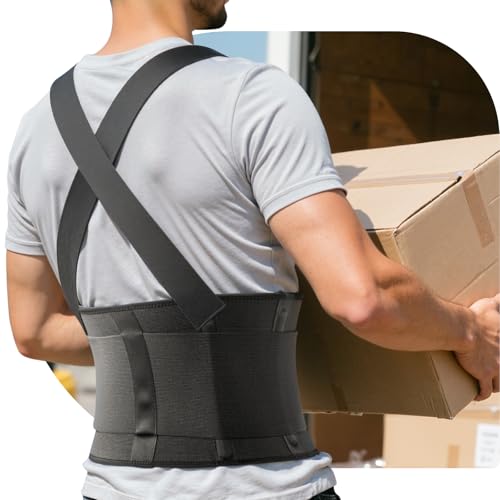
This back brace is designed for flexible support during physically demanding tasks. It primarily targets the lower back, helping maintain posture during construction, warehousing, and heavy lifting. The adjustable fit accommodates diverse torso sizes, making it suitable for both men and women who perform repetitive or strenuous lifting.
Best for: workers needing substantial, adjustable lower-back support with secure suspenders. It’s a practical option for daily wear during long shifts.
Limitation: while suspenders add stability, wearers should verify fit to avoid pinching under long sessions or high-mobility tasks.
FEATOL Back Brace Support Belt

The FEATOL belt focuses on comprehensive lumbar support with multiple reinforcing strips and a removable lumbar pad. The sizing guide targets accurate waist measurement for a secure fit, and the brace provides 360-degree stability for daily activities and workouts.
Best for: users needing strong back support across various movements, including gym workouts and daily lifting. The removable lumbar pad adds customization for comfort, especially during long wear.
Caution: size accuracy matters; incorrect sizing may reduce effectiveness or cause discomfort during movement.
Gymreapers Lifting Wrist Straps
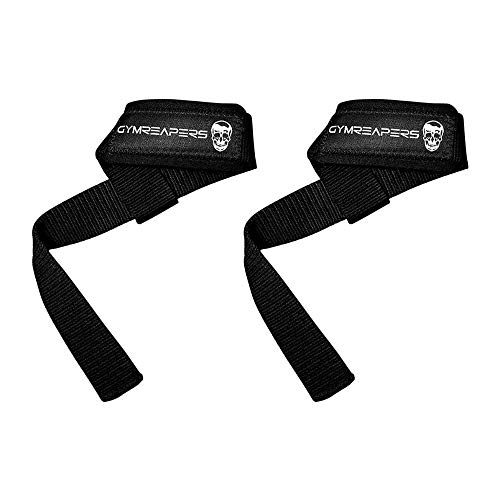
These lifting straps are designed to enhance grip during pulling movements, enabling lifters to focus on target muscles such as the back and lats. The straps use padded neoprene for wrist comfort and a secure cotton strap to reduce grip fatigue during deadlifts, rows, and heavy back work.
Best for: lifters whose grip weakness limits back training or volume. They’re ideal as a complementary tool alongside a back belt rather than a substitute for core or lumbar support.
Limitation: straps do not provide lumbar stabilization; pair with a back support belt for integrated protection during heavy lifting.
RitFit Weight Lifting Belt

The RitFit belt emphasizes core stability with a 6-inch wide contour design. It supports a broad range of lifts, from squats to deadlifts, by creating consistent intra-abdominal pressure for safer lifting performance.
Best for: users who want a versatile belt that supports many lift types and emphasizes back and core stabilization. It’s a solid all-around choice for gym routines.
Limitation: might feel rigid at first; break-in time could be needed for a comfortable long-term fit.
Ergodyne ProFlex 1650 Back Support Belt

The ProFlex 1650 is an all-elastic back support with a simple single-strap closure and non-conductive stays. It aims to provide economical, dependable back support with steady stability for daily lifting tasks.
Best for: budget-conscious buyers needing minimalistic, ongoing back support during routine lifting. It’s a straightforward choice for light to moderate workloads.
Limitation: all-elastic design may offer less rigid support for very heavy lifts compared to rigid belts or braces.
Ultra Breathable Work Back Brace
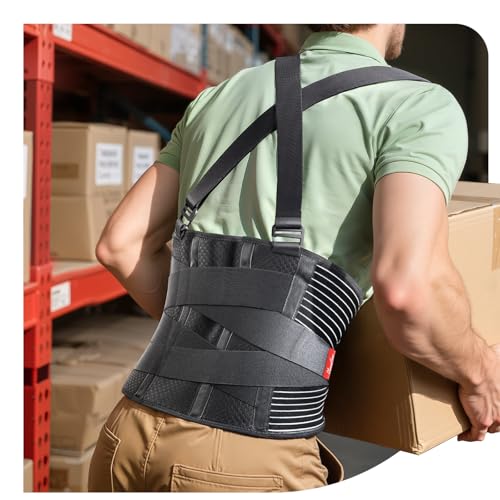
This back brace features a patent-level strap system for 360-degree compression and a lightweight, breathable mesh material. It includes aluminum support bars that contour to the back for improved alignment and comfort during long shifts.
Best for: workers needing strong back support with enhanced airflow and extended wear. The breathable design helps maintain comfort for all-day use in hot environments.
Limitation: aluminum supports add rigidity; slightly less flexible movement may be noticeable for some users during certain activities.
Buying Guide: How to Choose the Right Back Strap for Lifting
- Purpose and task profile: Select a belt or brace that aligns with your lifting workload (daily warehouse tasks vs. occasional heavy lifting).
- Support level: Rigid belts offer strong core stabilization; braces with multiple supports and lumbar pads provide broader back coverage.
- Size and fit: Use waist measurements or product-specific sizing guides to ensure secure fit and comfort during movement.
- Breathability and comfort: For long shifts, prioritize mesh fabrics, padding, and suspenders that reduce pressure points.
- Mobility vs. stability: If you need more range of motion, choose lighter-duty back braces; if you repeatedly lift very heavy loads, favor high-stability options.
- Durability and maintenance: Look for reinforced materials, easy cleaning, and components like removable pads for customization.
Frequently Asked Questions
- Who should wear a back belt or brace for lifting? Answer: Individuals performing repetitive or heavy lifting tasks who want lumbar support and posture improvement.
- What is the difference between a lifting belt and a back brace? Answer: A lifting belt emphasizes core stabilization, while a back brace provides broader back support and sometimes adjustable suspension.
- How do I know which size to choose? Answer: Use the manufacturer’s sizing guide and measure at the navel level for the most accurate fit.
- Can back braces improve performance? Answer: They can help maintain posture and reduce fatigue, potentially allowing longer, steadier lifting sessions.
- Are back braces safe for long-term wear? Answer: Generally yes when worn as directed; avoid overly tight belts and take breaks as needed.
- Should I wear a back brace for all lifting tasks? Answer: Use braces for heavy or repetitive lifts; for light tasks, comfort may be the priority without a brace.