Best Balance Board for Work: Enhance Posture and Focus at Your Desk
Discover balance boards that suit different desks and activity levels. This guide highlights five top options, ideal for office workers, students, and anyone who wants subtle movement during tasks. The right board can improve core strength, posture, balance, and focus without leaving your workstation. Below, you’ll find compact buyer notes, per-product comparisons, and a practical buying guide to help you choose.
| Product | Best For | Key Benefit |
|---|---|---|
| Gaiam Evolve Balance Board for Standing Desk | Desk workers seeking subtle motion | Engages core with micro-movements |
| Non-Slip Wood Wobble Balance Board (Juoe) | All ages, home therapy | Full assembly, versatile training |
| Professional Wooden 360° Rotating Balance Board (Giongma) | Rehab and core training | 360° wobble with solid wood |
| Ergohead Standing Desk Anti Fatigue Mat Balance Board | Office comfort with rotation | 360° rotation with massage features |
| Yes4All Wobble Balance Board | General fitness, beginners | Two sizes, textured grip |
Gaiam Evolve Balance Board for Standing Desk
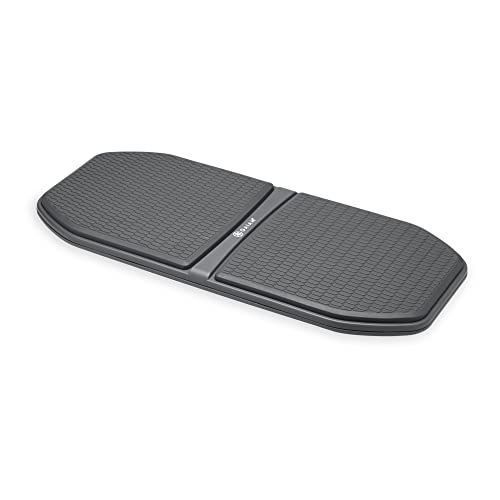
Best for subtle movement at a standing desk. This durable rocker balance board is designed to keep your body and mind engaged during desk work. It helps strengthen stabilizing muscles in the back, core, legs, and ankles through a fluid rocking motion. The ergonomic design promotes neutral ankle positioning and features a honeycomb non-slip texture for a secure base on hard floors or carpet.
Who it’s best for: Ideal for professionals who stand while working and want light, continuous micro-movement to reduce fatigue. It’s also suited for students who need a subtle way to stay focused during long study sessions.
Why chosen: It balances ease of use with meaningful muscle engagement, while maintaining a stable base on common floor types. A potential limitation is that the movement is mild, so those seeking intense balance challenges may prefer a more dynamic board.
Non-Slip Wood Wobble Balance Board (Juoe)

Best for family use and versatility. This 17.5” by 13.5” board supports up to a broad weight range and ships assembled. It engages core muscles while training arms, shoulders, back, abs, glutes, and legs through plank-like movements. The non-slip bottom and textured surface improve safety on diverse surfaces.
Who it’s best for: Families or individuals seeking a multi-use training tool for home, gym, or outdoor workouts. It’s well-suited for kids developing balance as well as adults rehabbing or enhancing coordination.
Limitations: As a general-purpose board, it may not offer advanced multi-directional wobble for highly seasoned users.
Professional Wooden 360° Rotating Balance Board (Giongma)

Best for rehabilitation and core training. This hand-crafted wooden board provides a 360° wobble with a robust, moisture-resistant surface. A textured, anti-slip pad adds comfort and safety for a range of exercises—from balance training to surfing-inspired workouts. It’s suitable for home, gym, or travel use.
Who it’s best for: Individuals pursuing rehab or general core conditioning who want a sturdy wooden board with a broader movement range.
Limitations: Handmade construction may require careful inspection for warping or surface irregularities after prolonged use in extreme conditions.
Ergohead Standing Desk Anti Fatigue Mat Balance Board

Best for office comfort and dynamic movement. This mat balances 360-degree rotation with up to eight tilting degrees. It includes massage balls and marbles to help relieve plantar pressure while you work. The anti-fatigue design encourages blood flow and muscle engagement during long tasks.
Who it’s best for: Office workers who want a larger surface with built-in comfort features and subtle movement to reduce stiffness at the desk.
Limitations: The rotating action may take some time to master, especially for users new to balance boards at a desk.
Yes4All Wobble Balance Board
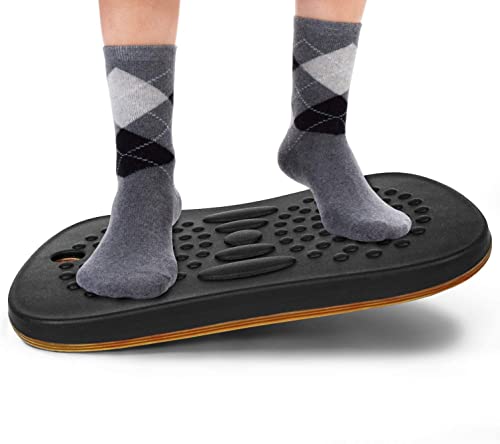
Best for beginners and general workouts. This foam-based wobble pad offers two sizes with a textured surface to prevent slipping. It’s suitable for a range of exercises like lunges, squats, and planks, improving balance and core engagement for users of all fitness levels.
Who it’s best for: Beginners or anyone seeking a softer, safer entry into balance training at home or in the office.
Limitations: Foam construction can wear more quickly with heavy use or frequent outdoor exposure compared to solid wood options.
Buying Guide
What should you consider before buying a balance board for work?
- Do you want mild micro-movements or full 360° wobble? Choose accordingly for comfort or challenge.
- Look for non-slip textures and a stable base. Carpet, wood, and tile surfaces affect stability differently.
- Wood boards tend to last longer and feel sturdier; foam boards are softer and safer for beginners.
- Ensure the board supports your body weight with a comfortable margin for dynamic movement.
- A larger board offers more stability but takes more desk space. Consider travel needs if you move between locations.
- Integrated massage points, anti-fatigue mats, or educational workout guidance can add value for daily use.
FAQ
- Do balance boards really improve desk comfort? Yes, by enabling subtle muscle engagement and improved posture during standing work.
- Is a wooden balance board better than foam? Generally more durable and supportive for long-term use, though foam boards are gentler for beginners.
- Can balance boards replace a chair? They complement a standing desk setup but do not replace the need for movement variety and breaks.
- Who should avoid balance boards? Individuals with severe balance disorders or joint injuries should consult a professional before use.
- How to choose the right size? A larger board suits bigger desks and more stable workouts; smaller boards fit compact workspaces.
- Are there safety concerns? Start on a flat surface, wear appropriate footwear, and progress gradually to avoid slips or strains.