Best Pedal Assist Bikes for Disabled People: Easy Home Rehab and Safe Exercise
If you’re seeking an accessible, low-impact way to improve circulation, mobility, and daily comfort, a pedal trainer or electric rehab bike can help. These devices are best for seniors, office workers with limited mobility, stroke survivors, and anyone recovering from injury who needs gentle, controllable exercise. This guide highlights five top options, explaining who each is best for and why. A quick summary table of the featured products follows for quick comparison.
| Product | Main Use | |
|---|---|---|
| JIANSMZ Fitness Motorised Exercise Bike | Upper and lower limb training | 12-speed motor, remote control, quiet operation |
| XTERRA Folding Exercise Bike | Compact cardio with full-body data | Solid X-frame, foldable, padded comfort |
| KUSOLE Electric Pedal Exercise Bike | Rehabilitation for elderly/disabled | Intelligent anti-spasticity, adjustable setup |
| KARFRI Electric Pedal Training Bike | Home rehabilitation and daily activity | 12-speed, remote control, easy adjustment |
| QIUFANGM Pedal Trainer for Seniors | Passive arm/leg cycling | Quiet motor, stand for hands-free use |
JIANSMZ Fitness Motorised Exercise Bike

Best for users needing combined arm and leg cycling with a motor-assisted option. This device is designed for office or home use, helping to increase blood flow and relieve tension with gentle, quiet pedal motion. Features 12 adjustable resistance levels and a remote control for easy operation, plus a multi-function LCD that tracks time, distance, speed, and calories. Four non-slip feet improve stability on various floors. Suitable for rehabilitation and daily activity in older adults or individuals with reduced mobility.
Who it’s best for: people who want hands-free control, quiet operation, and a compact design for desk-side workouts. Why selected: strong combination of motorized and manual modes provides scalable assistance for progressive rehab. Caution: ensure the remote control is within reach and the device sits on a stable surface to avoid movement during use.
XTERRA Fitness Folding Exercise Bike
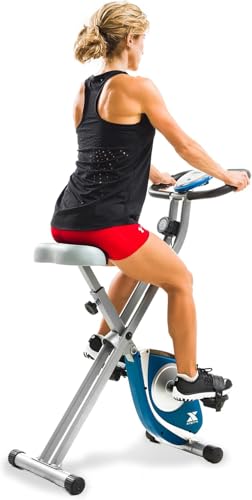
Best for small spaces that still need a full-feature cardio option. This folding bike has a solid X-frame that reduces footprint to about 18.1″ x 18.1″ when stored, making it ideal for apartments or shared rooms. It offers a large seat and multi-position padded handlebars for comfort, plus a clear LCD window showing speed, distance, time, calories, and pulse. The foldable design and comfortable seating make it suitable for beginners and older users building endurance.
Who it’s best for: users who value compact storage and straightforward data tracking. Why selected: the foldable design and comfortable setup deliver practical daily use. Caution: folding mechanisms require periodic checking for looseness to maintain stability during workouts.
KUSOLE Electric Pedal Exercise Bike

Best for intensive rehabilitation with adaptive resistance and smart safety features. The KUSOLE unit targets both upper and lower limbs and offers a high-resistance profile along with a motor that remains relatively quiet. It includes an intelligent anti-spasticity function to adjust movement if spasticity occurs, and a four-height adjustable setup to fit different body sizes and comfort needs. This is a solid choice for users requiring careful monitoring during repetitive movements.
Who it’s best for: stroke survivors or individuals needing careful, programmable control over movement. Why selected: anti-spasticity feature provides an added safety layer for sensitive users. Caution: higher resistance settings can require stronger initial support; start slow and build gradually.
KARFRI Electric Pedal Training Bike
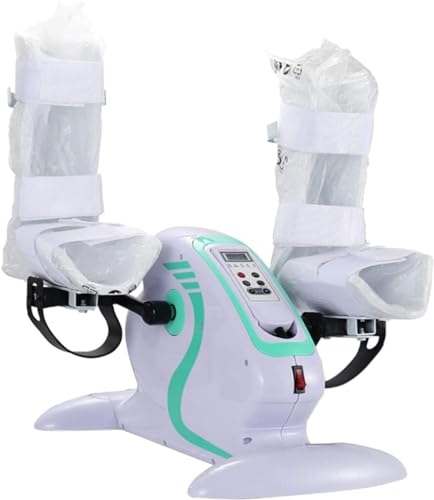
Best for home rehabilitation with easy setup and reliable default configurations. The KARFRI model offers an electric pedal trainer suitable for cycling arms and legs, useful for increasing blood circulation after surgery or injury. It features 12-speed adjustable resistance and a remote control for easy use, with a compact LCD to log time, distance, speed, and calories. This bike is well-suited for progressive rehab and daily conditioning.
Who it’s best for: users needing a simple, adjustable electric trainer for both limbs. Why selected: consistent motor assistance and straightforward operation. Caution: ensure the unit is placed on a flat surface to prevent wobble during higher resistance cycles.
Electric Pedal Exercise Bike (Basic Model)

Best for a budget-friendly entry point into home rehabilitation with upper and lower limb training. This basic model emphasizes stability, a quiet motor, and consistent resistance suitable for light daily use. It includes anti-spasticity features that help manage muscle tone during workouts and adjustable length and height settings for comfort. Choose this if you want a straightforward option without extra frills.
Who it’s best for: first-time users or caregivers seeking affordable rehab equipment. Why selected: simplicity and predictable performance. Caution: lower maximum resistance might limit progression for some users; plan for gradual increases as tolerated.
KARFRI Electric Pedal Training Bike (Second Model)
Best for ongoing home rehab with consistent, adjustable resistance. This KARFRI variant mirrors the earlier model’s core features—electric pedal trainer, 12-level resistance, remote control, and a multi-function LCD—while offering a stable, easy-to-use platform for seniors or disabled users who need regular, guided workouts. It is a practical choice for steady rehabilitation cycles at home.
Who it’s best for: users who want repeatable sessions with simple controls. Why selected: familiar operation and dependable resistance progression. Caution: ensure all connections and remotes are kept dry and clean to avoid malfunction.
Buying Guide: Key Considerations For Selecting A Pedal Trainer
- Intended use: Choose based on whether you want upper-limb focus, lower-limb focus, or full-body training. Some models are better for desk-side workouts, while others prioritize compact storage.
- Resistance and modes: Look for adjustable resistance and motor-assisted vs. manual modes. More levels allow gradual progression in rehab.
- Safety features: Anti-spasticity systems, remote controls, and stable bases reduce risk during sessions. Consider devices with a protective stand for hands-free operation.
- Stride and comfort: Seat design, handlebar positioning, and foot straps affect long sessions. Larger, cushioned seats benefit older adults.
- Footprint and portability: Folding designs and compact frames help fit small living spaces.
- Data and feedback: LCD displays that track time, distance, speed, calories, and heart rate (if available) support tracking progress and goals.
FAQ
- What is a pedal trainer best used for?
Pedal trainers support gentle, low-impact rehabilitation for arms and legs, improve blood circulation, and help reduce tension in daily activities.
- Should I choose motorized or non-motorized models?
Motorized models provide assisted movement and consistent pace, while non-motorized models rely on user effort; choose based on rehab needs and comfort.
- Are these devices safe for stroke survivors?
Most models include safety features like anti-spasticity mechanisms and remote controls. Always consult a healthcare provider before starting new exercise equipment.
- Can a small apartment fit a folding option?
Yes. Folding designs compact to roughly 18 x 18 inches when stored, making them suitable for limited spaces.
- What maintenance is required?
Regular checks for loose screws, clean surfaces, and dry storage help maintain stability and performance. Replace worn straps as needed.
- How do I choose the right resistance level?
Start at the lowest setting and increase gradually as comfort and strength improve to avoid strain.