Best Fuel Belts for Runners: Hydration Belts and Phone Pouches
Answering the question: which fuel belts or hydration belts best suit runners who want secure storage and easy access to water? This guide highlights top options for hydration, phone storage, and lightweight comfort. Best for recreational runners seeking reliable hydration on long runs; better for commuters who need quick access to essentials; choose this if you want minimal bounce and a snug fit. The table below summarizes five strong picks to compare at a glance.
| Product | Best For | Key Benefit |
|---|---|---|
| Q-RUN Hydration Running Belt | All runners | Unisex design with water bottles, flexible sizing |
| AiRunTech Hydration Belt | Beginners to intermediates | Zero-bounce fit, BPA-free bottles |
| Nathan Peak Running Hydration Waist Pack | Long-distance runners | Expandable pocket and 18 oz bottle |
| Fitletic Hydra 16 | Varying weather/conditions | Two 8 oz bottles, phone-safe pocket |
| FlipBelt Zipper | Minimalist pockets | Secure zipper for small items, no-bounce |
Q-RUN Hydration Running Belt With Bottles

The Q-RUN belt offers a hydration-forward design that keeps essential fluids within easy reach. Best for runners who want a simple, compact setup that still supports phone storage and basic accessories. The unisex belt is designed for both women and men, making it versatile for a wide range of body types. Its primary appeal is steady, comfortable hydration without bulk, ideal for short to mid-distance runs or cycling commutes.
Who it’s best for: runners who prioritize hydration first, with a practical, everyday use belt. Why selected: it combines water bottles with a compact pouch, reducing the need for extra accessories. Limitation: water bottle capacity is modest, which may require more frequent sips on longer runs.
Fitgriff Running Belt For Men & Women

Fitgriff’s running belt focuses on secure storage for phones and essentials with a design that emphasizes protection from sweat and splashes. Best for runners who want reliable protection and separation of belongings. This belt supports almost all phone sizes and includes a dedicated small pocket for keys and cards, helping keep screens safe from moisture. Sensible choice for daily workouts and light rain.
Who it’s best for: runners needing robust storage with splash resistance. Why selected: versatile fit and good protector features; limitation: not fully waterproof in heavy rain or prolonged exposure.
AiRunTech Hydration Running Belt

AiRunTech emphasizes a zero-bounce design with a low-hip positioning for stability during runs. Best for runners who want a snug, friction-free fit that minimizes bounce, even on longer efforts. The belt includes two 10 oz BPA-free bottles with a leakproof nozzle, plus a roomy pocket that fits most smartphones up to 6.5 inches. It’s designed for comfortable endurance training and triathlons.
Who it’s best for: athletes needing stable hydration and secure storage for trips and races. Why selected: strong anti-slip design; limitation: some users may prefer larger bottles for ultra distances.
Nathan Peak Running Hydration Waist Pack
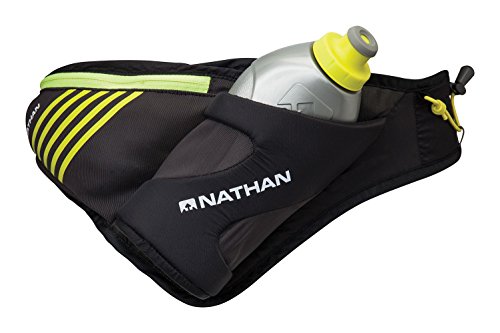
Nathan’s Peak belt pairs a dedicated 18 oz/535 ml water bottle with an expandable zippered pocket for essentials. Best for long runs, hikes, or training sessions where you need more storage without sacrificing hydration. The belt’s extended side panels hug the body for a reliable, comfortable fit. It’s built to reduce chafing and maintain a steady rhythm throughout miles.
Who it’s best for: runners who want a larger capacity and proven comfort on long distances. Why selected: strong storage and ergonomic design; limitation: bottle shape may not suit every hand size for quick sips.
Fitletic Hydration Running Belt With Water Bottles – Hydra 16
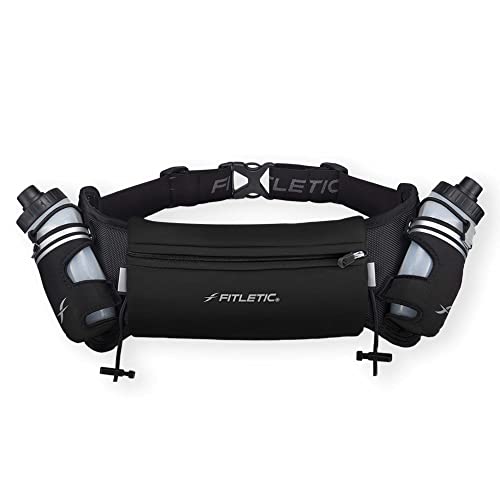
Fitletic Hydra 16 offers a breathable, contoured fit with two 8 oz bottles and a Hydra 16 pocket sized for phones, cards, and gels. Best for runners who want a lightweight, performance-focused belt with a secure, bounce-free experience. The internal organizer helps prevent items from rattling during a run, while reflective accents enhance visibility in low light. Avoid if you need extremely large bottles for ultra distances.
Buying Guide: Key Considerations For Choosing A Fuel Belt
- Hydration capacity: Consider bottle size and number. Larger bottles mean fewer refills but add weight and bulk.
- Fit and bounce: Look for snug, low-hip designs with adjustable straps and contoured backs to reduce bouncing.
- Phone and essentials storage: Check pocket dimensions and separation options to protect screens and prevent scratches.
- Waterproof vs water-resistant: Some belts are water-resistant; fully waterproof models are rare in belts with bottles.
- Ease of use: Leaks, spill-proof nozzles, and quick-access zippers matter for fast drinking and item retrieval.
- Durability and materials: Breathable fabrics, sweat-wicking properties, and sturdy zippers extend belt life.
- Activity compatibility: Choose depending on running distance, cycling use, or triathlon needs.
Frequently Asked Questions
- What is the main benefit of a hydration belt?
– It provides accessible water and essential storage, helping you maintain hydration without stopping your run. - Should I choose a belt with two bottles or a single large bottle?
– Dual bottles offer balanced weight distribution for shorter runs; a larger bottle reduces refills for long distances. - Are hydration belts waterproof?
– Most belts resist moisture and sweat; they are not fully waterproof. Some pockets may be water-resistant, depending on the model. - Can these belts fit large smartphones?
– Many belts accommodate up to 6.5 inches or larger; verify pocket dimensions in product descriptions before purchase. - Is bounce-free design essential?
– For comfort on long runs, a bounce-free or low-bounce design helps minimize chafing and movement during activity. - Do belts work for hiking or cycling?
– Yes, most belts support multiple activities, but positioning and strap adjustment may vary by sport.