Best Handlebar Extenders for Bikes: Comfort, Range of Motion and Safe Installations
Answering your search for better ride comfort and control, this guide compares five top handlebar extenders designed for a range of bikes and use cases. Best for mountain and road riders seeking higher, more ergonomic handlebars; better for those wanting quick adjustments on mixed-terrain bikes; choose this if you ride long distances and need less strain on shoulders and back. The following selections highlight what makes each extender distinct, who it’s best for, and potential limitations to consider before buying. A quick buyer’s table at the end helps you compare essentials at a glance.
| Product | Best For | Key Benefit |
|---|---|---|
| Adjustable Bike Stem Riser (COTOUXKER) | Riders needing adjustable angle up to 60° | Full customization of height and angle |
| LERWAY Bike Stem Riser Extender | Most bikes with 1-1/8″ steerer | Up to 85 mm height increase with spacers |
| Lamicall Bike Handlebar Extender | Durable, low-profile extensions | Aluminum alloy with thickened clamp areas |
| FIFTY-FIFTY Bar Ends | End-mounted extensions for added reach | Ergonomic grip and vibration reduction |
| ROCKBROS Handlebar Extender | Mounting space for devices | Lightweight with robust bracket |
Adjustable Bike Stem Riser By COTOUXKER

The COTOUXKER adjustable stem riser fits 31.8 mm handlebars and 28.6 mm steer tubes, offering 0–60° of angle and 110 mm height options. It includes a 4-bolt clamp for a secure hold and a clear angle indicator to help you dial in the perfect riding position. Best for riders who want fine-grained control over both height and reach without removing the stem during adjustments. Limitation: compatibility is strongest with standard 31.8 mm bars, so some oversized or unconventional setups may require alternative components.
LERWAY Stem Riser Extender
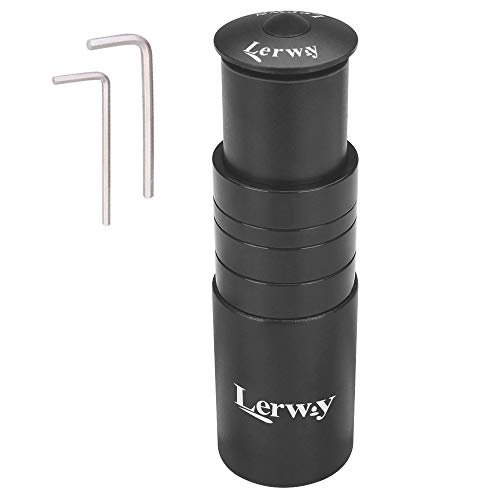
Designed for most 1-1/8″ (28.6 mm) threadless steerers, the LERWAY extender offers up to 85 mm of height adjustment. It includes four spacers (two 10 mm and one 5 mm plus another 10 mm) enabling precise stack height customization. Best for riders who want a simple, adjustable rise without changing cockpit geometry drastically. Caution: ensure your frame clearance allows the extra height to avoid pedal or chest contact on steep climbs.
Lamicall Bike Handlebar Extender

The Lamicall extender is a 4″ long aluminum alloy extension compatible with handlebars 0.875″ to 1.34″ in diameter. It ships with two types of non-slip mounting sheets and a hex wrench, and emphasizes durable corrosion resistance with a matte finish. Best for riders seeking a clean, durable upgrade that resists rust in wet environments. Choose this if you value a simple, stylish upgrade and need a reliable clamp. Limitation: some handlebars may require extra-width clamps for optimal fit.
FIFTY-FIFTY Mountain Bar Ends

These 6061 T6 aluminum bar ends are lightweight yet strong, with an ergonomic bend and sand finish to reduce fatigue on long rides. They fit 22.2 mm (7/8″) MTB handlebars and road bike equivalents with a standard 22 mm diameter. Best for riders who want extra mounting or end-cap versatility with pleasant handholds. Limitation: compatibility is specific to standard outer diameters; oversized bars may not be a fit.
ROCKBROS Handlebar Extender

The ROCKBROS extender is designed to hold devices such as speedometers, GPS units, and smartphones. It uses a carbon fiber and aluminum alloy construction to balance lightness with durability. Best for riders who want an integrated mounting solution without adding excessive weight. Limitation: check device compatibility with the base bracket before purchasing to ensure a secure fit.
Buying Guide: Key Factors To Consider
What should you check before choosing a handlebar extender?
- Bar and steerer compatibility: Confirm the extender fits your handlebar diameter (common sizes include 22 mm, 25.4 mm, and 31.8 mm) and steerer tube type (threaded vs. threadless).
- Adjustment range: Decide whether you need height only or height plus angled positioning. Higher ranges help on steep climbs or upright comfort, while angle-enabled models support multiple grip positions.
- Material and durability: Aluminum alloys are common for lightness and corrosion resistance; carbon fiber options reduce weight but may differ on price and rigidity.
- Mounting security: Look for multi-bolt clamps, clear angle indicators, and included installation tools to ensure a slip-free setup.
- Device mounting capacity: If you plan to add accessories (GPS, phone, light), verify the extender supports accessories with robust mounting bases.
- Riding goals: For endurance riding, prioritize comfort and stability; for aggressive riding, ensure the extender does not interfere with steering or frame geometry.
FAQ
- What is a handlebar extender best used for? It increases cockpit height or reach to improve posture, visibility, and comfort on longer rides or mixed terrain.
- Do extenders affect steering control? A well-installed extender should not compromise control; ensure proper clamp tightness and fit within handlebar clearance.
- Are all extenders universal? No. Check bar diameter, stem type, and whether the extender is designed for mountain, road, or indoor bikes.
- Can I install an extender myself? Yes, most models include installation hardware and manuals. Use the included tools and follow torque guidance to avoid over-tightening.
- Will extenders fit with quill stems or only threadless stems? Some models work with both; verify compatibility in the product description.
- What safety checks should I perform after installation? Recheck clamp tightness, ensure there is no contact with the rider or frame at full turn, and test in a safe area before long rides.