Best L Screen Baseball Solutions for Pitchers and Batters
Looking for the best L screens for baseball to protect pitchers during batting practice? This guide highlights five top options that balance protection, stability, and practicality. Each pick is suitable for backyard batting cages, school facilities, or training rooms, with notes on who benefits most. For quick comparison, see the buying guide and a concise product table below.
Summary table of selected products
| Product | Best For | Key Benefit | Notes |
|---|---|---|---|
| ZivPlay L Screen | Left or Right-Handed Pitchers | Thick 2.5mm HDPE net; stable 7×7 ft frame | Double-layer protection |
| VEVOR L Screen (7×7) | Beginners and Recreational Use | Double-sided design; sturdy 1.25 ft frame | Lightweight, portable |
| Skywalker Sports 6ft L Screen | Portable practice anywhere | UV-treated net; powder-coated steel frame | Easy transport |
| GoSports 7×7 L Screen | Coaches and clubs | Reinforced bow frame; carrying case | Durable construction |
| PodiuMax 7×7 Pitching Screen | All-weather practice | Triple-layer frame with wide base; sandbags | High stability |
ZivPlay L Screen Baseball Screen

Best for pitchers who need solid protection against high-speed line drives. The ZivPlay L Screen uses a thicker 2.5mm HDPE mesh, which helps resist tearing from hard hits. It features a large 7×7 ft L-shaped design with a 3.5×3.5 ft pitching cutout. The screen can be flipped to accommodate both left- and right-handed pitchers. This makes it a strong choice for batting cages in backyards or community facilities where versatile use is valued.
Who this is best for: casual to serious training setups where durability matters and both left- and right-handed throws are common. Why selected: its thick netting reduces breakage risk during powerful contact and the flipping option adds flexibility for varied drills.
Limitation: heavier frame and net assembly may take a bit longer than lighter models, especially when transporting between locations.
VEVOR L Screen Baseball for Batting Cage, 7×7 ft
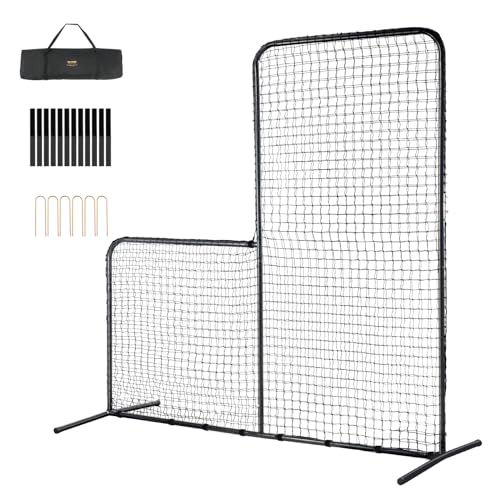
Best for entry-level to intermediate practice with easy setup. This 7×7 ft L-screen uses a double-sided design so both left- and right-handed players can practice without repositioning the frame. A 1.25-foot diameter steel frame base provides stability on typical practice fields. The 45-ply, high-density netting offers robust protection against errant balls.
Who this is best for: beginners through recreational players seeking dependable protection and straightforward assembly. Why selected: its portable design and dual-sided use make it a practical, budget-friendly choice for schools and clubs.
Limitation: the mesh size is 1.75 inches, which may be slightly more prone to catching smaller projectiles than ultra-fine nets.
Skywalker Sports Baseball and Softball Pitching Screen

Best for lightweight, portable training setups with quick setup. The Skywalker 6ft L Screen uses a powder-coated steel frame and UV-treated netting to withstand outdoor training. It is designed for easy transport and rapid assembly, making it ideal for coaches or players who practice at multiple locations.
Who this is best for: teams and individuals who value mobility and fast setup in varied environments. Why selected: the combination of UV protection and a sturdy frame supports longer outdoor sessions with less maintenance.
Limitation: a 6ft height may be less protective for very high-velocity shots compared with taller 7×7 configurations.
VEVOR L Screen Baseball for Batting Cage, 7×7 ft (Second Listing)

Best for robust, dual-handed use with strong protection. This second VEVOR listing emphasizes a 7×7 ft L-screen with a double-sided design and a lightweight net that minimizes field space. The 600x300D waterproof storage bag adds portability for traveling teams or easy off-season storage.
Who this is best for: coaches or players who train in various outdoor spaces and require compact, reliable storage. Why selected: portability without sacrificing durability makes it a strong all-around option for diverse practice settings.
Limitation: some users may prefer a larger base in windier environments for maximum stability.
GoSports 7 ft x 7 ft Baseball & Softball L Screen

Best for coaches seeking durable, easy-to-move protection. The GoSports L Screen features a reinforced bow-type frame and high-density polyester netting to maximize safety. It weighs about 11 pounds and comes with a carrying case, facilitating transport to games, practices, or clinics.
Who this is best for: clubs and training facilities needing a balance of sturdiness and portability. Why selected: the carrying case and solid frame simplify frequent setup and stowaway between venues.
Limitation: a lighter frame may be more susceptible to tipping in strong winds without proper anchoring.
MR L-Screen Baseball Pitching Screen 7x7FT

Best for high-durability training environments. The MR L-Screen uses a 5-ply polyester net and 1.5-inch diameter steel tubes with powder coating for rust resistance. It is designed to be easy to assemble with a pillowcase-style netting and offers protection for batting and pitching practice.
Who this is best for: institutions or families needing a long-lasting screen that withstands frequent use. Why selected: the heavy-duty construction provides consistent protection and endurance.
Limitation: assembly can be more involved compared with simpler, lighter models.
PodiuMax Baseball Softball Pitching Screen
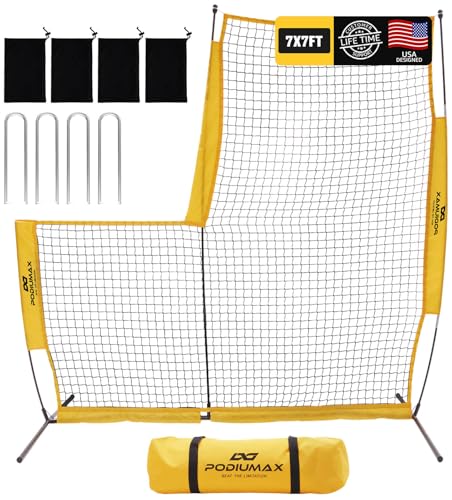
Best for all-weather training with enhanced frame stability. PodiuMax uses a 7×7 ft L-screen with an upgraded frame featuring thickened fiberglass poles and galvanized steel pipes, plus a wider base for stability. It includes 4 sandbags and 4 ground anchors to secure the screen on windy days.
Who this is best for: outdoor fields and busy training spaces where strong ball impacts and wind resistance matter. Why selected: the wide base and anchoring system reduce wobble and improve safety during high-velocity practice.
Limitation: heavier setup due to sturdy frame and extra accessories may require more storage space when not in use.
Buying Guide: How to Choose the Right L Screen for Baseball
- Protection level: Look for thicker nets and reinforced frames to resist heavy impacts. A 2.5mm or higher HDPE net offers better durability than thinner options.
- Size and footprint: Standard 7×7 ft screens fit most cages, but consider your space. Ensure the pitching window is sufficient for your throwing style (3.5×3.5 ft is common).
- Frame material and weight: Steel frames are sturdy but heavier; aluminum or fiberglass frames offer lighter options with adequate strength. Consider how often you move the screen.
- Portability: If you train across multiple locations, prioritize models with carrying cases, straps, or quick-assembly features.
- Stability features: Bases, ground stakes, sandbags, or ballast bags help prevent tipping, especially in windy outdoor environments.
- Left- vs right-handed use: Dual-sided nets or flip designs provide flexibility for both throwers without repositioning.
Frequently Asked Questions
- What size is typical for an L screen? Most standard L screens are 7×7 feet with a pitching window around 3.5×3.5 feet.
- Which material lasts longest? Screens with steel frames and thick, high-density nets tend to endure the most impacts and weather exposure.
- Do these screens protect pitchers from line drives? Yes, when paired with a robust net and secure frame, they substantially reduce direct ball contact with pitchers.
- Is portability important for backyard use? Yes. Models with carrying bags and lightweight frames are easier to move and store.
- Should I choose a dual-sided screen? Dual-sided screens are advantageous for practicing with both left- and right-handed throwers without repositioning the frame.