Best Pitching Machines for Softball: Top Home Training Picks
Answering the need for consistent softball practice at home, these pitching machines help players develop swing mechanics, timing, and hand-eye coordination. The top picks below are best for players ranging from beginners to advanced, including those training solo, with a coach, or during small group sessions. Each entry highlights who it’s best for, why it stands out, and a clear limitation to consider before buying.
| Product | Key Strength | Best For |
|---|---|---|
| Heater Sports Softball Pitching Machine with 9 Ball Automatic Feeder | Auto-feeder for steady pitching and adjustable speeds | Home hitters who want continuous reps |
| PowerNet Launch F-lite Baseball & Softball Pitching Machine | Two-sport versatility with adjustable height | Teams or households drilling both baseball and softball |
| Louisville Slugger Blue Flame Pitching Machine | Throws varied ball types with precise control | Developers needing broad pitch variety |
| Heater Sports Power Alley Lite 360 | Compact 12″ machine with 0-50 mph control | Compact setups needing simple speed ranges |
| Mound Yeti-1 Baseball Softball Pitching Machine | Single-wheel design with dual chutes | Youth and adults seeking reliable auto-pitching |
Heater Sports Softball Pitching Machine With 9 Ball Feeder

This machine is designed for continuous batting practice with an Auto-Ball Feeder delivering a new pitch every 9 seconds. It offers adjustable speed control and a variety of pitch types to simulate game-like scenarios. Best for solo practice or small groups that want consistent repetitions without manual reloading. A limitation to consider is that some users may want more specialized pitch types beyond the included options.
PowerNet Launch F-lite Baseball & Softball Pitching Machine

This model supports both baseball and softball with interchangeable tripod legs to adjust pitch height. It includes 12 launch balls and offers speeds from 40 to 90 MPH at 25 feet. It’s ideal for coaches and parents running batting practices on field or at home. A potential limitation is that the dual-sport setup can be heavier and more complex to transport than single-sport units.
Louisville Slugger Blue Flame Pitching Machine
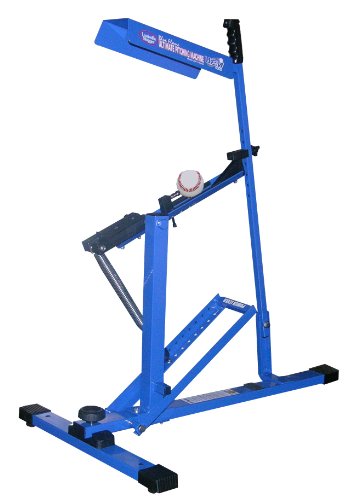
This machine throws multiple ball types, including fastballs, dimple balls, light flight balls, and even non-traditional items like soccer and volleyballs. It excels in delivering fast, accurate strikes across a range of speeds, up to 60 mph for lighter balls and up to 45 mph for standard balls. Choose this if you want broad pitch variety; avoid if you need ultra-low-speed soft-tly pitches for beginners since it focuses on a broader range of types and speeds.
Heater Sports Power Alley Lite 360 12 Inch Softball Machine

Built for 12″ softballs and speeds up to 50 MPH, this compact unit features a built-in speed control enabling quick 0-10 speed adjustments. It supports fastballs, drop balls, curves, and sliders. Best for small spaces and straightforward batting practice; a caveat is that its speed range is modest compared with higher-end models.
Mound Yeti-1 Baseball Softball Pitching Machine
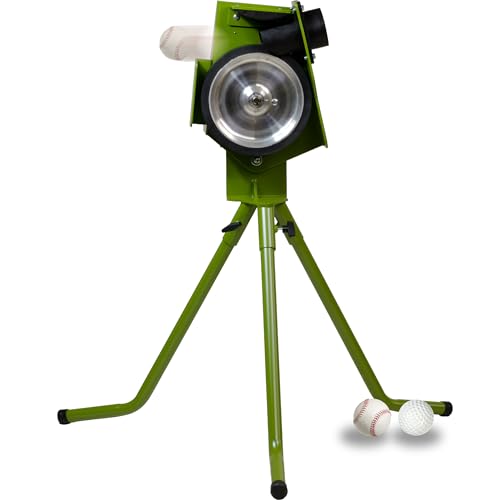
This single-wheel machine provides automatic pitching with 30-60 MPH adjustable speeds, suitable for both youth and adult players. It includes dual chutes to switch between baseballs and softballs, making it flexible for mixed drills. It’s best for practice environments requiring quick changes between ball types; a limitation is that the single-wheel design may offer fewer pitch variety options than multi-wheel systems.
Buying Guide
- Target sport and skill level: If you train primarily softball, prioritize models with softball-specific settings and ball sizes. For mixed baseball/softball use, consider dual-sport units like the Launch F-lite or F-lite Pro.
- Speed range and pitch types: Decide whether you need a broad speed range and various pitch types (fastballs, curves, drop balls) or a narrower range for beginners. Consider auto-feeders for uninterrupted practice versus manual loading.
- Portability and setup: Compact machines are easier to move and store. If you have limited space or plan to travel for practice, evaluate weight, handle design, and setup time.
- Durability and warranty considerations: Look for solid construction, especially for frequent use or group training. Check that the device supports the ball types you intend to throw.
- Ball type compatibility: Some machines handle a wide range of balls (including plastic or lighter practice balls), while others are optimized for standard softballs.
- Maintenance and replacement parts: Review availability of replacement chutes, power adapters, and standard wear items to minimize downtime.
FAQ
- What should I look for in a softball pitching machine for beginners? Prioritize adjustable speeds, a simple user interface, reliable auto-feeders, and a compact footprint for a small practice space.
- Are dual-sport machines better for family use? Yes, they’re convenient for households that want to practice both baseball and softball without purchasing two separate units.
- Can these machines be used for field drills or only batting practice? Many models support fielding drills by launching consistent throws and fly balls, aiding fielding practice in addition to batting.
- Is higher speed always better for practice? Not always. Start with appropriate speeds for your skill level and gradually increase as timing and mechanics improve.
- Do these machines require special balls? Some use standard softballs; others support a range of balls. Check diameter, weight, and material compatibility before purchasing.