Best Shoe Grips for Ice and Snow: Safe Winter Traction Picks
If you need dependable traction on icy sidewalks or snowy trails, these shoe grips provide reliable grip and easy on/off wear. They’re ideal for outdoor enthusiasts, commuters, and anyone who walks on slick surfaces. Each option below targets different footwear, climates, and activity levels, helping you pick the right pair for your winter routine.
| Product | Best For | Stud Type / Spikes | Material |
|---|---|---|---|
| Yaktrax Walk Traction Cleats (1 Pair) Medium | Everyday winter commuters | 360-degree underfoot traction with coil system | Thermoplastic rubber |
| Cimkiz 19 Spike Crampons | Hiking and rugged terrain | 19 stainless steel spikes | Thermoplastic elastomer |
| Aliglow Ice Snow Grips Over Shoe | Casual wear and light hiking | Non-slip steel studs (silicone + TPE) | Silicone elastomer + steel studs |
| Tomaje 24 Spikes Crampons | Heavy snow, icy trails, winter activities | 24 stainless steel spikes | Cold-resistant silicone, stainless steel |
| VATEICO Ice Snow Cleats (9-Studs) | Universal quick-fit for varied footwear | 9 stainless steel studs | Durable rubber + stainless steel |
Notes: This overview focuses on non-technical descriptions to help you compare at a glance. Specifications may vary slightly by product line. All options are designed to fit a range of shoe sizes and activity levels without requiring specialized equipment.
Yaktrax Walk Traction Cleats for Walking on Snow and Ice

Best for: Everyday winter walkers and commuters who need lightweight, quick-to-don traction. The slip-on design distributes underfoot traction across ice and snow, improving stability on flat and uneven surfaces.
Why selected: Durable thermoplastic rubber remains flexible in cold weather, enabling reliable use across multiple outings. The 360-degree coil system provides stability when walking forward, backward, or laterally.
Limitations: Some users may prefer additional ankle support for uneven terrain, as the design focuses on underfoot traction and ease of use.
Cimkiz 19 Spike Crampons for Boots

Best for: Outdoor enthusiasts tackling steep, icy, or mixed-terrain trails where enhanced bite from multiple spikes is needed. Suitable for hiking, fishing, and mountaineering on slick surfaces.
Why selected: 19 stainless steel spikes deliver robust traction, and the adjustable strap plus durable TPE material support long-lasting comfort in cold conditions.
Limitations: Heavier and bulkier than some casual-use options, which may affect travel ease and packability.
Aliglow Ice Snow Grips Over Shoe Traction
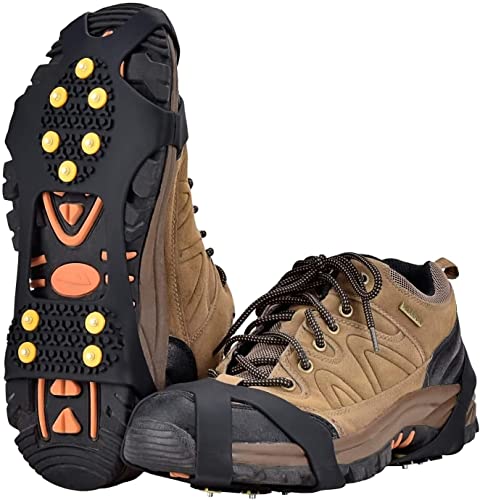
Best for: Light to moderate winter conditions where quick on/off is valuable, including commuting and short treks. Fits a broad range of footwear due to its stretchable silicone construction.
Why selected: The combination of silicone rubber with non-slip steel studs provides durable traction down to very cold temperatures, and the stretchable design helps with a secure fit on many shoe shapes.
Limitations: Very stretchy fits may feel looser on very thin or tightly fitted footwear; ensure proper sizing for stability.
Tomaje 24 Spikes Crampons for Shoes

Best for: Winter hikers and climbers who need strong bite on icy terrain and reliable side-to-side stability. Suited for outdoor activities in snow and ice conditions where foot security matters.
Why selected: 24 stainless steel spikes and reinforced silicone provide notable traction, while the elastic band accommodates various footwear. The design supports portability and on-the-go use in cold environments.
Limitations: Higher spike count can increase weight and feel, and may be less comfortable on dry pavement.
VATEICO Ice Snow Cleats 9-Studs

Best for: Everyday wear on varied surfaces where quick attachment matters, including city sidewalks and light hiking. The nine studs offer dependable traction without excessive bulk.
Why selected: Universal sizing and included straps help stabilize the traction stability, especially for users with thin footwear or tight fits. Durable rubber and stainless steel ensure robust performance down to sub-freezing temperatures.
Limitations: With fewer studs than some competitors, performance may be less aggressive on very steep or deeply icy routes.
Buying Guide: Key Considerations For Choosing Shoe Grips
- Intended use: Choose lighter options for daily commuting and heavier options for trail hiking or mountaineering.
- Footwear compatibility: Check size ranges and strap systems to ensure a secure fit on your shoes or boots.
- Traction type: Consider the number and material of studs or coils. More spikes usually mean stronger bite on ice but can add weight.
- Cold-weather durability: Look for materials that stay flexible in low temperatures and resist cracking or tearing.
- Portability: If you travel with them, opt for foldable or lightweight models that fit in a backpack or glove compartment.
- Easy on/off: Quick-access designs are beneficial for urban use or frequent transitions between indoors and outdoors.
Frequently Asked Questions
- What are shoe grips for ice and snow called?
They are commonly called ice cleats, traction cleats, crampons, or ice grips. - Do these fit over most shoes?
Most options offer universal sizing or adjustable straps to fit a wide range of footwear, but always check the size chart. - Are metal studs better than rubber coils?
Metal studs provide stronger bite on icy surfaces, while rubber coils distribute traction more evenly and are easier to wear on dry pavement. - Can I wear these in warm weather?
Yes, but they are designed for ice and snow; prolonged use on dry, warm surfaces can wear materials faster. - How do I store and maintain them?
Rinse off dirt after use, dry thoroughly, and store in a cool, dry place to prevent material degradation. - Is one brand clearly better for all situations?
No single brand fits all scenarios; choose based on intended activity, terrain, and footwear compatibility.